If you are new to silver, put 5% to 10% of your total portfolio into physical metal, weighted 80% toward fractional sovereign coins and 20% toward 10 oz bars. If you already hold metals and understand premium math, push to 10% to 20%, shift the mix toward 100 oz bars and junk silver, and rebalance against the gold-to-silver ratio twice a year. That single rule covers most of the decision. The rest explains the numbers behind it, what to buy at each stage, and where Fused Distribution fits.
What a Beginner Allocation Looks Like in 2026
A beginner allocation has one job: get you exposure to physical silver without locking up cash you might need. Start with 5% of your investable assets. If your portfolio is $50,000, that is $2,500 in physical metal. Split it 70/30 between silver and gold by dollar value, so roughly $1,750 goes to silver and $750 to gold.
Financial advisors used to cap precious metals at 5% of a portfolio. That ceiling moved. Many now recommend 5% to 15% total precious metals exposure, with conservative investors at 5% to 10% and aggressive investors going as high as 15% to 20% (Source: U.S. News & World Report). For a first-time buyer, the lower end of that band is the right entry point.
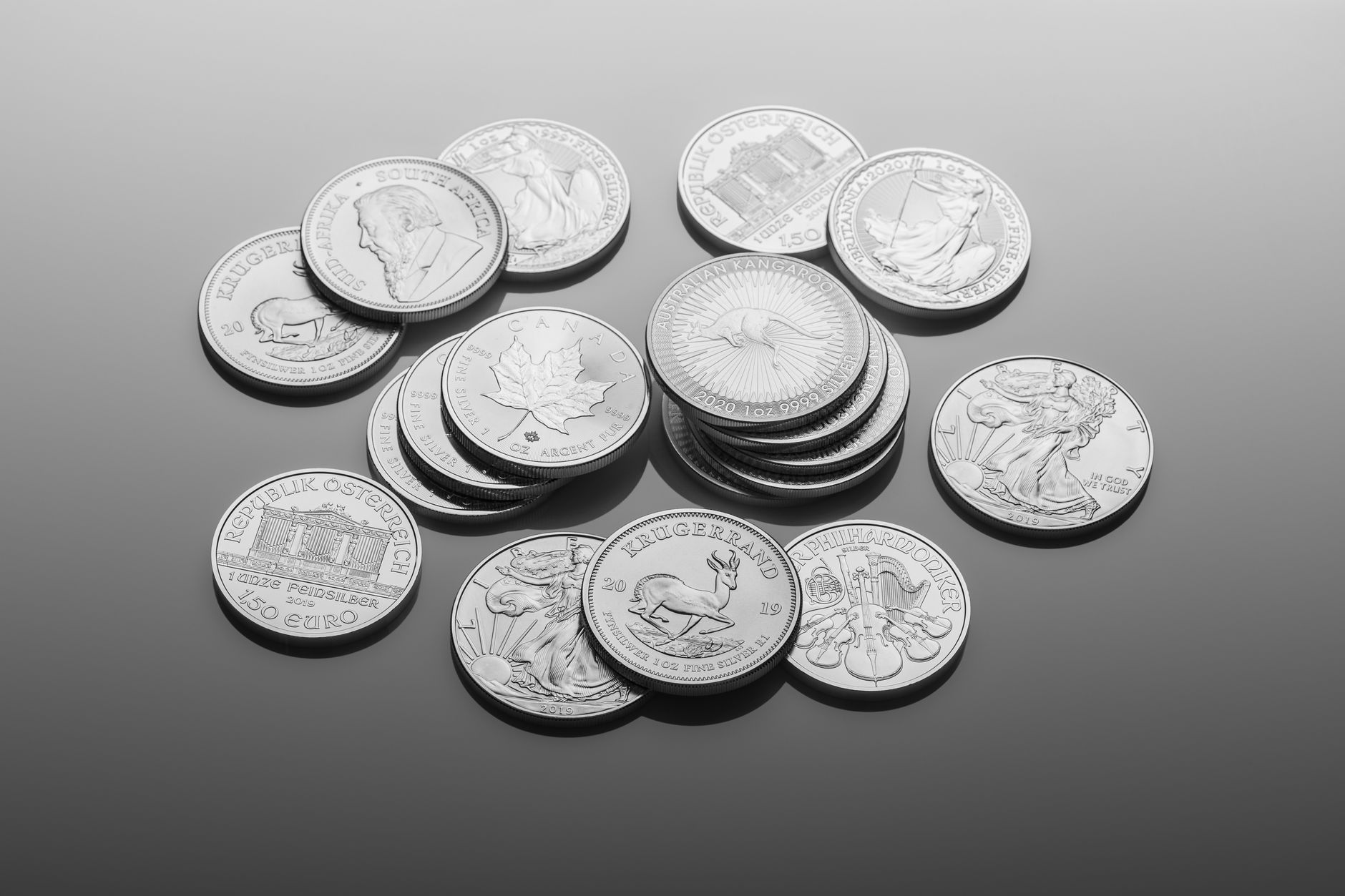
For the silver portion, buy products you can sell anywhere in the US without a long conversation. American Silver Eagles, Canadian Silver Maple Leafs, and 10 oz Royal Canadian Mint bars all qualify. We stock all three. Avoid private-mint rounds with unfamiliar branding for your first stack. The premium savings rarely justify the resale friction.
A practical first order looks like this: ten 1 oz American Silver Eagles, one 10 oz cast bar, and one fractional 1/10 oz gold coin for diversification. Total cost at current spot will run around $900 to $1,100 depending on the day. That gives you handling experience with three product types before you commit larger sums.
What Changes at the Advanced Level
Advanced allocation is about efficiency per dollar and ratio-driven rebalancing. You already own metal. You understand that premium, not spot, determines your real cost basis. At this stage, you stop buying 1 oz coins for stacking and start buying 100 oz bars and pre-1965 US 90% silver coins, often called junk silver.
A 100 oz Royal Canadian Mint or Asahi bar typically carries a premium of $1.50 to $2.50 per ounce over spot. A 1 oz American Silver Eagle carries $4 to $7 per ounce. On a $10,000 order, that gap is real money. We pass roughly 60% of that savings through to customers buying in bar weights of 10 oz or larger.
Junk silver fills a different role. A $1,000 face value bag contains 715 ounces of silver and trades close to melt. It is the most liquid product for small private transactions because every coin is recognizable to any American adult. Allocate 10% to 20% of your advanced silver position here.
The other thing advanced buyers do is watch the gold-to-silver ratio. The 20-year average sits near 70:1, and the ratio compressed from above 100 in April 2025 toward roughly 55 to 62 by June 2026 as silver outperformed (Source: Longtermtrends). When the ratio sits above 80, buy silver and hold gold. When it drops below 55, trade some silver for gold. Rebalance no more than twice a year to keep transaction costs reasonable.
The Macro Case That Justifies a Larger Position
You need a reason to hold metal beyond fear. The supply and demand picture is the reason. The silver market is on track for a sixth consecutive annual supply deficit in 2026, projected at 46.3 million ounces (Source: The Silver Institute). Six straight years of deficit drains aboveground stocks. That is the structural backdrop pushing the gold-to-silver ratio lower.
Industrial demand is the engine. Industrial and technology applications accounted for roughly 61% of total global silver demand in 2025, up from 53% a decade earlier (Source: The Silver Institute). Solar panels, EV electronics, and AI data center components all consume silver in quantities that do not return to the recycling stream quickly.
The Silver Institute forecasts industrial fabrication to decline about 2% in 2026 to roughly 650 million ounces, with AI data centers and automotive demand partially offsetting weaker solar PV usage (Source: The Silver Institute). A 2% pullback in a market already running a 46 million ounce deficit does not flip the picture. It just reshuffles which sectors lead.
Retail demand is also picking up. Global coin and bar demand rose 14% in 2025, supported by a 33% jump in Indian physical investment (Source: The Silver Institute). When industrial users, central banks, and retail buyers all bid for the same constrained supply, the case for holding a meaningful position strengthens.
Premium Math: What You Are Actually Paying
The price you see is not the price of silver. It is spot plus premium. Premium covers minting cost, distributor margin, dealer margin, shipping, and insurance. On a 1 oz American Silver Eagle, premium typically runs 12% to 20% of spot. On a 100 oz bar, premium runs 4% to 7%. On a $1,000 face junk silver bag, premium runs 2% to 5%.
Here is the math that matters. If spot silver is $35 per ounce and you buy one hundred 1 oz Eagles at $41 each, you paid $4,100 for 100 ounces. If you bought a single 100 oz bar at $36.50 per ounce, you paid $3,650 for the same 100 ounces. That $450 difference is the cost of fractional flexibility.
Beginners should accept that cost in exchange for liquidity and recognition. Advanced buyers should minimize it by buying larger units once they have enough small denominations for trade.
We publish our premiums next to spot on every product page. If a dealer will not show you spot and premium separately, that is your signal to shop elsewhere. There is no legitimate reason to hide that breakdown.
Storage, Insurance, and When to Use Each
A beginner with under 200 ounces can store at home in a quality safe bolted to a concrete slab or floor joist. Budget $300 to $600 for a residential security container rated RSC level 1. Keep the safe in an interior room, not the garage or a closet against an exterior wall.
Once your holdings cross roughly $25,000 in metal value, the insurance math changes. Standard homeowners policies cap precious metals coverage at $1,000 to $2,500. You either need a scheduled rider, which runs about 1% to 2% of insured value annually, or a depository account. A segregated depository account at Brinks or Loomis costs about 0.5% to 0.7% per year and includes full insurance.
Split storage is the smart middle path. Keep three to six months of household expenses worth of silver at home for crisis liquidity. Send the rest to a depository. We can ship orders direct to Brinks SLC or Delaware Depository if you set up an account first.
Avoid bank safe deposit boxes for metals. They are not insured by FDIC, contents are not covered by your homeowners policy by default, and access is limited to bank hours.
A Simple Rebalancing Rule
Once your position is built, you need a rule for keeping it sized correctly. Check your portfolio at the end of June and the end of December. If precious metals have grown past your target band by more than 3 percentage points, sell the overage and redeploy into whichever asset class fell below its target. If they shrank below the band by 3 points, buy back up.
For an advanced buyer with a 15% target and a 12% to 18% band, that means selling when metals hit 18% and buying when they drop to 12%. The discipline of selling into strength is what separates a portfolio from a stack.
When you rebalance, use the gold-to-silver ratio to decide which metal to trim or add. Sell silver, buy gold when the ratio is below 60. Sell gold, buy silver when the ratio is above 80. Between 60 and 80, trim proportionally.
Where to Go From Here
Pick your tier. If you are starting, place a first order between $500 and $1,500 in mainstream sovereign coins and one 10 oz bar. If you are advanced, model your next purchase against your current premium-weighted cost basis and target the largest unit you can hold comfortably. Either way, get the order in before the next quarterly Silver Institute supply update reshapes premiums. We stock the products and price them against live spot at /reserve/.
Related
- Is Silver A Good Hedge Against Inflation?
- Silver ETF Vs Physical Silver Tax Differences
- Physical Silver Vs Silver Etf Pros And Cons
Read next: Is Silver A Good Hedge Against Inflation?