Most US investors hold about 0.2% of their portfolio in silver. Oxford Economics research commissioned by the Silver Institute concludes the optimal allocation is 4-6%. That gap is the entire point of this guide. If you own stocks and bonds and nothing else, you are missing a sleeve that has historically moved on its own rhythm and, in 2025, returned roughly 145% while gold returned 64% (Source: GoldSilver / Mike Maloney).
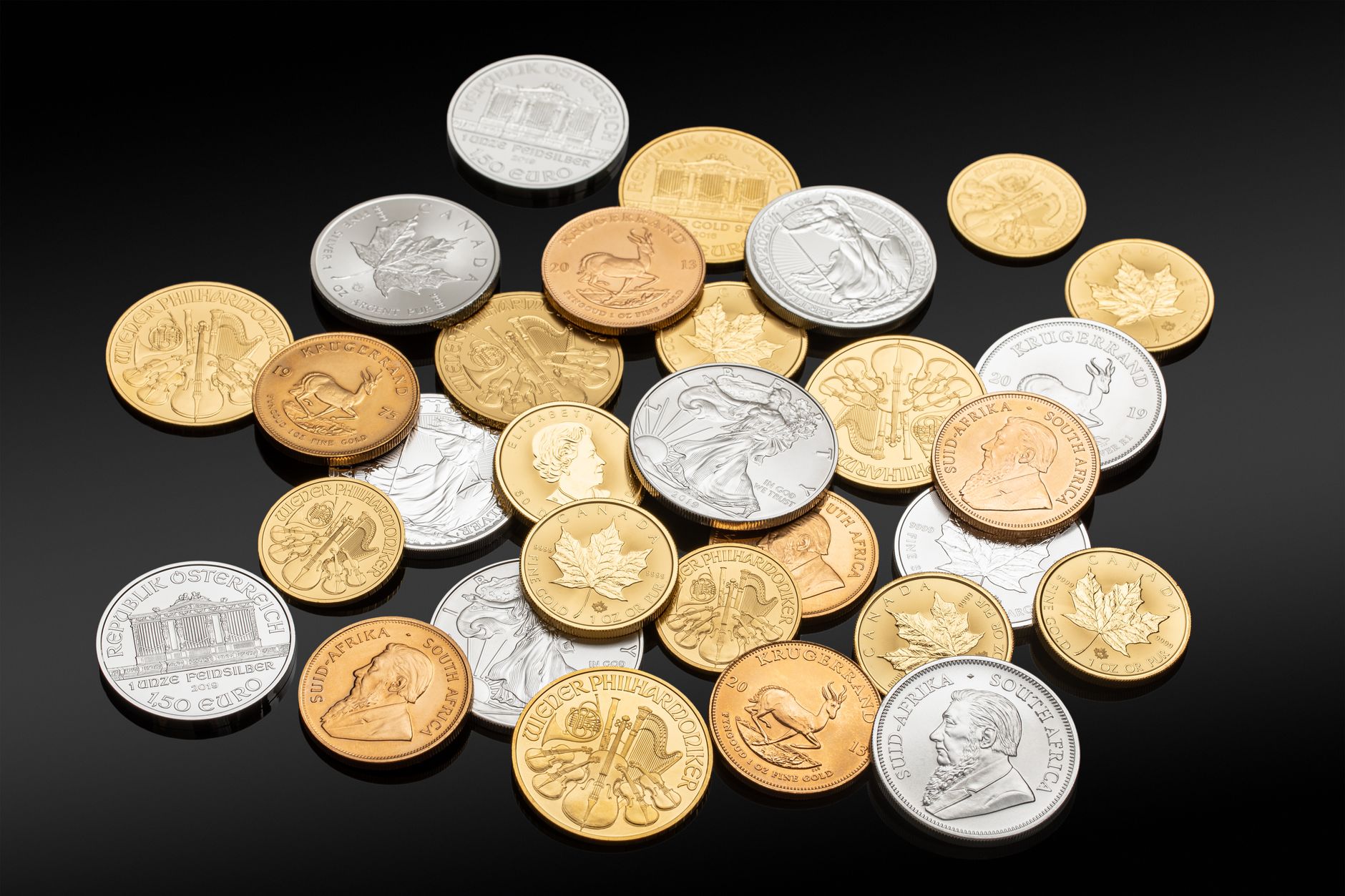
Below is how to size that sleeve, what to actually buy, when to add to it, and the mistakes that quietly cost money.
Why Silver Belongs Next To Stocks And Bonds
Stocks and bonds used to cancel each other out. Since 2021, their correlation has flipped positive, meaning they fall together on inflation shocks and rate scares. Precious metals do not follow that script. Gold's historical correlation to the S&P 500 has typically run from about -0.1 to 0.2 (Source: BlackRock). Silver tracks gold loosely but adds higher volatility on both sides.
That low correlation is the diversification math. When two assets move together, holding both reduces nothing. When a third asset moves on different drivers (industrial demand, monetary stress, retail buying waves), it lowers the portfolio's overall swing without lowering long-run return.
Silver has two engines stocks and bonds do not: a monetary engine (store of value during currency stress) and an industrial engine (solar, EVs, electronics, AI data center power infrastructure). The Silver Institute forecasts a sixth consecutive global silver market deficit in 2026 of roughly 46.3 million ounces, widening from 40.3 Moz in 2025 (Source: The Silver Institute). Persistent deficits put a floor under prices that paper assets do not have.
How Much Silver To Hold
Use 4-6% of total investable assets as your target band. That comes straight from the Oxford Economics study and matches what most precious metals advisors land on after running portfolio optimizations.
A practical split inside that sleeve:
- 70-80% gold (the stability anchor)
- 20-30% silver (the high-beta growth piece)
So a $100,000 portfolio targeting 5% in metals would hold $5,000 total: roughly $3,500-$4,000 in gold and $1,000-$1,500 in silver. If you already own gold and zero silver, you are running the equivalent of an all-bond fixed income sleeve with no credit exposure. The pieces work better together.
Investors closer to retirement often run the lower end (4%). Younger investors with longer horizons and tolerance for swings can push to 6-7%. Above 10%, you are no longer diversifying. You are making a directional bet on metals, which is fine if you mean to, but call it what it is.
What To Actually Buy
Inside the silver portion, prioritize in this order:
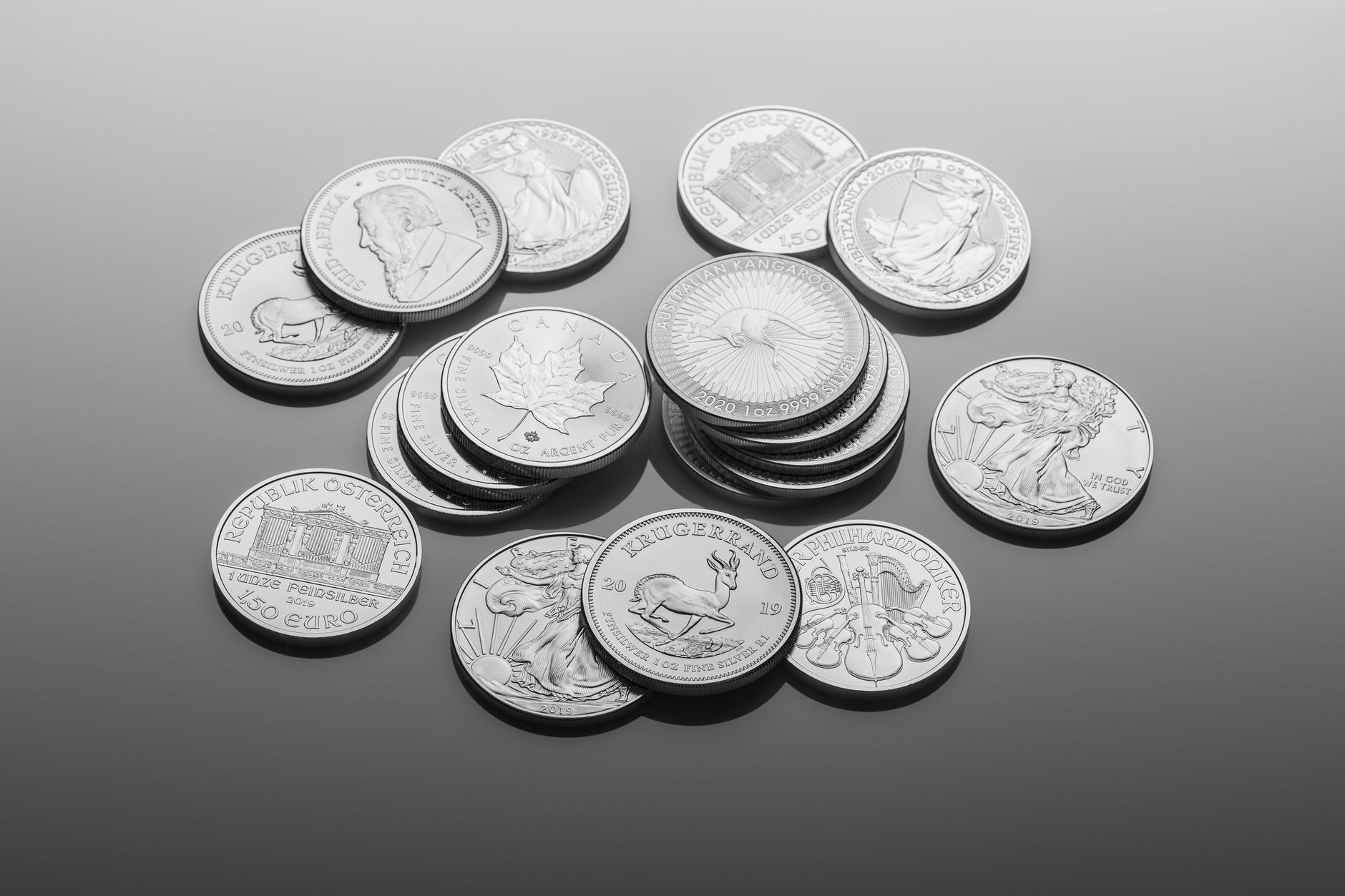
- Sovereign coins (60-70% of the silver sleeve). American Silver Eagles, Canadian Maple Leafs, Britannias. Government-minted, instantly recognizable, easiest to resell at any dealer. Pay 15-25% premium over spot during normal markets.
- Generic rounds and bars (20-30%). 1 oz rounds, 10 oz bars, 100 oz bars from recognized refiners (Sunshine, Asahi, Royal Canadian Mint). Premiums of 8-15% over spot. Better cost per ounce, slightly harder to liquidate at small dealers.
- Junk silver, pre-1965 US dimes and quarters (0-10%). Useful for very small transactions in a stress scenario. Premium varies widely.
Skip numismatic coins unless you specifically collect them. You pay for the rarity, not the metal, and that premium rarely survives a resale.
We stock the full range at Fused Distribution and recommend most beginners start with 1 oz American Silver Eagles for liquidity, then add 10 oz bars once they pass the $5,000 mark to reduce per-ounce cost.
When To Buy: Timing And Dollar Cost Averaging
J.P. Morgan Global Research projects silver will average $81/oz in 2026, more than double its 2025 average (Source: J.P. Morgan Global Research). Spot sat at $57.50/oz on 2026-06-27. If that forecast plays out, waiting for a perfect entry costs more than imperfect entries spread across the year.
The clean approach for most investors:
- Set a monthly auto-buy. Pick a fixed dollar amount (say $250 or $500) and buy the same day each month regardless of price. This smooths your average cost.
- Add a dip rule. Whenever silver drops 7% or more from a recent high, double that month's buy. Do not try to call bottoms.
- Stop adding once you hit the target allocation. Rebalance back to 4-6% annually. If silver runs and pushes the sleeve to 9%, sell down to 6% and move the cash into whichever asset class is underweight.
Avoid the two opposite traps: buying your entire allocation in one lump on a green day, and never buying because you are waiting for a pullback that does not come.
Where To Store It
Storage is the part most new buyers underestimate. Three options:
- Home safe. Best for small holdings (under $10,000). Buy a TL-15 rated safe, bolt it to the floor, do not tell anyone you own metals. Add a rider to your homeowners insurance for the value, since standard policies cap precious metals coverage at $200-$2,500.
- Bank safe deposit box. Cheap ($50-$200/year). Downside: contents are not FDIC insured and access is limited to bank hours. Read the rental agreement carefully on what is permitted.
- Allocated, segregated vault storage. Companies like Brinks, Loomis, and IDS hold your specific bars and coins in your name, fully insured, with audit reports. Costs roughly 0.5-1% of value per year. Use this above $50,000 in holdings.
Never use unallocated storage where the dealer owns the metal and owes you ounces on paper. That is a credit exposure to the dealer, not a metals position.
Common Mistakes That Cost Real Money
Buying ETFs and thinking you own silver. SLV and similar funds give you price exposure, which is fine if that is your goal, but they are not a diversifier against financial system stress because they live inside that system. If your reason for owning silver is portfolio insurance, take physical delivery.
Paying numismatic premiums for bullion buys. A 2025 American Silver Eagle and a 2008 American Silver Eagle hold the same ounce of silver. If a dealer is charging a $15 premium on one and $40 on the other, you are buying a story, not metal.
Selling at the wrong time. Physical silver investment demand is forecast to rise 18% in 2026 to its highest level since 2022, driven largely by a projected 57% rebound in US retail demand (Source: The Silver Institute). When retail piles in, premiums spike and supply tightens. That is the wrong moment to sell unless you are rebalancing on a schedule.
Ignoring the industrial side. Silver industrial fabrication is forecast to slip 2% in 2026 to a four-year low near 650 million ounces as photovoltaic thrifting offsets growth from AI data centers and autos (Source: The Silver Institute). Even with that dip, industrial use absorbs more than half of annual mine supply. Watch solar capacity build-outs and EV production numbers, not just Fed meetings, when you think about silver's medium-term direction.
Holding zero gold. A silver-only metals allocation is more volatile than the data suggests is optimal. Pair them.
Rebalancing Rules That Actually Work
Pick one rebalance trigger and stick to it:
- Calendar rebalance. Once a year, on a fixed date (your birthday works), check the allocation. If metals are outside the 4-6% band, trim or add to bring it back.
- Threshold rebalance. Anytime the metals sleeve drifts more than 2 percentage points from target (so under 2% or over 8% on a 5% target), rebalance.
Rebalancing forces you to sell strength and buy weakness, which is the opposite of what most investors do emotionally. Write the rule down before you need it.
Your Next Move
Pull up your last brokerage and retirement statements. Add up everything you own. Multiply by 0.05. That number is your target silver-and-gold sleeve. Subtract what you already hold in physical metals. If the gap is more than zero (and for most readers it is), set up a monthly buy starting next month at an amount that closes the gap over 12-24 months. Start with 1 oz American Silver Eagles, store the first $10,000 at home in a bolted safe, and move to vault storage once you cross $50,000. That is the entire playbook.
Related
- Is Silver A Good Hedge Against Inflation?
- Silver ETF Vs Physical Silver Tax Differences
- Physical Silver Vs Silver Etf Pros And Cons
Read next: Is Silver A Good Hedge Against Inflation?