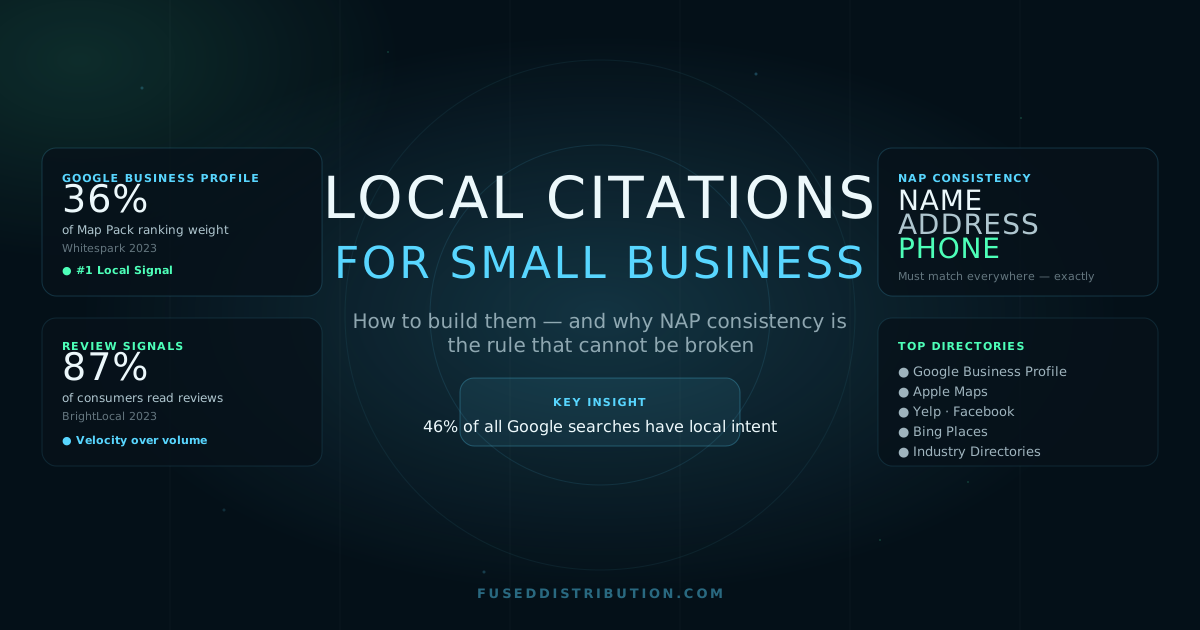
Local citations are one of the most overlooked parts of local SEO. A citation is any online mention of your business name, address, and phone number. Google uses them to verify that your business is real, located where you say it is, and active in your community. According to Moz's Local Search Ranking Factors survey, citation signals consistently rank among the top five factors that determine whether your business appears in Google's Map Pack.
If you're starting from scratch, you don't need hundreds of listings. You need the right ones, filled out correctly, and consistent everywhere. That's what this guide covers. For background on why consistency matters so much, read What Is NAP Consistency and Why It Matters.
Start With Your Google Business Profile
Your Google Business Profile (GBP) is the most important citation you own. It's free. It's how Google decides whether to show your business in local search results and the Map Pack. Before you touch any other directory, your GBP needs to be complete. That means your exact business name, address, phone number, hours, website, service area if you're a contractor, and at least one photo.
The name on your GBP must match the name on your website, your signage, and every other directory exactly. If your legal name is "Smith Plumbing LLC" but you operate as "Smith Plumbing," pick one and use it everywhere. Variations create inconsistency that Google treats as uncertainty about your business.
The Core Directories Every Local Business Needs
After your GBP, these are the directories that carry the most weight for local search. Build them in this order. Each one takes 10 to 15 minutes if you have your information ready.
- Google Business Profile — non-negotiable, do this first
- Apple Maps — covers all iOS searches and Siri results
- Bing Places for Business — powers Bing and Cortana local results
- Yelp — still influential for restaurants, contractors, and services
- Facebook Business Page — Google crawls Facebook pages for NAP data
- Better Business Bureau — high-authority trust signal
- Foursquare / Factual — feeds data to dozens of aggregators downstream
Once those seven are live and consistent, add industry-specific directories. A plumber should be on Angi and HomeAdvisor. A restaurant on Zomato and TripAdvisor. A dentist on Healthgrades and Zocdoc. The directories matter less than the consistency of what you put in them.
NAP Consistency: The Rule That Cannot Be Broken
NAP stands for Name, Address, Phone number. Every citation must match your GBP exactly, down to abbreviations. If your GBP says "123 Main St," every directory must say "123 Main St," not "123 Main Street." If your phone number includes a local area code on GBP, it needs that same area code everywhere.
Inconsistent NAP data is one of the most common reasons local businesses fail to rank in the Map Pack. Google interprets discrepancies as separate businesses or incorrect data, which reduces trust and lowers your ranking. Whitespark's annual Local Search Ranking Factors study has listed NAP consistency as a top local ranking signal every year since 2013.
Run an audit before you build new citations. Search your business name on Google and check every listing that appears. Fix any that have old addresses, old phone numbers, or variations in how your name is formatted.
Reviews Amplify What Citations Build
Citations tell Google your business exists. Reviews tell Google your business is worth showing. A business with strong, consistent citations and a steady stream of recent reviews will outrank one that only has citations. The two signals work together.

Ask every satisfied customer for a Google review. Make it easy: send a text with your direct GBP review link right after the job is done. Don't wait. Recency matters. A business that gets two reviews a week will outperform one that got 50 reviews two years ago and nothing since.
Citation Sources by Local Ranking Impact
How to Audit and Fix Existing Citations
If your business has been operating for more than a year, you likely have existing citations with incorrect data. This happens when you change phone numbers, move locations, or rebrand. Old data doesn't disappear. It stays in directories and confuses Google.
Use a free tool like BrightLocal's Citation Tracker or Moz Local to scan your existing listings. Both tools show you where your business appears and flag any NAP inconsistencies. Fix the most authoritative directories first (GBP, Yelp, Facebook, Apple Maps), then work through the list. Most directories let you claim and edit your listing without paying for anything.
For more on building a complete local presence, see the Local SEO for Small Business Beginner Guide.
Frequently Asked Questions
Sources
- Moz, "Local Search Ranking Factors," 2023. moz.com/local-search-ranking-factors
- Whitespark, "Local Search Ranking Factors Survey," 2023. whitespark.ca/local-search-ranking-factors
- BrightLocal, "Local Consumer Review Survey," 2023. brightlocal.com/research/local-consumer-review-survey
- Google, "Understanding Local Search," 2023. support.google.com/business