Buy physical silver, store it yourself, and dollar-cost average into it every month. That is the short answer. Silver protects your purchasing power because its supply cannot be printed, and in 2025 it surged roughly 147%, far outpacing dollar-denominated assets as currency-debasement concerns mounted (Source: GoldSilver / Silver Price Predictions 2026). The dollars in your checking account lost value last year. The silver in a safe did not.
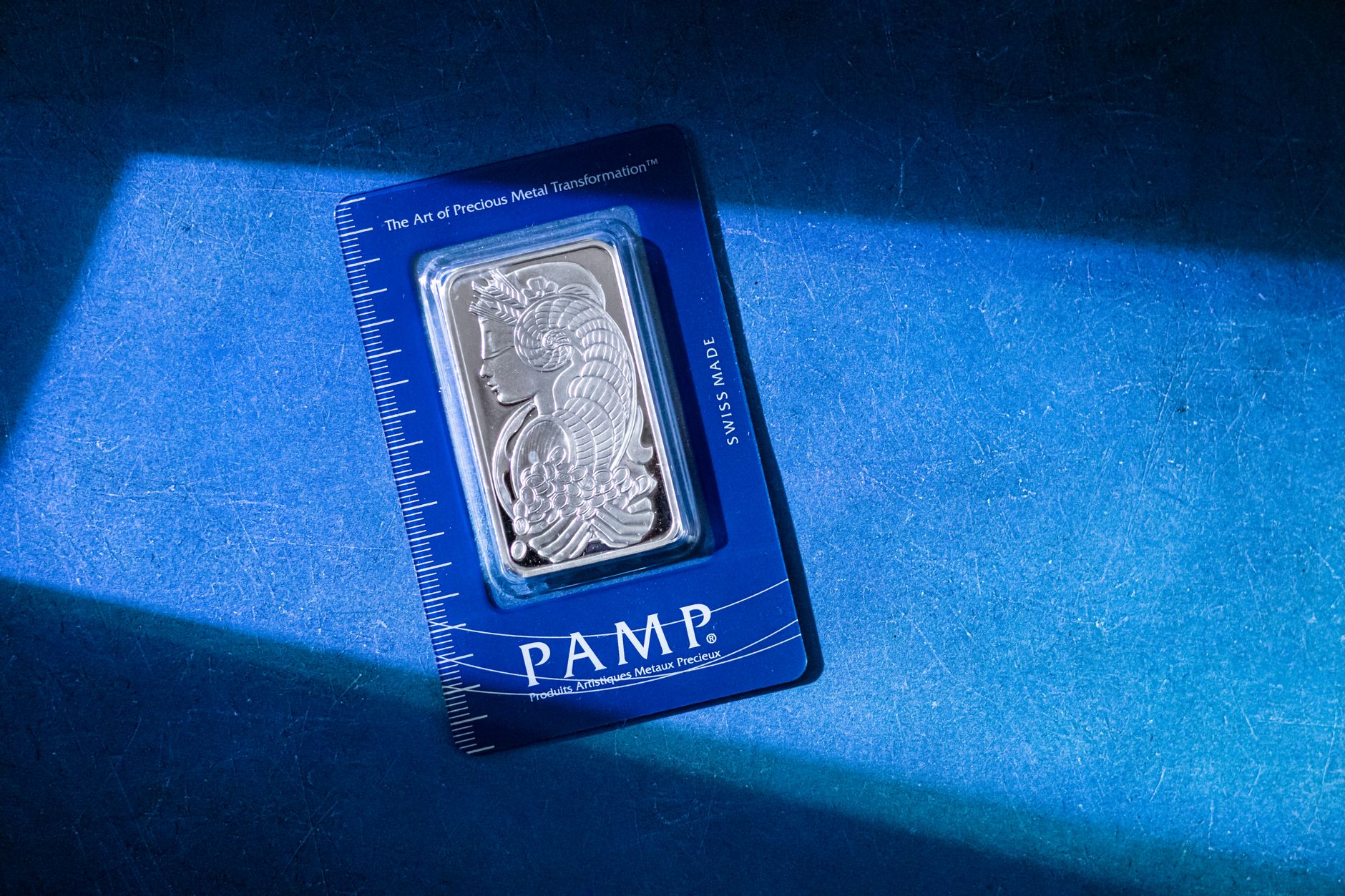
We stock American Silver Eagles, Canadian Maple Leafs, and recognized bars at transparent premiums. You can start with a single ounce and add to your stack on a fixed schedule. Below is exactly how to do it, what to buy, where to store it, and how to size your position against the rest of your savings.
Why The Dollar Keeps Losing Ground
The US M2 money supply hit a record high in mid-2025, expanding at the fastest pace since July 2022 (Source: Federal Reserve Bank of St. Louis (FRED) - M2SL). More dollars chasing the same goods means each dollar buys less. That is currency devaluation in one sentence.
CPI inflation kept eating purchasing power through 2025, on top of a cumulative loss of about 20% since 2020 (Source: US Bureau of Labor Statistics - CPI). A $100 bill from 2020 buys roughly $80 of groceries today. Cash held in a checking account at 0.01% interest is a guaranteed loss against this backdrop.
Silver responds to this in two ways. First, you cannot print more of it. New supply requires mining, refining, and minting, all of which take years and capital. Second, when the public loses confidence in paper currency, monetary demand for silver spikes on top of its already heavy industrial use. The result is a price floor that rises with the money supply, not against it.
How Much Silver You Should Actually Hold
Most beginners ask the wrong question. They ask how much silver to buy. The right question is what percentage of your liquid savings you want outside the banking system.
A conservative allocation for a US retail buyer looks like this:
- 5% of liquid savings in precious metals if you are new to the asset class
- 10% to 15% if you have held metals for a year or more and want a real hedge
- 20%+ if you are actively worried about currency stability and want significant insurance
Inside that precious metals allocation, a common split is 70% silver and 30% gold for buyers under $50,000 in total metals, then shifting toward 50/50 as the stack grows. Silver gives you more ounces per dollar and better divisibility for barter scenarios. Gold gives you density for long-term storage.
If you have $20,000 in liquid savings and want a 10% allocation, that is $2,000 in metals. At a 70/30 split, roughly $1,400 goes into silver. At current spot levels that buys a meaningful starter stack of one-ounce coins.
What To Buy First
Stick to recognized government-minted coins for your first $5,000 in silver. They carry slightly higher premiums than generic rounds, but they resell instantly anywhere in the country at full liquid value.
Start with these in order:
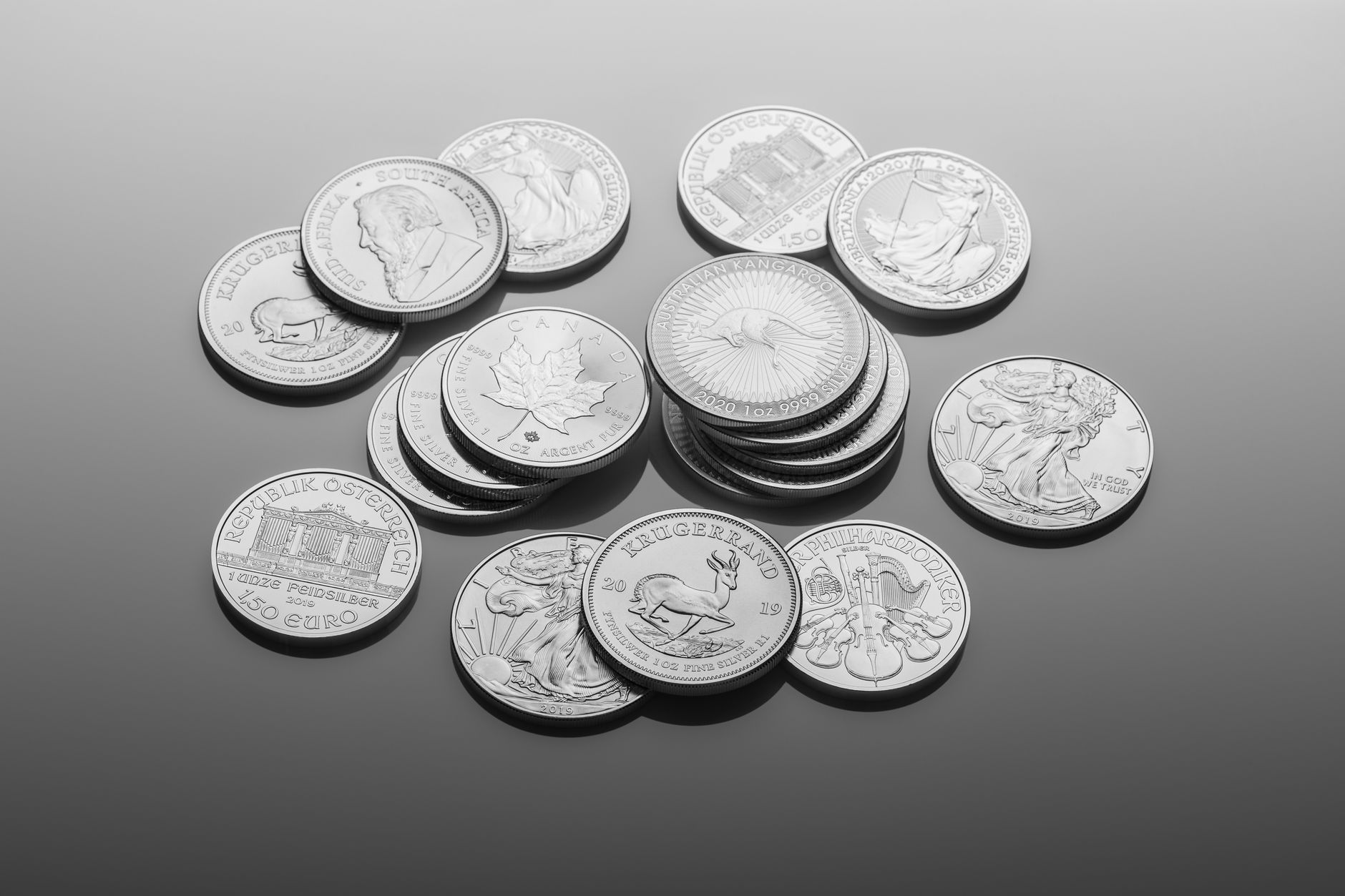
- American Silver Eagles, one ounce, current year or any year. These are the most recognized silver coin in the US and the easiest to sell back.
- Canadian Silver Maple Leafs, one ounce. Often a few dollars cheaper than Eagles with the same liquidity.
- Generic one-ounce rounds from a known refiner like Sunshine, Asahi, or Scottsdale once you are past $5,000 and want lower premiums.
- Ten-ounce and one-kilo bars for buyers past $15,000 who want to lower their per-ounce cost.
Avoid numismatic and semi-numismatic coins as a beginner. Telemarketers push these because the markups can exceed 50%. You are buying metal to hedge currency, not collecting rare dates. Stick to bullion priced near spot plus a small premium.
The global silver market is on course for its fifth consecutive structural supply deficit, with the cumulative 2021 to 2025 shortfall approaching 820 million ounces (Source: The Silver Institute). Premiums on physical product can widen quickly when retail demand spikes against this tight backdrop. Buying steadily through quiet weeks gets you better pricing than waiting for a panic and paying $8 to $12 over spot for an Eagle.
How To Dollar-Cost Average Your Stack
Pick a fixed dollar amount and a fixed day of the month. Buy on that day regardless of what spot price did that week. This single habit removes emotion and beats timing for almost every buyer over a multi-year horizon.
A practical schedule for a buyer adding $300 per month:
- Day 1 of each month, check spot at kitco.com or our pricing page
- Place an order for roughly 7 to 9 ounces depending on premium
- Take delivery, log it in a spreadsheet with date, ounces, premium paid, and spot
- File the packing slip and move the metal into storage that night
The spreadsheet matters. After 12 months you will know your blended cost basis, your average premium, and your total ounces. That is the data you need to make smart decisions in year two, like whether to shift toward larger bars to lower your premium per ounce.
If you can only afford $100 per month, buy three or four ounces. If you can afford $1,000 per month, buy 25 to 30 ounces. The amount matters less than the consistency.
Where To Store Physical Silver
Silver tarnishes from sulfur in the air but does not corrode in any way that affects its value. Tarnished silver still trades at full melt. Storage is about theft prevention and moisture control, not chemistry.
For stacks under 200 ounces, a quality home safe bolted to a concrete floor handles the job. Look for a safe with at least a 30-minute fire rating and an RSC (Residential Security Container) rating from Underwriters Laboratories. Budget $400 to $800 for something that will actually slow a thief down. Add a few silica gel packs and replace them annually.
For stacks between 200 and 1,000 ounces, split your holdings. Keep roughly a third at home for immediate access and put the rest in a safe deposit box at a local credit union. Credit union boxes typically run $40 to $80 per year and most do not ask what you store. Never tell the teller it is metal.
For stacks above 1,000 ounces, use a private depository that offers segregated, allocated storage. Companies like Brink's, Loomis, and IDS of Delaware run insured vaults. Annual cost is typically 0.5% to 0.7% of metal value. Insist on segregated storage where your specific coins and bars are yours, not a pool share.
Never store metal in a bank safe deposit box if you bought silver specifically as a hedge against banking system stress. The whole point is access outside the banking system.
Why Industrial Demand Tightens The Hedge
Silver industrial demand reached a record high in 2024 and remained the largest single demand category through 2025 (Source: The Silver Institute - Silver News April 2025). Solar panels, electric vehicles, electronics, and medical applications consume hundreds of millions of ounces every year and most of that silver is gone forever. It is too dispersed and too cheap per unit to recycle economically.
This matters for currency hedging because it puts a hard floor under physical availability. Gold sits in vaults and gets recycled. Silver gets soldered into circuit boards and buried in landfills. Every year of industrial growth subtracts ounces from the available monetary pool.
When monetary demand from investors rises against that shrinking pool, premiums on physical product spike and delivery times stretch. Buyers who already hold metal sit comfortably. Buyers trying to enter during a stress event pay double or wait three months. Building your position during quiet markets is the entire game.
Silver Versus Other Currency Hedges
Stocks hedge inflation imperfectly. They go up in nominal terms during money printing but their multiples compress when inflation runs hot, so real returns disappoint. Real estate hedges well but is illiquid, requires active management, and carries property tax exposure that rises with inflation.
Treasury Inflation-Protected Securities pay you CPI plus a small real yield. The problem is CPI understates the real cost of living for most households, and TIPS are still dollar-denominated. You are trusting the issuer of the currency to fairly measure how much they are debasing it.
Bitcoin offers similar scarcity properties to silver with better portability and worse physical utility. Many buyers hold both. Bitcoin moves on liquidity cycles. Silver moves on industrial demand plus monetary demand. They are not the same trade.
Central banks themselves voted with their reserves in 2025. Sovereign gold buying remained far above pre-2022 historical norms as central banks diversified away from US dollar reserves (Source: World Gold Council - Gold Demand Trends 2025). When the institutions that print the currency are buying metal instead of holding their own paper, the signal is clear. Silver follows gold in this thesis at a lower entry price.
Your First Month
This week, decide your monthly amount and your buy day. Open a spreadsheet with columns for date, ounces, premium, spot price, and dealer. Next week, place your first order for one-ounce Silver Eagles or Maple Leafs and have them shipped insured. The week after, install your safe and log the delivery. Repeat next month. By month twelve you will hold roughly 80 to 100 ounces of recognized bullion and a real position outside the banking system. The dollar will keep losing value on its own schedule. Your stack will be ready.
Related
- Is Silver A Good Hedge Against Inflation?
- Silver ETF Vs Physical Silver Tax Differences
- Physical Silver Vs Silver Etf Pros And Cons
Read next: Is Silver A Good Hedge Against Inflation?