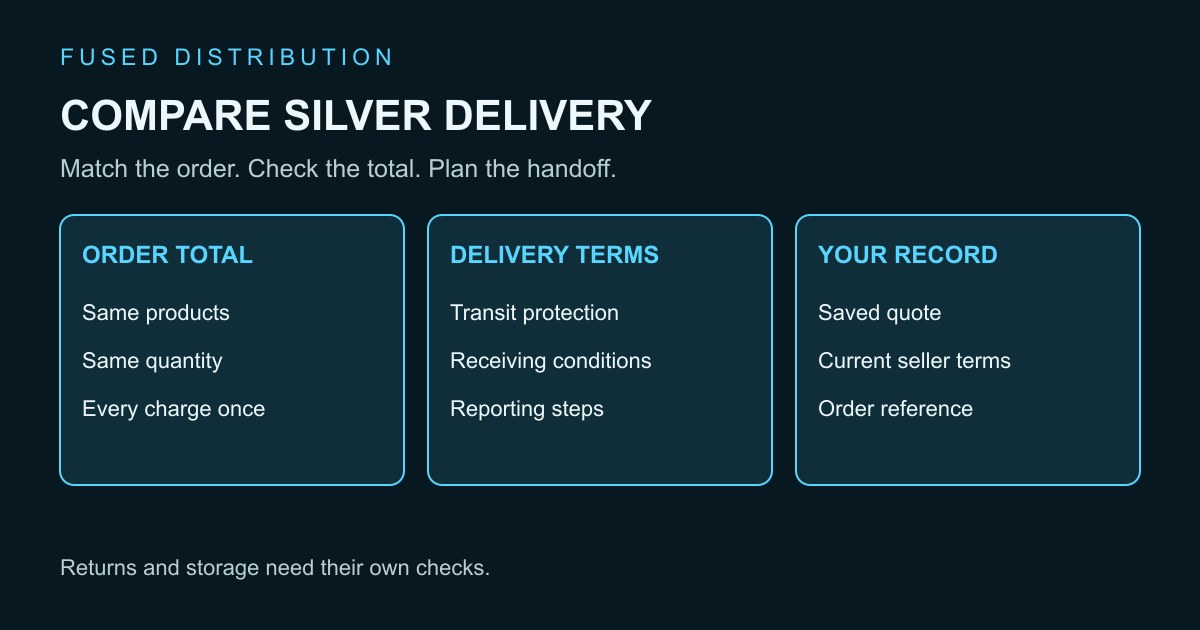
The shipping charge is only one part of a silver order comparison. Start with the same products, quantity, payment method and destination, then compare the complete checkout total and the delivery terms. A small difference in the shipping line is not useful if the two quotes describe different orders or different receiving arrangements.
This guide is for buying physical silver from a dealer for delivery to you. Sending silver to a buyer, returning an order and insuring silver in storage are separate situations. Do not assume the terms for one direction of travel cover the others.
Same product and quantity
Every charge once
Current receiving terms
Compare the Same Order First
Write down exactly what you intend to purchase before opening several carts. Use the product name, condition, quantity and stated silver content. A comparison between different coins or bar sizes may reflect product premiums rather than a difference in delivery costs.
Keep the payment method and delivery address consistent. Record the time of each quote because an online cart can change before an order is placed. Treat an incomplete checkout estimate as provisional until the seller has calculated the charges for your actual destination and selected options.
Your comparison record should contain the product subtotal, shipping charge, optional services, any separately charged transit protection, taxes shown at checkout, and final amount due. If a charge is already included in another line, do not add it again. Mark an unknown amount as unknown rather than entering zero.
Use the Final Checkout Total
Add the itemized charges once and check that they reconcile to the displayed total. Keep a screenshot or saved quote for your own comparison, while avoiding unnecessary sharing of your address or payment information.
A useful worksheet has one row per seller and one column per cost category. Include a notes column for differences that a number cannot describe, such as the available delivery method or a signature requirement. If a seller shows one combined shipping and handling amount, record it as a combined charge rather than inventing an insurance allocation.
A free shipping offer should be evaluated with the whole order. If you add products to reach a threshold, compare the larger final payment and additional quantity with the purchase you actually intended. Spending more to remove one fee is still a change in your order. Recheck eligibility in the current checkout rather than relying on an older advertisement or comparison article.
Read What Transit Protection Actually Covers
Find the dealer's current shipping policy and order terms before assuming that the word insured answers every question. Record who handles a missing or damaged shipment, what evidence the seller asks for, how to report a problem, and the stated point at which transit coverage ends.
For example, JM Bullion's shipping policy describes coverage for packages in transit and says it ends when a carrier obtains a signature or completes delivery confirmation. That policy is a reason to examine the handoff carefully, not a promise that every possible delivery dispute is covered.
APMEX's ordering policy describes conditions involving instructions to leave a package unattended or with another recipient. Check the exact current terms before changing delivery instructions. A convenient carrier option should not be assumed to preserve the seller's protections.
These are examples of seller policies, not a ranking of dealers or a summary of every exclusion. Read the terms applicable to your order and ask the seller to clarify any receiving arrangement that does not fit them. Save the response with the order records.
Separate Payment, Dispatch and Transit Time
An advertised carrier service describes only part of the journey. Ask when the order can be dispatched after the selected payment method clears and whether the product is in stock. Record a dispatch estimate separately from an estimated transit time.
Use those dates to decide whether you can receive the shipment under the seller's conditions. Faster transport is not automatically useful if nobody can accept the package when it arrives. If you need a particular delivery arrangement, establish that before ordering rather than improvising after dispatch.
Do not describe an estimate as a guaranteed arrival date unless the seller explicitly offers that guarantee for your order. Keep any cost for an optional service in the comparison worksheet, together with the actual service it buys.
Make a Receiving and Problem Reporting Plan
Before paying, confirm the destination, recipient and contact details. Find the order support channel and the instructions for a missing, damaged or apparently tampered shipment. Record the applicable reporting deadline from the current seller policy. Do not assume all dealers use the same deadline.
Follow the seller's instructions if there is a problem. Preserve order confirmations, tracking information and relevant packaging or photographs as directed. Describe what you actually observed and when, rather than turning a tracking status into an assumption about what happened.
If the policy is unclear, ask a specific question before purchase: does this proposed delivery arrangement meet your terms, and what should I do if the carrier reports delivery but I cannot locate the package? Keep the answer with the comparison so it remains connected to the transaction you evaluated.
Keep Returns and Storage Separate
Your outgoing shipment may have different terms from the dealer's delivery to you. If a return becomes necessary, obtain the seller's instructions before selecting a label or carrier service. Do not assume an independently purchased service has the same protection as the seller's approved return process.
Likewise, delivery coverage does not establish protection for metal after you receive it. Consider storage arrangements separately and check any relevant policy directly. This comparison does not calculate storage insurance premiums or make claims about what a personal insurance contract covers.
The final decision should be based on a complete order total and a receiving process you understand. Keep the quote, terms and support instructions together. A clear comparison shows both what you will pay and what you need to do when the silver arrives.
For related planning, see how to compare silver premiums across dealers and the silver storage guide.
Related
- How to compare silver premiums across dealers
- Where to buy silver online safely
- How to store silver without losing it
Read next: Compare silver premiums across dealers