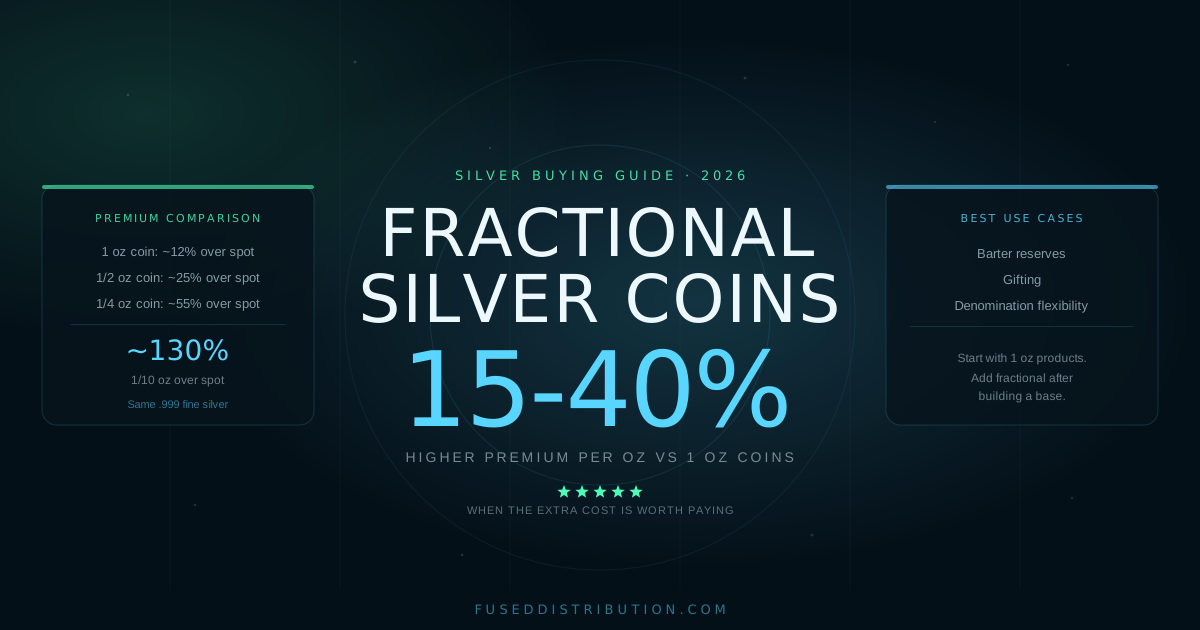
A 1/10 oz silver coin and a 1 oz silver coin are both .999 fine silver. But you pay significantly more per ounce for the smaller coin. That gap is the fractional premium, and understanding it tells you exactly when fractional coins are worth buying and when they're not.
Most dealers charge $3-4 over spot for a standard 1 oz American Silver Eagle. For a 1/10 oz version of the same coin, the premium per ounce runs $25-40 or more depending on the dealer. You're not paying for better silver. You're paying for the smaller denomination.
That premium isn't always a bad deal. Fractional coins serve real purposes that standard 1 oz coins can't. This guide covers the premium math, which sizes exist, what each is actually useful for, and how to decide whether fractional coins belong in your stack.
Key Takeaways
- Fractional silver coins carry 15-40% higher premiums per ounce than 1 oz coins due to fixed minting costs spread over less silver content
- The most practical fractional sizes are 1/10 oz, 1/4 oz, and 1/2 oz, each suited to different use cases
- Fractional coins make the most sense for barter reserves, gifting, and diversifying an existing position, not as a starting purchase
- New buyers are better served starting with 1 oz rounds or coins to minimize premium cost before adding fractional sizes
What Is a Fractional Silver Coin?
A fractional silver coin is any silver coin that contains less than one troy ounce of silver. The term covers government-minted coins like 1/10 oz American Silver Eagles as well as private mint rounds in the same small denominations.
They're made from the same .999 fine silver as standard 1 oz products. The silver content is proportionally smaller. A 1/10 oz coin contains exactly one-tenth of a troy ounce, or about 3.1 grams of silver.
Common fractional sizes:
- 1/10 oz — smallest common size, fits in a standard capsule, roughly the size of a large US dime
- 1/4 oz — mid-size, popular for gifting and barter flexibility
- 1/2 oz — closest to a full ounce in feel and look, lower premium than smaller fractions
- 1/4 oz gold fractionals — the term also applies to fractional gold, though silver fractionals are more accessible at current prices
Silver coins at standard 1 oz are the most common and most efficient form of bullion. If you're new to buying silver, the first-time silver buyer guide covers the recommended starting point before exploring fractional options.
The Premium Math: Why Fractional Costs More Per Ounce
Minting a coin costs roughly the same regardless of how much silver is in it. Die creation, blanking, striking, quality control, packaging, and shipping are fixed costs per unit. When those costs are distributed over a full troy ounce, they add a few dollars per coin. When they're distributed over 1/10 oz, they add the same dollar amount but over ten times less silver.
Here's what that looks like in practice with spot silver at $32 per ounce:
Silver value: $32.00
Dealer price: ~$36.00
Premium: $4.00 per oz (12.5%)
1/2 oz American Silver Eagle
Silver value: $16.00
Dealer price: ~$20.00
Premium: $4.00 on 0.5 oz = $8.00/oz equivalent
Premium: 25% over spot per oz
1/10 oz American Silver Eagle
Silver value: $3.20
Dealer price: ~$6.50-$8.00
Premium: $3.30-$4.80 on 0.1 oz = $33-$48/oz equivalent
Premium: 100-150% over spot per oz
That's not a typo. A 1/10 oz silver coin can cost twice the spot price of silver per ounce. You're not being overcharged. That's what minting costs look like at small denominations.
How Premiums Compare Across Fractional Sizes
Premiums decrease as coin size increases. The 1/2 oz occupies a reasonable middle ground. The 1/10 oz carries the highest premium of any common silver product.
This comparison assumes you're buying recognized mint products. Generic fractional rounds from private mints carry somewhat lower premiums but also carry lower liquidity when you sell. American Silver Eagles command the most recognition and sell the easiest, but you pay for that advantage at every size.
When Fractional Silver Coins Are Actually Worth It
The premium is real. There are still situations where fractional silver is the right choice.
Barter reserves. A 1 oz silver coin is worth about $32 at today's prices. If you ever need to use silver in a direct exchange, a $32 minimum denomination creates problems. You can't make change on silver. Fractional coins solve that. A 1/10 oz coin at $3.20 in silver value covers a real range of small transactions. Holding 10-20 fractional coins as a barter reserve is a different purpose than building a position, and the premium cost is part of that utility.
Gifts. A 1/10 oz American Silver Eagle in its original US Mint capsule makes a recognizable, tangible gift that a non-collector can appreciate. The recipient gets real silver, a familiar design, and something that lasts. The $6-8 cost is appropriate for the size and occasion. The premium doesn't matter here because you're buying utility, not silver by the ounce.
Diversifying denominations. Once you've built a base position in 1 oz coins and rounds, adding a layer of fractional coins gives you more flexible liquidation options. You can sell or trade smaller amounts without breaking into your 1 oz holdings. This is a secondary consideration, not a starting point.
Dollar-cost averaging at lower entry points. If you have $25 to put into silver this week and the cheapest 1 oz coin costs $36, fractional coins let you participate at a smaller dollar amount. You pay a higher premium, but you're still buying real silver. The dollar-cost averaging approach works at any denomination.
When to Skip Fractional and Buy Full Ounces Instead
If your primary goal is to accumulate silver by weight as efficiently as possible, fractional coins are the wrong choice. You're paying 15-130% more per ounce than you would for a 1 oz round.
New buyers should always start with 1 oz products. A 1 oz silver round from a reputable private mint carries a premium of $1.50-$3.00 over spot, lower than government coins and far lower than fractional sizes. That gap compounds over time. If you buy 10 oz per month and you're paying a 12% premium instead of 120%, the difference over a year is significant.
The silver coins vs rounds vs bars comparison breaks down which 1 oz formats make the most sense at different budget levels and goals.
Fractional silver is a specialized purchase that makes sense after you've established a base position. It's not where most buyers should start.
Buying Fractional Silver: What to Look For
If you decide fractional coins fit your purposes, a few buying considerations apply.
Stick to recognized government mints. American Silver Eagle fractionals (US Mint), Maple Leaf fractionals (Royal Canadian Mint), and Britannia fractionals (Royal Mint UK) are the most liquid and most widely recognized. They'll sell the easiest when you need to liquidate.
Buy in original packaging. Fractional coins come in individual capsules or mint tubes. Buying encapsulated coins protects condition and maintains the premium you paid. A scratched or handled fractional coin loses more relative value than a larger coin would.
Compare per-ounce cost, not per-coin cost. A 1/10 oz coin at $7 looks cheap. At $70/oz equivalent, it's not. Always convert the price to cost per troy ounce before comparing products. Most dealer sites show this calculation, but do it yourself to confirm.
Watch for collector premiums on low-mintage issues. Some fractional coins carry an additional premium because of limited mintage or special designs. Unless you're buying for numismatic reasons, stick to standard annual issue coins where supply is adequate and premiums are predictable.
Frequently Asked Questions
Sources
- US Mint, American Silver Eagle product page, retrieved 2026-06-10, usmint.gov/coins/coin-medal-programs/american-eagle/silver
- APMEX, Fractional Silver Coins pricing guide, retrieved 2026-06-10, apmex.com/category/23-fractional-silver-coins
- JM Bullion, Silver coin premium comparison, retrieved 2026-06-10, jmbullion.com/silver/silver-coins/
- Kitco, Silver spot price data, retrieved 2026-06-10, kitco.com/charts/livesilver.html