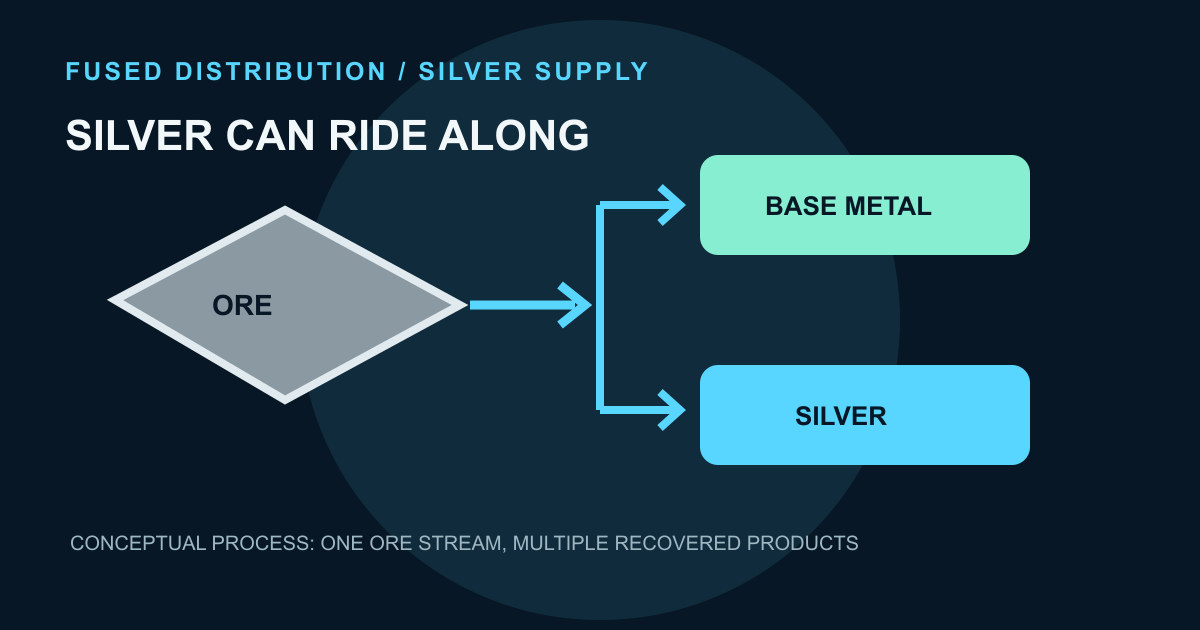
Ore contains multiple metals → Processing separates outputs
Another metal is the main product → Silver is also recovered
Silver mine supply includes metal recovered alongside other products because many deposits contain more than one economically recoverable metal. A mine may focus on copper, lead, zinc or gold and also recover silver during processing. That means silver output can depend on decisions made across a broader operation, not only on mines whose main product is silver.
The U.S. Geological Survey’s 2026 Mineral Commodity Summary reports that U.S. silver came from primary silver mines and as a byproduct or coproduct from base and precious metal operations. This describes U.S. production for the report’s stated period. It is not a global percentage or a forecast. The guide below explains the distinction without treating mine output as a direct signal of price.
Separate primary, byproduct and coproduct output
A primary silver mine focuses on silver as a main product. Byproduct silver is recovered while producing another metal that is the operation’s main target. Coproducts are multiple products recovered as part of the operation. These labels describe the relationship between outputs; they do not by themselves show how much silver a mine contains or earns.
The wording can vary between reports and operations. Check how a source defines production before comparing its categories. Our guide to reading a USGS silver commodity summary explains why the reporting period, units and table notes matter.
Follow the ore through processing
Ore can contain several minerals. Mining and processing separate material into products or concentrates, and later stages may recover silver from streams associated with another metal. The exact route depends on the deposit and facility. A headline about a copper or zinc operation does not establish how much silver it recovered.
This is why output descriptions should name the measured stage. Mine production, concentrate output, refined metal and recycled material are not interchangeable measures. The industrial scrap recycling guide covers a different input stream and shows why the material basis should stay explicit.
Understand what can affect supply
When an operation changes production, its decisions may reflect its main product, operating conditions, ore characteristics, processing capacity and economics across the site. Silver recovery may be one factor among several. It is not safe to assume the operator can quickly increase silver output just because a market price changes.
For the same reason, a byproduct share is not a simple measure of future availability. Read the source date, geography, definitions and whether the figure is estimated or measured. Do not turn a production fact into an investment recommendation or a guaranteed market outcome.
Compare production reports carefully
Compare like measures for the same period and region. Keep metric tons separate from troy ounces, mine output separate from refinery output, and contained silver separate from refined metal where the source makes that distinction. Check footnotes for coproduction, byproduct or recycling categories before adding figures.
If a report changes its method, preserve the earlier definition rather than joining unlike totals into one trend. A short note of source, date, unit and scope makes later updates easier to verify. The USGS summary is a useful starting point for its stated U.S. data, not a complete account of every mine worldwide.
Sources
- USGS Mineral Commodity Summaries 2026: Silver: U.S. mine production context and domestic reporting categories for 2025. Figures are not presented as a global share or forecast here.
- USGS Statistical Compendium: Silver: historical context on silver recovery from copper, gold, lead and zinc operations; not used as a current production estimate.
Related
Does byproduct production make silver supply harder to estimate, or does it add useful flexibility?
Read next: Read a USGS silver commodity summary.