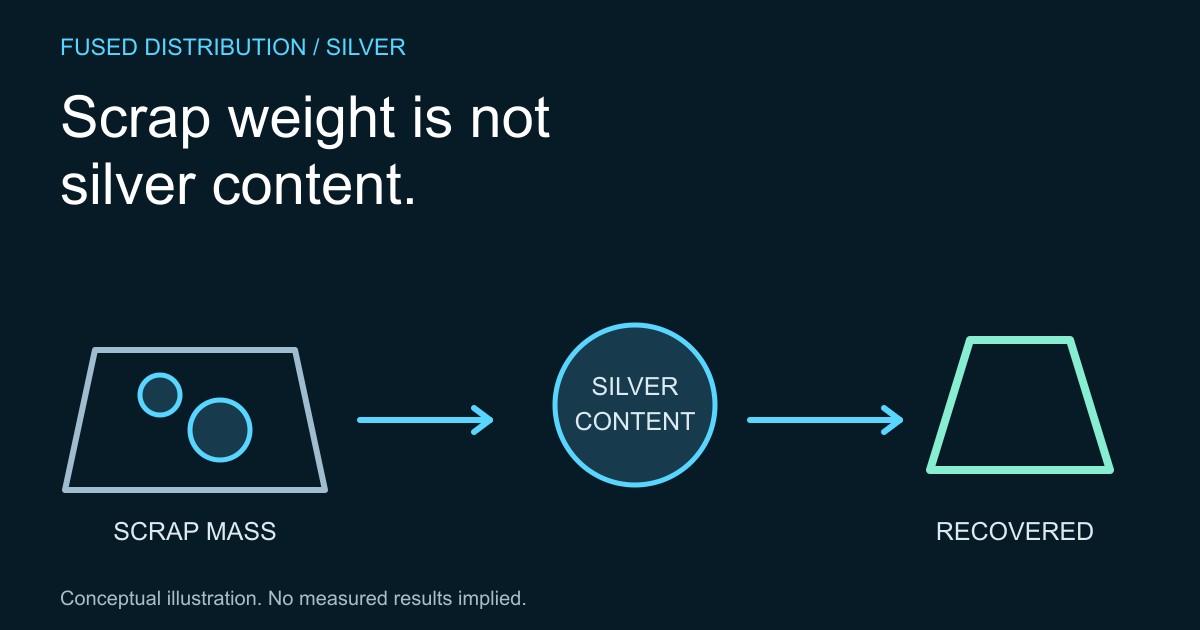
Identify the industrial scrap being discussed → Separate scrap mass from silver content
Follow the recovery boundary in the report → Keep recycling claims within the evidence
Silver recycling from industrial scrap concerns recovering silver from material associated with industrial activity. To understand a claim about that recycling, identify the material, the silver it contains and the quantity actually recovered. A weight of collected scrap is not automatically a weight of silver.
The USGS study of silver recycling in the United States in 2000 identifies photographic wastes, spent catalysts and electronic scrap among recycling sources. That historical study provides examples, not a current ranking or a recovery estimate for your material. This article explains how to read a recycling claim without turning an old example into a present day forecast.
Identify the industrial scrap being discussed
Write down the material category used by the source. Keep a distinction between a specific waste stream and a broad label such as electronics. If the source gives a facility, process or reporting period, preserve that context. A useful record explains what was included rather than attaching a silver label to an unidentified pile of material.
Our explanation of silver catalysts in manufacturing shows why a manufacturing role needs its own description. It does not establish the composition of a particular spent catalyst. For a material assessment, use the relevant documentation and qualified services instead of treating a general industrial article as an assay.
Separate scrap mass from silver content
Give gross material weight, stated silver content and recovered silver separate fields. Record units beside each quantity. If a number is estimated, keep that label. Without those distinctions, a recycling story can accidentally compare the weight entering a process with the amount of one metal leaving it.
Avoid calculating a recoverable quantity from a product photograph or a generic internet example. When reviewing a supplier statement, ask what was measured, what was assumed and which sample or shipment the result describes. A missing definition should remain an open question. It should not be filled with an attractive estimate simply to complete a chart.
Follow the recovery boundary in the report
Look for whether a report describes material collected, processed or recovered. Note the geography and period as well as the stage. The same material may appear in records at more than one stage, so adding every listed quantity can create a misleading total. Read the categories before doing arithmetic.
The distinction between mine and refined production illustrates a similar accounting problem. A refinery output measure and an input measure answer different questions. In recycling records, preserve the source definitions and check whether a reported figure is a component or a total before combining it with another entry.
Keep recycling claims within the evidence
Save the edition, URL and date of the report with your notes. If you cite the USGS study above, make its historical period visible. Do not describe its material mix or totals as current conditions. Use a contemporary, clearly defined source when your question concerns today's activity, and document any differences between the datasets.
For a proposed recycling service, request terms specific to the material and the job. This reading method does not provide a processing recipe, establish a payment amount or predict silver prices. Its purpose is to make the claim auditable: what material was involved, what quantity was measured and what result the source actually supports.
Sources
- USGS: silver recycling in the United States in 2000: historical examples of recycling sources. The report reading method is original guidance; historical totals are not presented as current data.
Related
Read next: Separate mine and refinery measures.