Are you wondering how a seemingly small group of investors could dramatically influence the price of silver in 1980? You’re not alone. The “Hunt Brothers Silver Squeeze” remains one of the most fascinating and dramatic events in precious metals history. At Fused Distribution, we stock real silver, and we believe understanding events like this is crucial for any serious investor. We skip the dealer markup games and confusing premiums. You get real silver, no pressure, no hype. Reserve your space at our reserve page. This post will break down what happened, what it means for you today, and how to build a solid silver buying plan - a plan that prioritizes clear action over chasing speculative stories.

History of the 1980 Squeeze
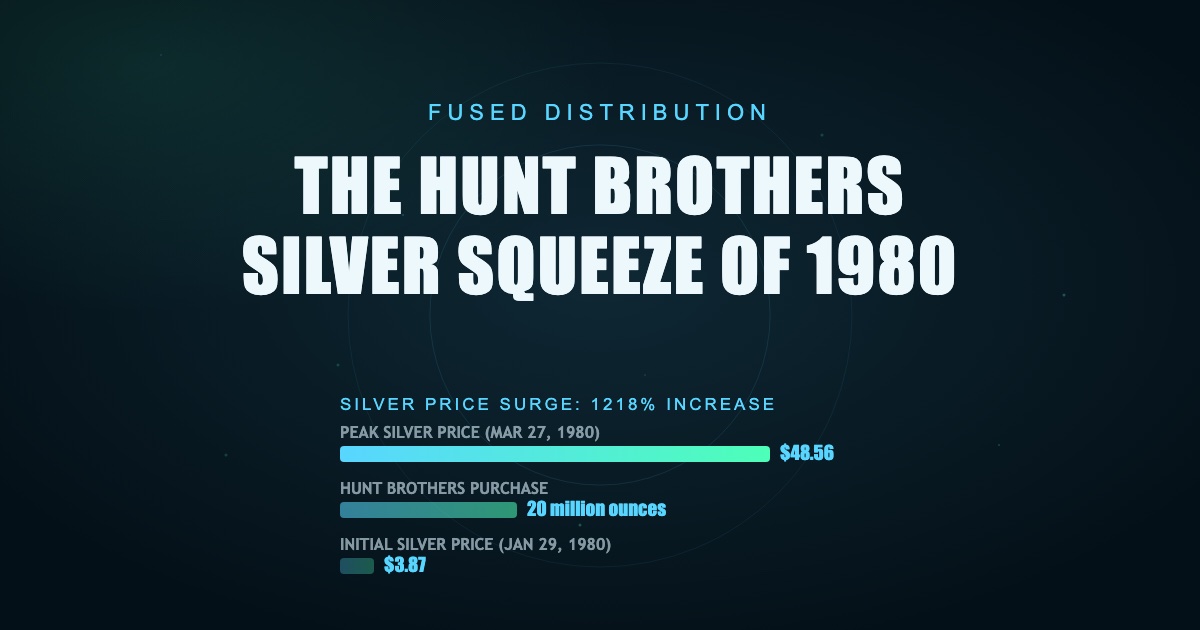
The year 1980 was a period of significant economic shifts, and the silver market was caught in the crosshairs. Silver, often considered a safe-haven asset, had been trading relatively low for years, hovering around $3 per ounce. However, in early 1980, T.J. Martineau, a commodities trader, began to publicly assert that the U.S. Government was secretly accumulating massive amounts of silver to back up the nation’s gold reserves. This claim, fueled by anecdotal evidence and a growing belief in a potential silver shortage, triggered a massive buying frenzy. The Hunt Brothers, a powerful family of investors, jumped on this bandwagon, initiating a massive, coordinated silver purchase. They began buying over 20 million ounces of silver in a matter of weeks. This unprecedented buying pressure quickly drove the price of silver skyward. The price rose from $3.87 per ounce on January 29, 1980, to a peak of $48.56 per ounce on March 27, 1980 - a staggering 1,218% increase. This rapid escalation caught many investors completely off guard. The market, accustomed to slower, more predictable price movements, simply wasn’t prepared for such a dramatic shift. The Hunt Brothers’ actions, combined with the growing belief in a silver shortage, created a self-fulfilling prophecy. The more they bought, the higher the price went, and the more convinced others became that silver was destined to rise even further.
What the 1980 Squeeze Actually Revealed About Silver
The 1980 event wasn’t about predicting the future; it was about revealing fundamental market dynamics. The rapid price movement demonstrated the powerful influence of supply and demand. The Hunt Brothers’ buying spree dramatically reduced the available supply of silver, creating artificial scarcity. This, coupled with the growing speculative demand, pushed the price far beyond what many considered a rational level. The volatility showcased that market shifts don’t always follow predictable patterns. They don’t adhere to complex theories or forecasts. Instead, they’re often driven by concentrated buying pressure and investor psychology. The event highlighted the importance of identifying real price action - the actual movement of the market - rather than getting caught up in the noise of rumors and speculation. It proved that a clear buying plan, based on fundamental analysis and a willingness to act decisively, is far more valuable than trying to predict the next big move. The Hunt Brothers’ strategy, while ultimately unsustainable, demonstrated the potential impact of concentrated investment.
Applying Squeeze Lessons to Your Current Silver Buying
Looking at the 1980 silver squeeze today, you’ll notice striking parallels to the current market. Sharp price movements are occurring again, driven by factors like inflation, geopolitical uncertainty, and renewed interest in precious metals. The Hunt Brothers’ buying frenzy highlights the importance of understanding supply and demand dynamics - a principle that remains fundamentally unchanged. Market shifts happen regardless of the theories you subscribe to. You need a clear buying plan. Focus on actual price action. Ignore the noise. Consider this: during the 1980 squeeze, the price of silver rose from $3 to $48 in just over two months. While the current market isn’t experiencing such an extreme surge, the underlying principles remain the same. Don’t chase old events. Don’t try to predict the next move. Build a clear buying strategy instead. Know what you are buying. That’s the only thing that matters. A disciplined approach, focused on identifying undervalued silver and building a long-term position, is far more likely to yield positive results than attempting to time the market based on historical events.
Choosing a Clear Path: Avoiding Old Market Confusion
Many investors feel overwhelmed by the current market, bombarded with conflicting information and speculative predictions. The 1980 event serves as a powerful reminder that much of the information circulating isn’t based on sound analysis. You see big movements in the news, fueled by social media and online forums. You hear theories about future prices, often based on limited data and emotional reactions. This noise makes it incredibly difficult to discern genuine opportunities from fleeting trends. The Hunt Brothers’ success was partly due to their ability to cut through the noise and focus on their own strategy. They weren’t swayed by the speculative frenzy; they simply executed their plan. The key is to ignore the speculation and focus on your own, well-defined investment strategy. Don’t get caught up in the hype. Don’t let fear or greed drive your decisions. A clear plan, based on your own research and risk tolerance, is your best defense against market volatility. For more on this, see Silver Standard Vs Gold Standard Explained.
Your Straightforward Path to Silver Investment
You want a physical silver reserve - a tangible asset you can hold and control. You need a clear path to building that reserve. We cut out the dealer markup games and confusing premiums. Dealers don’t play games. They push premiums. You don’t need to guess. You need a plan. The 1980 event showed silver moves. Prices shifted fast then. This showed you need to see supply and demand. Market shifts happen. They don’t follow one specific story. You watch for real price action. You look past the noise. Consider this: during the peak of the 1980 squeeze, the market capitalization of the New York Stock Exchange (NYSE) was approximately $1.2 trillion. This illustrates the scale of the economic activity surrounding the silver market at the time - and the potential impact of even a relatively small shift in its price. The Hunt Brothers’ strategy, while ultimately unsustainable, demonstrated the potential impact of concentrated investment. Don’t chase old events. Don't try to predict the next move. Build a clear buying strategy instead. Know what you are buying. That’s the only thing that matters.
Key Stats from the 1980 Silver Squeeze
Here are some key statistics from the 1980 silver squeeze that illustrate the magnitude of the event:
- Initial Silver Price (Jan 29, 1980): $3.87 per ounce
- Peak Silver Price (Mar 27, 1980): $48.56 per ounce - representing a 1,218% increase
- Total Silver Purchased by the Hunt Brothers: Over 20 million ounces
- NYSE Market Capitalization (1980): Approximately $1.2 trillion - demonstrating the overall economic significance of the silver market at the time
Stop Guessing About Premiums. Reserve Your Silver Straightforwardly.
At Fused Distribution, we believe in transparency and straightforward pricing. We stock real silver, no dealer markup games, no confusing premiums. You get real silver, no pressure, no hype. Reserve your space at our reserve page. Don’t let the complexities of the market intimidate you. Building a silver reserve doesn’t have to be overwhelming. By focusing on a clear buying plan and prioritizing real silver, you can navigate the market with confidence and achieve your investment goals. Let us help you build your physical silver reserve today.
Related
- How Inflation Erodes Purchasing Power And Silver Protects It
- Silver Standard Vs Gold Standard Explained
- Why Silver Was Used As Currency For 5000 Years
Read next: How Inflation Erodes Purchasing Power And Silver Protects It