You want to build a physical silver reserve without the dealer markup games. Fused Distribution is the straightforward way to do that. You skip the confusing premiums and the pressure tactics. We focus on clear pricing and simple steps. Reserve your space today at our reserve page.
Understand the Real Cost Basis
Calculating your true cost of silver is the first, and arguably most crucial, step to maximizing your profits when selling. Most buyers operate on a premium, adding a percentage above the spot price. But that premium isn’t always what it seems. We stock a wide variety of silver bullion, from American Eagles to Canadian Maple Leafs, and we recommend a methodical approach to ensure you’re getting the best possible return. Don't just accept the first offer - understand where the money is really going.
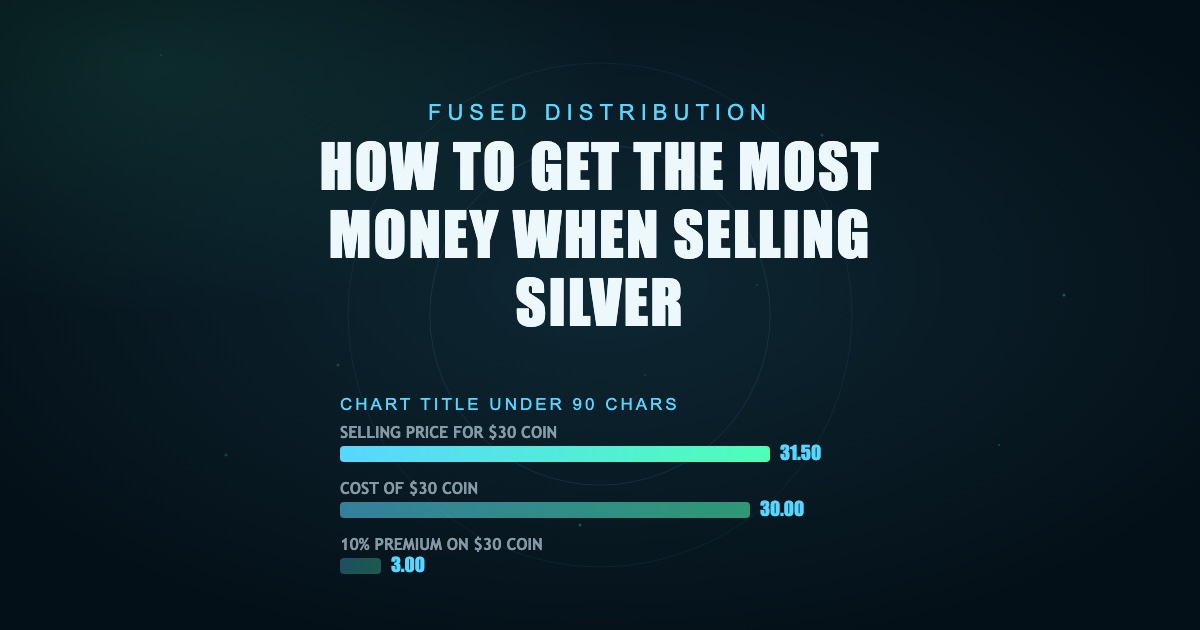
Let’s break down how to determine your cost basis. First, meticulously record every purchase. This includes the spot price at the time of purchase, any shipping fees, and any transaction costs. This gives you a baseline. Then, examine the premium structure offered by different buyers. A premium is the amount added to the spot price to account for fabrication, distribution, and dealer profit. For example, a premium of 5% on a $30 per ounce silver coin means you’ll receive $31.50 per ounce. However, that 5% might be inflated - it could be higher than the actual cost of producing and distributing the coin. Compare that premium to the current market value. If the premium is significantly higher than the spot price, you’re paying too much. You need to know the real cost. Consider this: a coin purchased for $30 with a 10% premium would have a total cost of $33. Selling it for $31 means you’ve lost $2. A lower premium would have resulted in a profit.
Also, compare your selling methods. Selling directly to a private buyer might offer a slightly higher price than selling through a dealer, but it requires more effort and carries more risk. Dealers offer convenience and security, but they also take a cut. Track your actual profit after everything - including fees and shipping. That is the number you need to focus on. Our system provides transparent pricing, eliminating the guesswork and potential for hidden fees.
Calculate Your Net Proceeds
Calculating your net proceeds - the actual amount you receive after all expenses - is just as important as understanding your cost basis. It’s not enough to simply know the price you paid; you need to factor in all the associated costs to determine your true profit. Let’s revisit the example above. If you purchased a coin for $30 and sold it for $31, your gross profit is $1. However, if you paid $33 for the coin and sold it for $31, your gross profit is only $2. This difference is due to the premium you paid.
Premiums add to the price, but they don't always represent a fair value. Understand what that extra charge means. A premium of 5% on a $30 coin is $1.50. But is that $1.50 justified? It might be if the coin is rare or in pristine condition, but it’s unlikely for a common bullion coin. Compare how you sell. Direct sales can be more profitable, but they require more time and effort. Established channels offer convenience, but they also reduce your profit margin. Track your actual profit after all costs. That is the number that matters for your selling plan. We recommend carefully evaluating each option to find the best balance between profit and convenience.
Finally, don’t forget about storage. Once you’ve sold your silver, you need a secure place to store your cash. A simple savings account is a good starting point, but for larger amounts, consider a metal storage vault. Keep your funds secure after you get paid. A secure storage solution is just as important as the sale itself.
Avoiding Dealer Markup on Silver Sales
Dealer markups are a common frustration for silver sellers. They often inflate the price by adding a significant premium to the spot price, leaving you with less than you could have received. The key to avoiding this is to do your research and understand the dynamics at play.
First, figure out your true cost. Find the exact price you paid for your silver. This is your starting point. You need this number for everything else. Don’t just look at the sticker price. Calculate the real cost of your metal. This includes the spot price, shipping, and any transaction fees.
Next, look closely at the premium structure. See what the premium actually costs you. This helps you spot inflated selling fees. Don’t let confusing terms hide extra expenses. Understand the difference between the metal’s value and the selling costs. A common premium for bullion coins is 5-10%, but it can vary depending on the coin and the dealer. Always ask for a breakdown of the costs before accepting an offer.
Compare how you sell. See direct routes versus established channels. Figure out which route gives you the best net return. Track your actual profit after all expenses. That is the number that matters most. Direct sales, while requiring more effort, often offer the highest profit margins. However, established channels provide convenience and security.
When you sell, you need a safe place for your cash. Know the simplest way to secure your proceeds. Storage is a part of the plan. Consider a high-yield savings account or a metal storage vault to protect your investment.
Choosing the Right Path for Your Silver Sale
Choosing the right path for selling your silver is a critical decision that can significantly impact your profit. There's no one-size-fits-all answer; the best approach depends on your individual circumstances and goals.
First, figure out your true cost. Find the exact price you paid for your silver. This is your starting point. You need this number for everything else. Don’t just look at the sticker price. Calculate the real cost of your metal. Accurately determining your cost basis is the foundation for maximizing your returns.
Next, look at the premium structure. See what the premium actually costs you. This helps you spot inflated selling fees. Don’t let confusing terms hide extra expenses. Understand the difference between the metal’s value and the selling costs. A 5% premium on a $30 coin translates to $1.50, but a 10% premium is $3.00. The difference can be substantial.
Compare how you sell. See direct routes versus established channels. Check the potential net returns for each option. You need to see what you keep after everything. Track your actual profit. That is the number that matters most. Direct sales offer the potential for higher profits, but they require more time and effort. Dealers provide convenience and security, but they also take a cut.
Finally, plan for the cash. Know the safest way to hold your proceeds. Storage is as important as the sale itself. Don’t let that money get lost. A simple savings account is a good starting point, but for larger amounts, consider a metal storage vault.
Securing Your Proceeds Safely
Calculating your exact purchase price is the first step to securing your proceeds. Don't just look at the sticker price. Know what you actually paid for the silver. This number sets your baseline for everything else.
Understand the premium structure. See how premiums affect your final sale. This helps you see what the actual market value is. You can avoid paying too much for selling. Focus on the difference between cost and selling price.
Compare how you sell. Think about direct sales versus established channels. See which route gives you the best net return. Track your actual profit after all expenses. That is the number that matters for your plan.
Storage needs to be simple. Figure out the safest place for your cash. Keep your proceeds secure after the sale. Don’t let that money get lost.
Stop guessing about premiums. Reserve your silver straightforwardly at our reserve page now.
We stock a wide variety of silver bullion and coins, and we recommend a methodical approach to ensure you’re getting the best possible return. Reserve your space today at our reserve page and start building your silver reserve the smart way.
Related
- Selling Silver To A Dealer Vs Private Sale
- Best Places To Sell Silver Coins In 2026
- How To Sell Silver For The Best Price
Read next: Selling Silver To A Dealer Vs Private Sale