A dented parcel, torn carton or missing item can make it hard to describe what arrived. Build a clear record before the details fade. Keep the outside packaging, shipping label, inner wrapping and contents together, and record what you observe without guessing how the damage happened.
The next steps depend on the seller, carrier, service and any coverage that was purchased. A record helps you explain the issue; it does not establish that a claim is covered or will be paid. For bullion, ask how the carrier classifies the item and what proof of value and insurance it accepts before relying on a shipment policy.
Record a damaged silver package as it arrived
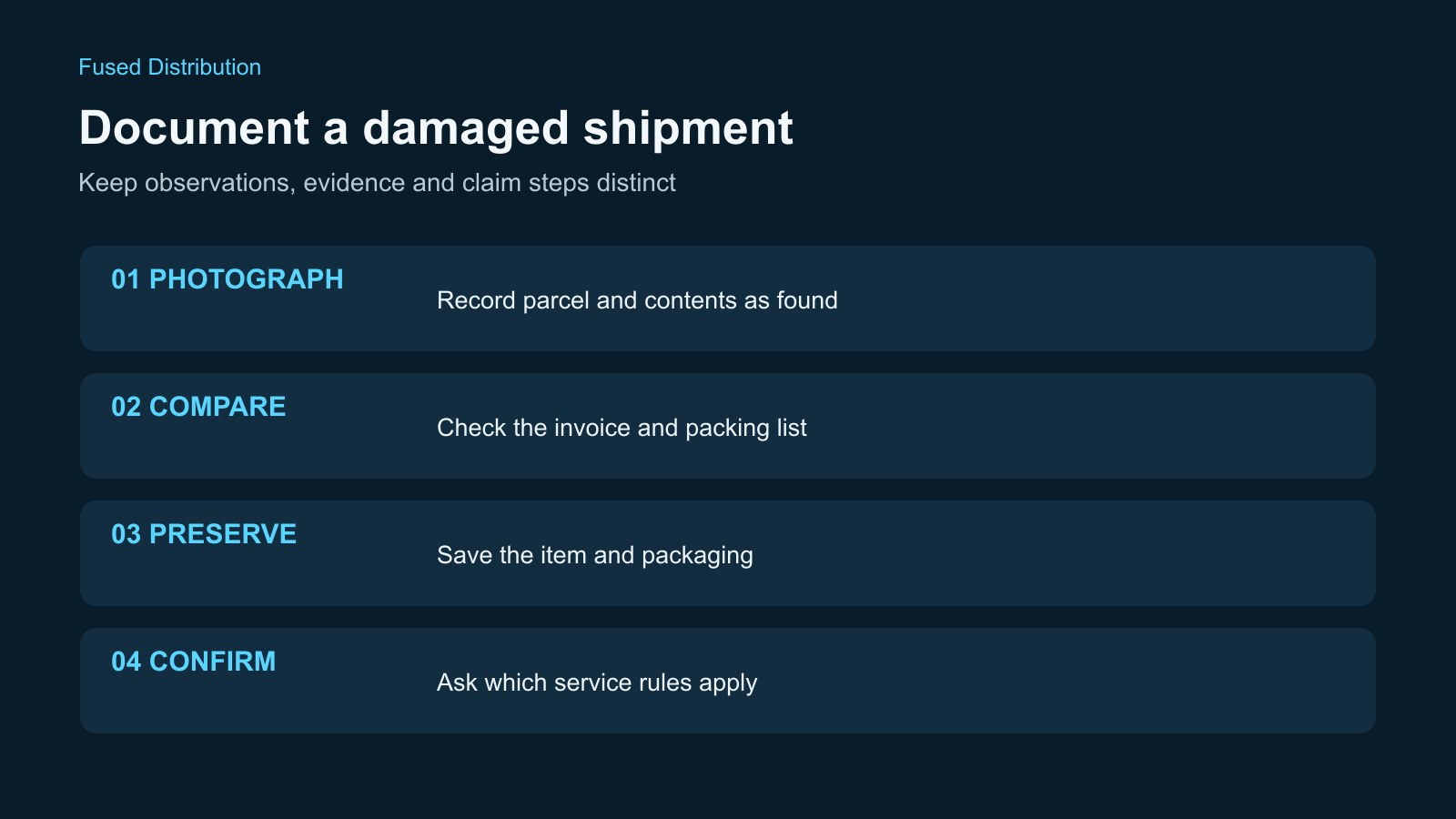
Photograph all sides of the unopened parcel if you can do so safely. Include the label, visible dents, punctures, tears, wet areas and any sign that tape or wrapping was disturbed. Take a wider image that shows the whole parcel and closer images of each affected area. Keep the original image files and note when they were taken.
If the package is already open, photograph the contents and the arrangement you found. Do not recreate the scene or describe an image as showing the unopened parcel. Write down who opened it and when, if you know. Keep the outer box, inner box, padding, tape, inserts and any pieces that came loose. Do not clean, polish, repair, discard or reship a damaged item while the seller or carrier may need to inspect it.
For a USPS domestic damage claim, the postal service says to retain the item and its packaging until the claim is resolved; it may request an inspection. Other carriers and seller policies can have different instructions, so ask the responsible party what to preserve before changing the package.
Compare the parcel with the order
Use the invoice, packing slip and tracking record to list each expected item. For every piece, record its product description, stated weight and purity from the seller's documents, quantity and whether it appears present. Describe visible condition in plain terms such as dented edge, split capsule or torn outer wrap. Do not infer silver content, authenticity, value or cause of damage from an appearance check.
If anything seems missing, say exactly what the documents list and what you received. Keep separate notes for a damaged product, missing contents and damaged packaging. They are different observations and may require different evidence. Do not estimate a loss as an established value when you have not confirmed the product or amount.
Make a dated evidence file
Create a folder or paper file with the order confirmation, paid invoice, packing slip, tracking history, shipping label, delivery notice, package photographs and your notes. Save the seller's shipping terms and the carrier service shown on the label. Record the date and time of delivery, inspection, opening, and each contact with the seller or carrier.
Keep a simple event log: who you contacted, which number or case reference they provided, what they asked you to do, and when you completed it. Preserve original email messages and uploaded files. If you take additional photographs later, label them with their actual date instead of presenting them as arrival day evidence.
The USPS domestic claims guide lists proof of value, proof of insurance and photographs of damage among the evidence that may be required for a claim. It also says claim timing depends on the mail service. Check the current requirements for the specific shipment rather than assuming another carrier uses the same process.
Contact the seller and carrier promptly
Read the seller's delivery and damage policy, then contact the seller using its published support channel. Share the order number and a concise description. Ask whether the seller or recipient should contact the carrier, what evidence is needed, and whether the package or contents must remain available for inspection. Keep the reply with the evidence file.
If a carrier process applies, open its current instructions and identify the deadline for the exact service and mailing date. Ask what documents prove the declared value, purchased coverage and damage. For bullion, ask how the carrier categorizes the contents and whether its terms impose a special limit or exclusion. A tracking number or a paid invoice alone does not show that coverage applies.
Do not promise yourself a claim payment or assume the seller and carrier will reach the same conclusion. If instructions conflict, ask the seller and carrier to clarify in writing who is handling the claim and who should retain the package. Follow the carrier's inspection directions and keep copies of what you submit.
Close the record only after the next step is clear
Add every response, inspection appointment, replacement shipment or resolution to the event log. If an item is returned or exchanged, keep the new tracking details separate from the original delivery record. If the issue remains open, write down who owns the next action and its due date.
For a future shipment, review the carrier's current rules for bullion, packaging, declared value and any coverage before the package leaves. Keep the order records and shipment terms together. The shipping and insurance comparison checklist helps organize service costs and stated conditions. For the receiving side, the silver delivery checklist covers a routine delivery review.
Related
Read next: Prepare a silver delivery checklist