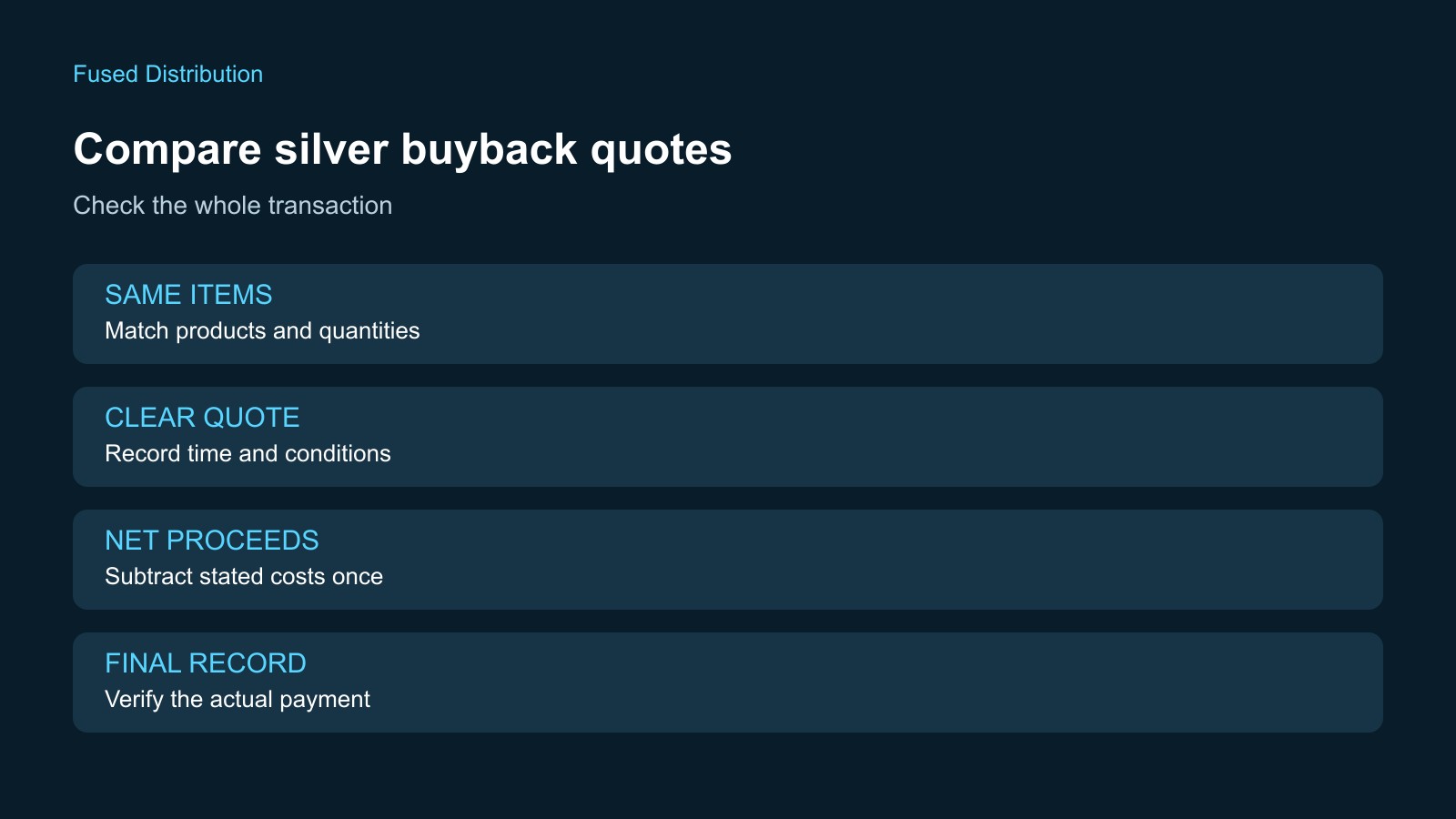
Compare silver buyback offers using the same items, a clear quote time and the amount you would receive after the stated transaction costs. The largest headline number is only one part of the decision. You also need to know when an offer becomes binding, how the buyer checks the shipment and when payment is expected.
This is a worksheet for comparing a sale you are considering. It does not tell you whether to sell, predict silver prices or identify a universally best buyer. Keep estimates separate from confirmed offers, and resolve missing terms before accepting a transaction.
Give each silver buyer the same inventory
Create one item list before requesting quotes. Include the product name, quantity, stated weight and purity, mint or refiner when known, and relevant packaging or condition details. Distinguish a coin from a privately produced round, and keep different products on separate lines. Do not describe an unidentified item as a particular branded product just to obtain a price.
Use the same list for each buyer. If one offer covers only part of it, label that difference instead of comparing it with a quote for the entire collection. Ask how the buyer handles items that are unlisted, damaged or different from the description. Photographs can help explain what you have, but do not assume a photograph replaces the buyer's inspection.
Your silver inventory record can provide the starting information. Share only the details needed for the quote. Keep unrelated account details and private storage information out of a general inquiry.
Record the quote and its conditions
For each response, save the buyer's identity, contact details, item list, gross offer, currency, quote time and expiry if provided. Ask whether the number is an indicative estimate, a price available to lock or an accepted transaction. Those stages should have different labels in your worksheet.
Buyer workflows are not interchangeable. JM Bullion's selling instructions describe selecting products, locking a sale, following shipping instructions and inspection before payment approval. APMEX's selling overview also describes locking pricing and a shipping process. Check the current terms for your specific offer rather than assuming a displayed figure completes every step.
When offers were collected at different times, ask for comparable refreshed estimates before choosing. Do not accept multiple binding sales for the same items as a way to compare prices. Read the acceptance and cancellation terms first, including any consequences of failing to deliver the agreed products.
Calculate proceeds after stated costs
Start with the gross amount the buyer offers for the listed items. Subtract each cost that you would pay to complete that sale, such as a shipping charge or a separately stated processing or payment fee. Include a charge once. If it is already deducted from the displayed payment, do not subtract it again.
A useful comparison line is:
Gross offer minus seller-paid transaction costs
Count each charge once. Keep unknown costs visible.
Label unknown costs as unknown. A blank fee field is not evidence of zero cost. Ask the buyer whether a supplied shipping label has a charge, what protection applies and which instructions you must follow. Keep questions about shipping separate from assumptions about insurance at home; our shipping comparison checklist explains why the handoff conditions matter.
This worksheet is a transaction comparison, not a calculation of after-tax profit. Your original purchase cost and any applicable tax treatment are separate questions. Keep the records needed to address those separately.
Use a simple example without treating it as a market quote
Suppose two hypothetical buyers quote for exactly the same items. Buyer A offers $1,000 and the seller pays $30 in stated sale costs. Buyer B offers $990 with $10 in stated sale costs. The estimated proceeds are $970 and $980 respectively. In this example, the smaller gross offer leaves $10 more after those costs.
These figures are invented arithmetic, not current silver prices or actual dealer offers. The example also assumes the quoted items are accepted and no other charges apply. If inspection changes either offer, recalculate before treating the comparison as final. A number with unresolved conditions should remain provisional.
Compare the practical handoff
Write down the required shipping method, packaging instructions, deadline and tracking process. Ask who handles a missing or damaged shipment and how to report it. Confirm the destination through the buyer's official channel before sending valuables. Keep the sale reference, instructions and proof of dispatch together.
Separate delivery time from inspection time, payment issue time and the time funds become available through the chosen payment method. Ask which event starts each estimate. Do not read a statement about issuing payment as a guarantee that money is immediately available to spend.
Find out what happens if the buyer disagrees with your description. Ask how a revised offer is communicated, whether you may reject it and who pays return costs. Record the answer for this transaction. The terms for an online bullion sale may differ from an appraisal process for jewelry or other material.
Choose with the unresolved items visible
Review the gross quote, estimated proceeds, conditions, shipment requirements and payment timing together. A higher provisional number may come with requirements you cannot meet. A lower number is not automatically preferable either. The point is to make the tradeoffs explicit for your actual items and circumstances.
Before accepting, check that the final confirmation still names the right products and quantities. Save the terms you accepted and reconcile the eventual payment with that confirmation. If there is a difference, use the transaction reference to ask for an explanation. Keep the comparison worksheet with your sale record so an estimate is never mistaken for the completed result.
Related
Read next: Silver inventory records.