The short answer: once a week, minimum. If you can publish two quality posts per week and sustain that pace without cutting corners, do it. If once a week is all you can hold consistently, that's the right starting point.

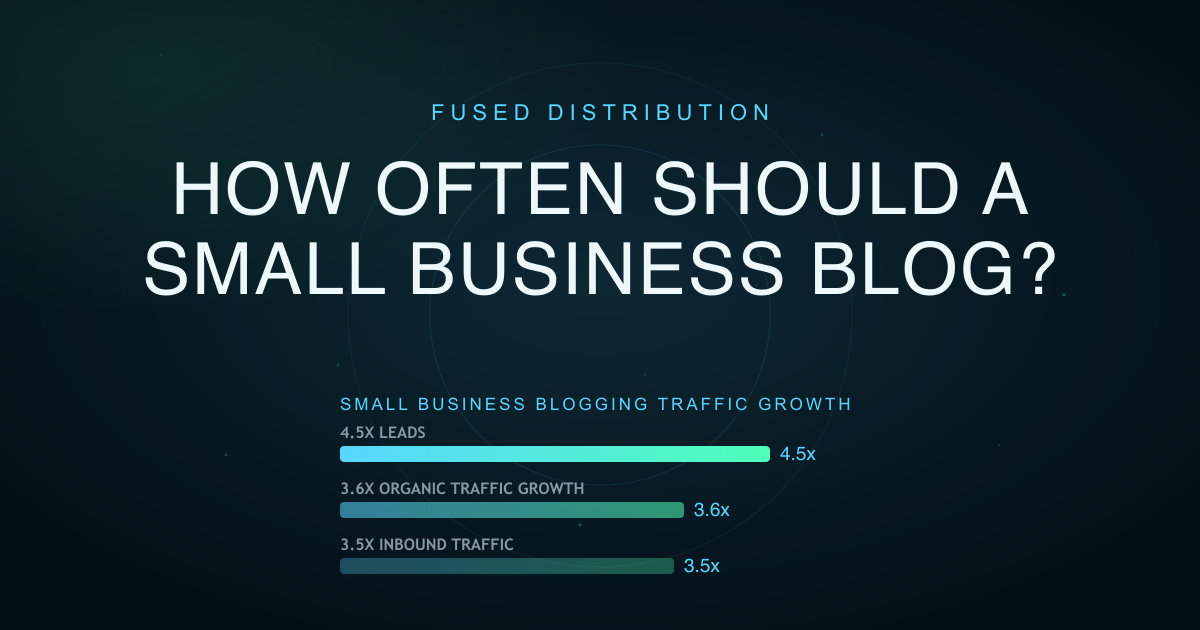
Publishing frequency is one of the strongest signals you can send to search engines. Companies that publish 16 or more blog posts per month get 3.5x more inbound traffic than companies publishing 0 to 4 posts per month (Source: HubSpot). That's not a marginal difference. It means a business posting four times a week is reaching three times as many potential customers as one posting once a week.
The catch most advice glosses over: consistency matters as much as volume. A post every Tuesday, without fail, outperforms five posts in one week followed by silence for a month. Google rewards steady signals, not noise.

Key Takeaways - Once per week is the practical floor; twice per week produces noticeably better results - Businesses publishing 16 or more posts monthly see 3.5x more traffic and 4.5x more leads (Source: HubSpot) - Consistency beats bursts, a reliable schedule outperforms sporadic high-volume publishing - Every post should target a specific question your customers are actually searching for right now
Why Your Posting Frequency Determines How Often You Get Found
Search engines index what they find when they crawl your site. If nothing new is there, there's little reason to return soon. Regular publishing keeps your site in Google's active queue and gives it more pages to rank across more searches.
Bloggers who publish multiple times per week are 76% more likely to report strong results than average publishers, with 37% calling their outcomes strong compared to just 21% of those posting less often (Source: Orbit Media 2025 Annual Blogger Survey). That gap compounds over time because frequent publishing does two things at once: it creates more ranking opportunities and it signals to search engines that your site is worth checking regularly.
For local businesses, this creates an opening that most owners miss. Your competitors are almost certainly not blogging consistently. A local HVAC company that publishes one useful post per week about common furnace problems in your city will outrank a larger competitor that posts twice a year. Frequency plus local relevance is a combination most small businesses haven't figured out yet. That's your advantage if you move on it now.
How Much Frequency Actually Moves the Needle
The data across multiple studies points to a clear pattern: the businesses seeing the biggest search gains are publishing at higher volumes than most small businesses attempt.
Companies publishing 16 or more blog posts per month generate 4.5x more leads than companies publishing 4 or fewer posts per month (Source: HubSpot). B2C organizations blogging 11 or more times per month generate 4x more leads than those blogging 4 to 5 times per month (Source: HubSpot). B2B SaaS websites publishing 9 or more blog posts per month saw 3.6x the organic traffic growth rate of those publishing just 1 to 4 posts monthly (Source: Stratabeat 2025 B2B SaaS SEO Performance Report).
The pattern is consistent: the jump in results happens somewhere around 8 to 11 posts per month for most business types.
That might sound out of reach. It is, for month one. What you take from those numbers is not that you need to write 16 posts this week. You take that the businesses winning in search are publishing at volume consistently, so you need a realistic plan to grow toward that over time, starting with what you can actually sustain.
The Right Blogging Schedule for Where You Are Right Now
If you're starting from zero, one post per week is a meaningful and achievable floor. That's 4 to 5 posts per month. At that pace, you're building a base that search engines can work with, without burning out in the first 30 days.
Once you've held one post per week for three months without missing, increase to two. Keep quality tight. Each post should answer one specific question your customers are actually searching for, not company news, not general industry commentary.
Think: "How much does it cost to replace a water heater in Phoenix?" or "What permits do I need to add a deck in Austin?" The specificity of the topic matters as much as the frequency. A post targeting a precise local question ranks faster and pulls in visitors who are close to hiring someone.
Here's a three-month ramp you can follow right now:
Month 1: Publish one post per week. Four total. Keep each post under 1,000 words. Focus on the four questions customers ask you most often before signing a contract.
Month 2: Hold the weekly schedule. If you missed a week in month one, fix consistency before adding volume. Log in to Google Search Console and check which posts are showing impressions in search results.
Month 3: If you're consistent, add a second weekly post. Use your Search Console data to identify posts that are close to ranking, then write supporting content around those topics.
What to Write About So You Never Run Out of Ideas
The most common reason small businesses fall off their posting schedule isn't time. It's topic exhaustion. Here's how to build a list that lasts six months without guessing.
Start with your sales process. Write down every question a customer has asked before signing a contract. Every single one of those is a blog post. "What's the difference between X and Y?" is a post. "How long does X take?" is a post. "Do I need a permit for X in our city?" is a post.
Then open Google and type the first few words of each question. Look at the autocomplete results and the "People also ask" section below the top results. These are real searches from real customers who are actively looking for someone like you. Pick the ones that match your services and write a direct, useful answer.
Before-and-after posts perform especially well for local service businesses. What problem did a customer bring you, what did you do about it, and what did the result look like? You don't need client names. These posts rank well because they match how people search when they're ready to hire: "plumber fixed low water pressure in older home" or "cost to remove tree stump near fence line."
How to Know Your Blogging Schedule Is Actually Working
Publishing is the foundation. Measuring what's working keeps you from spending time on posts that never produce results.
Check Google Search Console once a month. Look at which posts are earning impressions, meaning Google is surfacing them in results even when people aren't clicking yet. Posts with impressions but low click-through rates are your best candidates for updates: sharpen the title, tighten the opening paragraph, add a more specific answer to the question the post targets.
Track two numbers each month: total organic visitors from the blog and how many of those visitors contacted you. If visitors are growing but calls aren't, your posts may be attracting people who aren't ready to buy. Shift your topic selection toward buyer-intent searches, questions people ask right before they're ready to hire someone.
If a post earns zero impressions after 90 days, update it with more specific information or swap the topic entirely. Don't leave underperforming pages sitting without attention. Every page on your site contributes to your overall search signals.
Build the Habit First, Then Build the Volume
The most important thing you can do today is publish one post this week. Pick the single question your customers ask most often, write a clear and useful answer, and get it up.
One post per week for three months will do more for your search visibility than 20 posts published in a rush followed by six months of silence. Frequency matters. Consistency matters more. The businesses that rank in local search are almost always the ones that kept publishing when it felt like nobody was reading, because that's when the compounding quietly starts.
When you're ready to turn your blog into a system that runs without you managing every piece, we build and manage the whole operation for local businesses. Reach out through FusedDistribution.com and we'll show you exactly what it looks like for your market.
Related
- Blogging For Small Business Does It Work
- Tracking Phone Calls From Your Website How To
- Google Search Console For Small Business Explained
Read next: Blogging For Small Business Does It Work