Contains silver → Check the material description
Uses silver contacts → Identify the contact assembly
Suitable replacement → Check the exact equipment specification
Silver is used in some electrical contacts because it conducts electricity well and can be combined with other materials to suit a contact's working conditions. A contact is the place where conductive parts meet. Its job is different from that of a decorative silver surface or a bullion bar: it must work as part of a complete electrical component.
The useful question is not simply whether silver is a good conductor. It is why a designer selected a particular contact material for a particular switch, relay or connector. Material, geometry, operating conditions and the rest of the assembly matter together. This guide explains the distinction without treating a material property as a replacement specification.
Silver conductivity and the contact surface
The U.S. Geological Survey identifies pure silver as the metal with the highest electrical conductivity and lists electrical and electronic products among its industrial applications. That supports silver's relevance to electrical equipment; it does not establish that every electrical connection should use silver. See the USGS silver overview.
Separate the bulk material from the contact surface when reading a description. A component may contain silver at the working interface while relying on other material elsewhere. A reference to silver contacts does not, by itself, tell you the amount of silver, the composition of the entire part, or the component's electrical rating. Record those as separate questions rather than filling the gaps with assumptions.
Why contact materials differ
USGS technical reports describe electrical contacts made from fine silver, alloys and composite materials. The reports discuss choices intended to address wear, arcing and welding of contact surfaces in different applications. This is historical engineering context, not a list of currently approved substitutes for a device. The USGS lifecycle report is explicitly about silver in the United States in an earlier reporting period.
For a reader, the distinction matters whenever a label says only “silver.” Ask whether the description refers to a material, a surface treatment, a contact assembly or a recovered scrap category. Those are different levels of description. A broad material name cannot answer a specific question about compatibility. An equipment manual or the manufacturer's exact part specification is the appropriate starting point for that question.
Read silver contact claims carefully
Start with the claim the source actually makes. “Contains silver” is a composition claim. “Uses silver contacts” identifies a feature of an assembly. “Suitable replacement” makes a much more specific claim about use. Do not treat one as proof of another. If the available document addresses only the first claim, leave the others unresolved.
A practical reading note can contain four fields: the equipment or part identifier, the exact material wording, the document title and revision, and what remains unknown. This is a suggested research method, not a technical certification process. It helps you avoid combining a general article with a photograph and then presenting the result as a verified part specification.
For example, you might record that a catalog mentions silver alloy contacts but does not identify the alloy in the passage you have. The honest conclusion is that the passage names a broad material family. It is not permission to estimate purity or select an alternative material. Keep the original document so someone with the necessary expertise can review the exact wording.
Silver contacts are not bullion specifications
A description of electrical contact material is not a description of an investment product. Do not copy a bullion purity assumption into a record for an unidentified component. Conversely, an article about industrial applications does not establish the current value or future price of a particular coin or bar.
If your interest is documenting purchased bullion, use the product's own identification and transaction records. Our guide to silver bullion invoice records explains that separate task. For an existing collection, photographing silver coins for an inventory helps connect images to the correct record. Neither workflow identifies the composition of an electrical component.
Keep those records separate in your research. A useful industrial note might explain an application and cite a technical report. A useful bullion record identifies the item and purchase. Mixing the two can make a document look more detailed while making its conclusions less reliable.
What this explanation does not establish
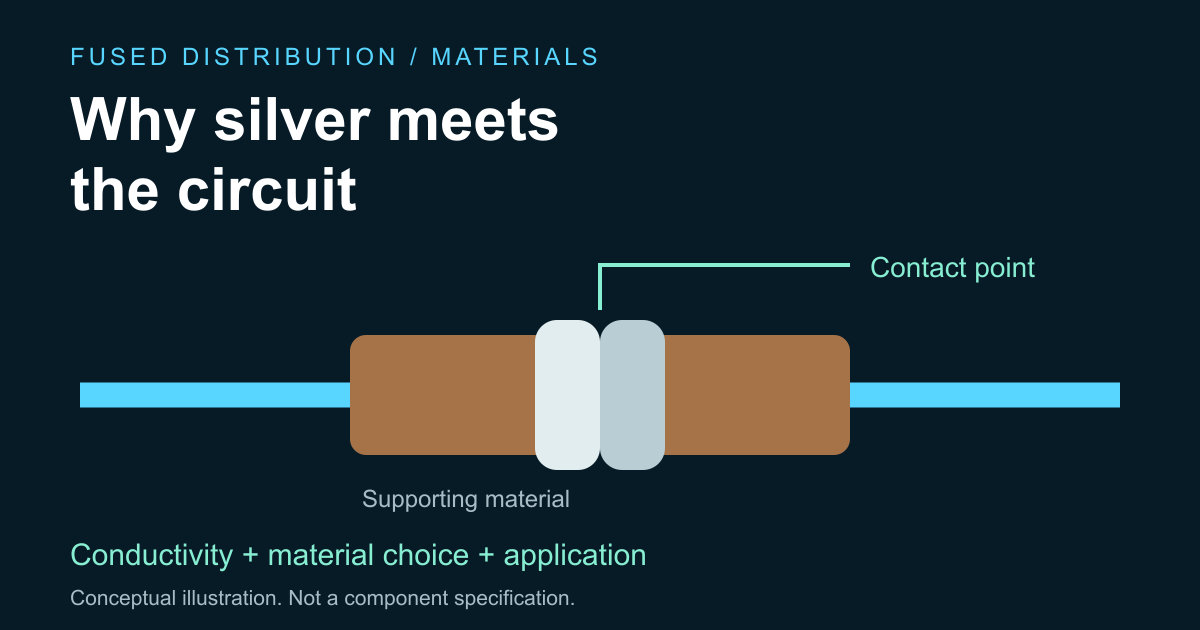
This article does not provide instructions for opening equipment, cleaning contacts, recovering metal or replacing electrical parts. It does not identify a material from its color, assign a purity to scrap, or forecast silver demand. The illustrated contact is a conceptual diagram, not a drawing of a working device or an instruction to modify one.
Older technical literature remains useful for explaining why material selection is more complicated than a conductivity ranking. Its publication date still matters. Do not reuse an old application discussion as current market-share evidence, and do not present a historical alloy example as a recommendation for equipment sold today.
When you encounter an unsupported claim, make the missing evidence explicit. A material comparison needs the actual materials and conditions being compared. A replacement claim needs the relevant equipment requirements. A market claim needs a dated dataset with a defined scope. The word silver alone supplies none of those details.
Keep the takeaway precise
Silver's electrical properties help explain its role in contact materials. The final component still needs to be understood through its own design and documentation. Learn the general material principle from a reliable reference, then stop short of conclusions that the reference does not support.
Before sharing a claim, check that the source discusses the same kind of contact, that its date is clear, and that your wording does not turn a general description into a promise. A short, correctly scoped explanation is more useful than a confident answer to a question the evidence never addressed.
Sources
- USGS silver statistics and information: physical property and broad application context.
- USGS, The Lifecycle of Silver in the United States in 2009: historical contact-material discussion; not current market data.
Related
Read next: Keep silver purchase records together.