Distinguish the coin edge from the rim → Compare different coin edge designs
Check the specification for the particular issue → Record an unusual coin edge without overclaiming
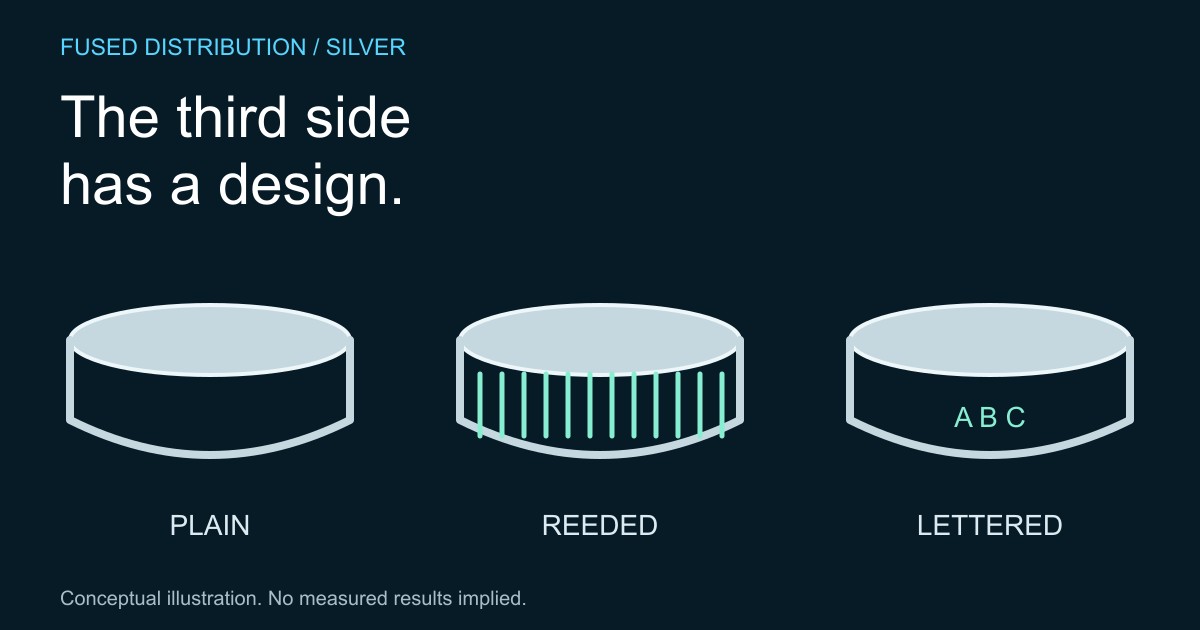
Coin edges are part of a coin's design, and they do not all look alike. The U.S. Mint identifies plain, reeded, lettered and decorated edges. The right comparison starts with the specification for the particular issue, not an assumption that every coin should have the same pattern.
An edge observation can be useful when describing a collection. It cannot, by itself, prove a coin's composition, authenticity or value. Look at the edge as one documented feature alongside the faces, dimensions and issuer information. Record uncertainty before trying to give an unusual feature a name.
Distinguish the coin edge from the rim
The edge is the outside surface between the two faces. The rim is the raised border around a face. The Mint's anatomy guide distinguishes these terms and explains that the rim helps protect the design from wear. Using the right term makes a photograph or a question much easier for someone else to interpret. Our guide to reading a design from center to rim connects these observations to the rest of the coin.
For a collection record, photograph the face and the edge separately where you can do so safely. Name the files with the same inventory identifier. Describe which surface appears in each image instead of calling every outer feature a border. A useful description lets another person locate the observation without guessing from the wording.
Compare different coin edge designs
A plain edge lacks the repeated grooves associated with a reeded edge. A lettered edge carries lettering, while decorated edges use other design details. These categories provide a starting vocabulary. For an actual attribution, preserve the issuer's wording rather than forcing every unfamiliar pattern into the closest familiar category.
Build a comparison using documented examples you already own or can inspect through reliable images. Put the issue name and source beside each example. Keep lighting and magnification as consistent as possible. A difference caused by a dark photograph should not quietly become a claim about the coin's manufacturing process.
Check the specification for the particular issue
Write down the issuer, denomination, year and product version before comparing the edge. A general article about a denomination may not describe the exact item in front of you. Find an issuer record for that version where possible, and save the link with the description you used.
If the record does not answer your question, keep the field unresolved. A seller's caption can be useful context, but it should remain identified as a seller's statement. Our guide to coin collars provides manufacturing context; it does not authenticate an individual object from an edge photograph.
Record an unusual coin edge without overclaiming
Describe what is visible before suggesting a cause. For example, a collector's note might say that a short section looks smoother than the neighboring grooves. That is an observation. Calling it a mint error introduces a separate conclusion that needs suitable evidence. Preserve the original image so a later assessment can revisit the same detail.
Include the viewing conditions and any limits, such as a holder obscuring part of the surface. Do not alter the coin to improve the photograph. When the question affects a purchase or attribution, seek appropriate specialist help. A careful collection record should make uncertainty easier to resolve, rather than conceal it behind confident terminology.
Sources
- U.S. Mint: anatomy of a coin: edge categories and rim terminology. The comparison and record keeping method is original guidance.
Related
Read next: Look from a coin's center to its rim.