Inherited silver can carry money value, family meaning, and paperwork obligations at the same time. Start with control and documentation. Do not clean, sell, divide, or melt the collection before you know who is authorized to act, what each item is, and which records the estate or beneficiaries need. This guide is general information, not legal, tax, appraisal, or investment advice.
Confirm who can act
Find the will, trust, court appointment, or other document that identifies the executor, personal representative, trustee, or beneficiary. State probate rules determine who can possess and distribute estate property. If authority is unclear, ask the estate lawyer or probate court before moving or selling anything. A family relationship alone does not establish authority.
Create a written handoff record: who delivered the silver, when, where it was stored, and who witnessed the transfer. Keep copies of relevant documents with the inventory. If more than one beneficiary is involved, do not promise particular coins or bars until the estate process allows distribution.
Secure the collection before assessing it
Move the silver only when the authorized person approves the move. Use a locked, dry location and limit access. Photograph the storage condition and note missing containers, damaged packaging, or signs of tampering. Avoid posting images with identifying labels or locations.
Separate the collection from household spending money. Do not mail valuable pieces casually or leave them in an unattended vehicle. Ask an insurance professional whether the current policy covers inherited bullion and collectibles; coverage and exclusions vary. Record any transport, storage, or appraisal expense paid by the estate.
Inventory inherited silver coins and bars without altering them
Give each item or matched group a temporary inventory ID. Record the visible date, mint or maker, denomination, metal description, stated fineness, weight, serial number if present, packaging, and condition. Photograph both sides, edges, certificates, and distinctive marks. Keep original envelopes and receipts.
Do not polish coins, remove toning, open sealed packages, test with chemicals, or separate a matched set before appraisal. Cleaning can reduce collector value, and an unverified test can damage an item. Record what is stated on the piece separately from what an expert later confirms. For a deeper valuation workflow, see How To Value Inherited Silver For Estate Purposes.
Use a neutral description in the first inventory, such as “round with date and weight visible,” rather than assigning a rare-coin grade from a photograph. If an item is sealed, record the seal and label without opening it. If a container holds mixed pieces, photograph the contents in place and count them with a witness. Keep a chain of custody whenever the collection moves between a home, bank, appraiser, dealer, or estate representative.
Separate metal content from collector value
A bar or coin may be worth more than its melt value because of condition, rarity, demand, provenance, or packaging. It may also be worth less than a family estimate if it is common, damaged, counterfeit, or difficult to authenticate. A weight and fineness mark is evidence to record, not a complete appraisal.
Group items by type for review: ordinary bullion, collectible coins, proof or graded pieces, silverware, medals, and items whose material is uncertain. Keep silver-plated objects and non-silver items in a separate group until identified. Never assume that every item in one box shares the same value.
Obtain a valuation suited to the decision
Use a qualified precious-metals or numismatic appraiser when the collection includes older coins, graded pieces, unusual bars, complete sets, or disputed value. Ask what the appraisal is for: estate reporting, equitable division, insurance, or a possible sale. Those purposes may require different methods and dates.
Request a written report that identifies the items, assumptions, valuation date, method, and limitations. A dealer’s offer is useful evidence of one buyer’s price, but it is not automatically an independent appraisal. Seek more than one qualified opinion when the amount is material or beneficiaries disagree. Preserve the reports with the inventory.
Determine the relevant date and basis records
For federal tax purposes, the IRS says inherited property basis is generally its fair market value at the decedent’s date of death. An alternate valuation date can apply when the executor files an estate tax return and elects it. The IRS explains these rules in Gifts and inheritances and Publication 551.
Do not calculate a personal tax basis from a current dealer quote alone. Ask the executor for the estate valuation, any Schedule A to Form 8971, and records showing the value used for the estate. Special facts can change the result, including prior gifts, joint ownership, trusts, and property held in a business. A tax professional should review the records before a sale or distribution.
Plan a sale only after authority and records are clear
Selling is a separate decision from taking possession. Confirm who owns the silver now, whether the estate still owns it, and whether the will or a court order controls the sale. Compare the written appraisal with offers from reputable buyers. Ask how the buyer weighs, tests, prices, and documents the transaction, and request a written offer.
If you sell for more than your basis, the IRS says the difference can be a taxable gain; inherited property sales may be reported on Schedule D and Form 8949 when filing is required. See the IRS gifts and inheritances guidance and Form 8949 instructions. Keep the sale date, proceeds, fees, buyer, items sold, and basis records. Tax treatment depends on facts, so use a qualified tax adviser.
Divide fairly with an agreed method
If several people inherit the collection, agree on the valuation date and method before choosing items. A fair division may use appraised values, equal dollar totals, a rotation, or a sale followed by cash distribution. The right method depends on the governing documents and local law. For division examples, see How To Divide Silver In An Estate Fairly.
Write down selections, values, balancing payments, and signatures. Do not treat a family story or a favorite design as a fixed value without documenting the decision. If beneficiaries cannot agree, pause distribution and ask the estate professional about mediation or court procedure.
Keep a decision file
Use one folder for authority documents, inventory, photographs, appraisals, insurance notes, storage expenses, offers, sale records, and distribution receipts. Keep the original files read-only and make dated copies when a record changes. Note who made each decision and why.
The file should answer five questions: What was received? Who was authorized to act? How was it valued and on what date? What was sold or distributed? Where are the proceeds and supporting records? Clear answers protect the estate and make a later tax or family question easier to resolve.
Know when to hand off
Ask a probate lawyer about authority, title, creditor claims, and distribution rules. Ask a qualified appraiser about authenticity, condition, and valuation purpose. Ask a tax professional about basis, estate reporting, gain or loss, and the records required for a sale. Ask an insurance professional about storage and coverage.
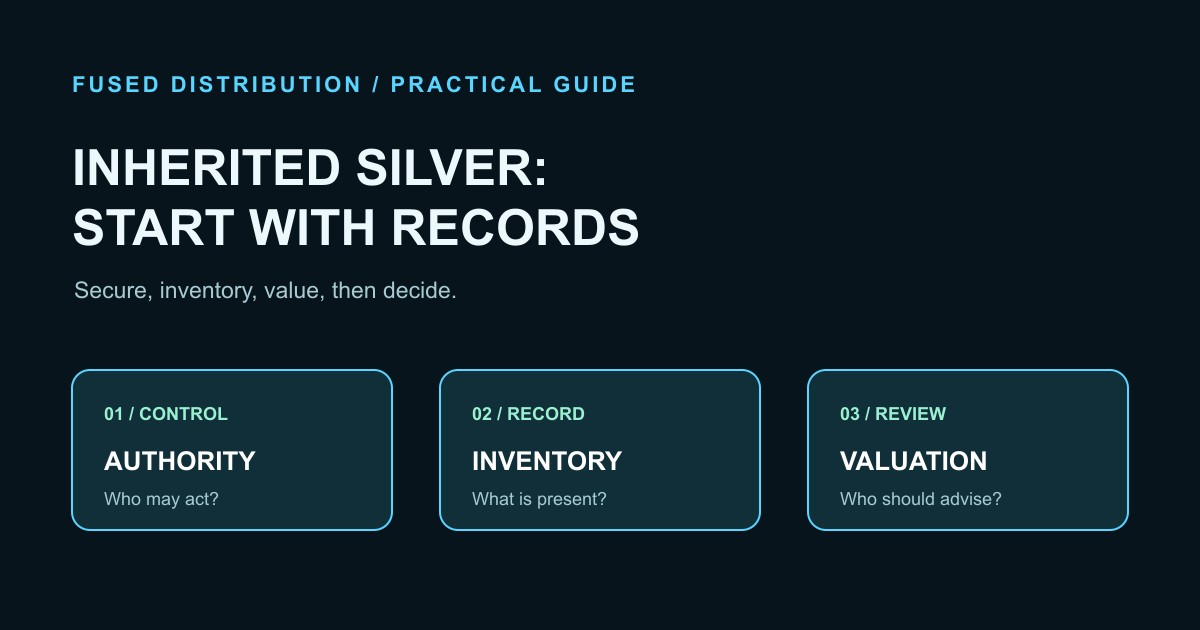
The safest sequence is: confirm authority, secure the collection, inventory without altering it, separate stated content from appraised value, document the relevant valuation date and basis, then decide whether to hold, divide, or sell. That order preserves options while the estate and its professionals determine the details.
Related
Read next: How To Value Inherited Silver For Estate Purposes