Follow the silver catalyst through the process → Connect silver catalysts to named chemicals
Separate catalyst use from silver consumption → Check a silver catalyst claim before sharing it
Silver can help a manufacturing reaction take place without being the material a customer buys. The Silver Institute identifies silver catalysts in the production of ethylene oxide and formaldehyde. That is a different role from silver used as an electrical contact, a coating or a collectible coin.
The useful question is where the silver acts. A material can matter to a production process even when its role is not visible in the finished product. Keep the catalyst, the chemical being made and the eventual consumer product separate when reading an industrial silver story.
Follow the silver catalyst through the process
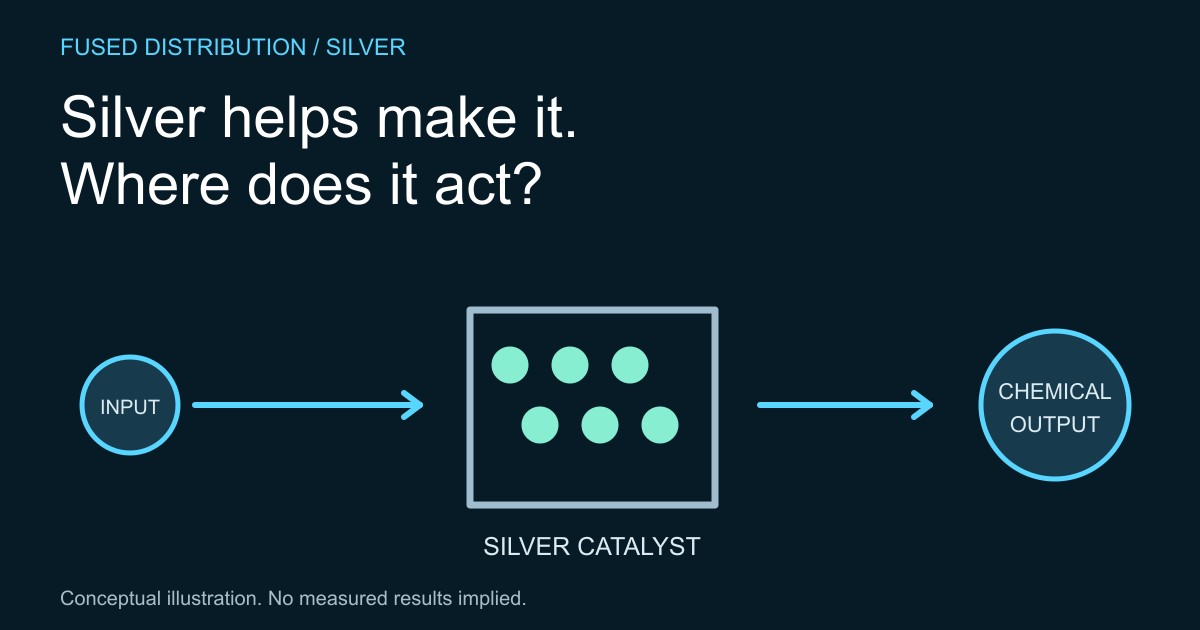
Start with a simple diagram: input chemicals, a reaction using a silver catalyst, and a chemical output. Label the diagram as conceptual. It should explain the relationship without pretending to show a particular factory, operating temperature or equipment design. Those details require documentation for the actual process.
On a reading worksheet, give each stage its own line. Record what the source says silver does at that stage. If a description merely says that a product depends on silver, look for the missing link. Does silver help manufacture an ingredient, or does the finished item contain silver? Those statements are not interchangeable.
Connect silver catalysts to named chemicals
The Silver Institute describes ethylene oxide as a starting point for materials including polyester. It also describes silver catalysts in making formaldehyde from methanol, with downstream uses in resins and adhesives. These examples explain how an industrial material can contribute to products far removed from a silver bar.
Use those examples as routes to investigate, not universal product specifications. When checking a particular product claim, ask for the manufacturer, process and supporting document. A general explanation of one manufacturing route cannot establish that every version of a finished product uses that route. Keep your notes specific to what you have actually checked.
Separate catalyst use from silver consumption
A claim about silver used in a process needs a defined measure. Ask whether the author means silver held in equipment, fresh purchases, material recovered or a net demand estimate. Write the original label next to any number. Do not combine quantities simply because they are all expressed in ounces.
The distinction is similar to the one in our guide to mine and refined production. Categories describe different activities. Before using an industrial example in a supply argument, find the reporting period and the accounting boundary. Our guide to comparing silver statistics with different units explains how to preserve the measure when converting a quantity. If they are missing, the honest result is an unresolved question rather than an estimated total.
Check a silver catalyst claim before sharing it
Save the source URL, its title, the date you checked it and the exact claim you intend to make. Then write a plain explanation of what the source supports. Keep your interpretation in a separate field. This small separation makes it easier to catch an unsupported jump from an industrial application to a claim about investment returns.
Try a two sentence summary. The first sentence names the documented chemical process. The second explains the boundary of the evidence. Leave out production totals that lack an edition or period, and do not add a price prediction. A clear explanation of silver's role is useful without attaching a market forecast to it.
Sources
- Silver Institute: silver catalysts: named chemical applications. The reading worksheet and claim checking method are original suggestions.
Related
Read next: Keep units attached to silver statistics.