Correction dated September 7, 2026: This article has been rewritten to remove unsupported statistics, price predictions, and business inventory claims. The 2026 figures below are a dated forecast, not a completed annual result. The original publication date is retained.
A silver supply deficit describes a market balance over a specified period. It does not mean every dealer has run out of coins, and it does not provide a timetable for the next price move. To understand a deficit headline, identify who produced the estimate, which year it covers, what the supply and demand categories include, and whether the number is historical or forecast.
The distinction matters particularly in an article about the current year. A forecast published earlier in the year remains a forecast even when it is repeated months later. A useful explanation keeps the source date attached to the figure and separates the market estimate from a decision about a particular silver purchase. This guide explains how to read those claims without turning a headline into an automatic instruction to buy.
What the 2026 Silver Deficit Forecast Says
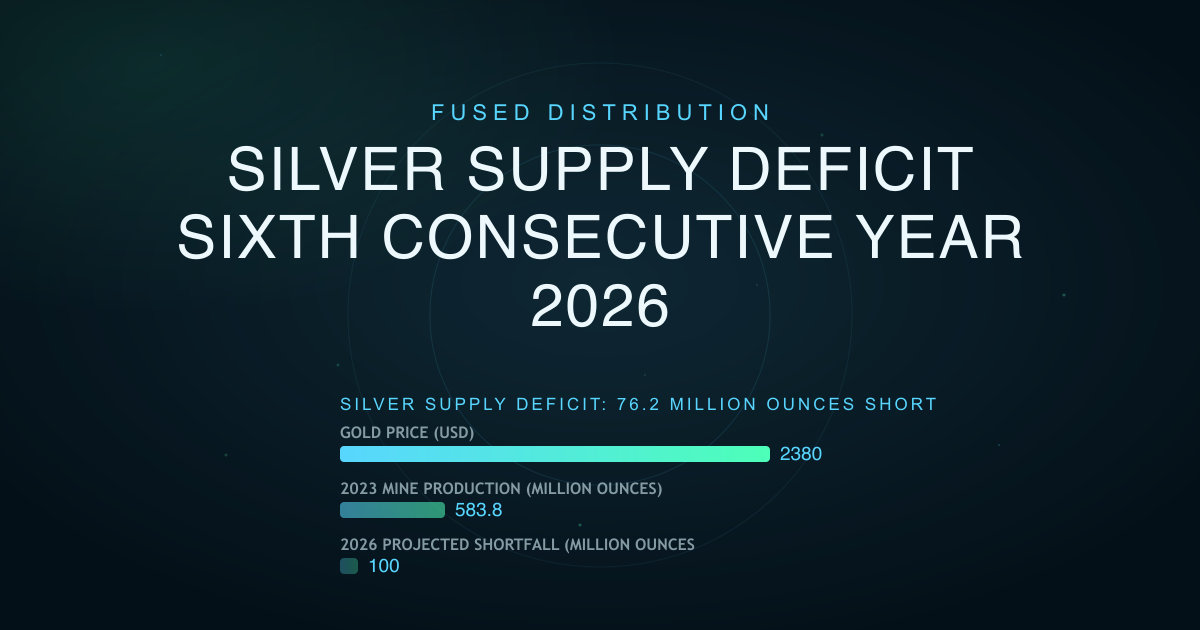
The Silver Institute's April 15, 2026 release, accompanying the World Silver Survey researched by Metals Focus, forecast a 46.3 million ounce market deficit for 2026. It projected total demand of 1.11 billion ounces, lower industrial demand, and broadly flat mine production. Those statements describe the outlook published on that date. They should not be presented as measured results for the whole of 2026. Source: Silver Institute survey release.
The same release distinguishes the fifth consecutive deficit recorded for 2025 from the outlook for the following year. That is why a headline discussing another deficit in 2026 needs conditional language. Write “forecast” or “projected” beside the figure rather than leaving readers to infer its status. If a later report changes the outlook, compare the new estimate with the earlier one and retain both publication dates in your notes. Do not silently replace a forecast with an outcome that has not yet been reported.
Read the Balance Using Consistent Categories
At its simplest, a deficit means the demand counted in a market balance exceeds the supply counted for the same period. The important qualification is what has been counted. Read the table headings and notes before combining numbers from different summaries. A mine production figure is not automatically a total supply figure, and one industrial category is not total demand.
Use a single report's definitions for the calculation you are trying to understand. If another source includes investment flows in a different balance, identify that difference before comparing the totals. Do not add a figure for exchange traded product holdings to a demand total without first checking how that report handles those flows. Otherwise, you may count the same activity twice or combine measures that answer different questions. When a table's scope remains unclear, describe the published balance directly and link the source instead of improvising a new total.
Separate Mine Production From Other Supply
A statement about mine output answers a different question from a statement about all supply included in a market balance. Recycling is another category to examine in the source. A discussion that compares total demand only with mined output can therefore produce a different gap from the report's stated deficit. Before describing the size of a shortage, confirm that the two sides of your comparison have the intended scope.
Keep units consistent as well. Write out whether a figure uses ounces, millions of ounces, or another unit, and check the period beside it. Do not place a quarterly figure next to an annual total as though they were directly comparable. When reviewing a revision, ask whether it reflects a change in the estimate, the method, or the period covered. These checks are more informative than repeating a large number without enough context for another reader to reproduce the comparison.
Avoid Treating Demand as a Single Story
A total can move differently from one of its components. A headline about activity in a particular industrial use does not establish the direction of every other use or of demand overall. Read the component discussion alongside the total. If a report describes offsets between categories, preserve that explanation rather than rewriting it into a claim that all demand is rising together.
The dated outlook cited above is a useful reminder to check that distinction. Its deficit forecast appears alongside lower projected industrial demand. Those statements are not inherently contradictory: the balance depends on both sides and all the categories included. A responsible summary explains what the source actually expects rather than selecting only the detail that supports a preferred investment story. Record the assumptions that would need to hold for the outlook, and revisit them when a new edition becomes available.
Distinguish Annual Balance From Available Inventory
An annual deficit and an inventory snapshot measure different things. Before drawing a conclusion from a vault or warehouse figure, identify its date, location, unit, and category. Ask what the figure includes and what it excludes. A number describing one location should not be relabeled as all silver available worldwide. Likewise, a reported total does not by itself establish the amount available to a particular buyer on particular terms.
Keep the annual balance and the inventory observation on separate lines in your notes. Explain any relationship only as far as the source supports it. Avoid converting an annual deficit into a countdown to exhaustion without an appropriate inventory definition and a justified method. Such a calculation can look precise while resting on incompatible inputs. If the available information cannot answer a question about immediate availability, leave that question open and seek a source that measures the relevant market or product.
Keep Retail Quotes Separate From Market Forecasts
A market report cannot tell you the complete delivered price of a specific coin or bar at checkout. For that decision, collect actual seller quotes for equivalent products and quantities. Record the item price, payment costs, shipping, and any tax displayed for your destination. Note the quote date and the conditions under which it remains valid. The guide to silver premiums explains another part of that comparison.
Ask potential buyers for the net amount they would offer for the same product and condition if you want to understand the costs of selling as well as buying. Do not assume a retail premium will be recovered simply because a market deficit is forecast. A supply headline is also not a reason to double an order automatically after a price decline. Keep any purchase decision connected to your available funds, intended purpose, and the terms of the transaction rather than to an unsupported universal rule.
Build a Source Record You Can Update
Save the report title, publisher, publication date, data period, units, and the relevant table or passage. Mark each number as a historical estimate or a forecast. Record the source's definitions and any limitation that affects your interpretation. When another article repeats a figure, follow its citation back to the original before treating it as new evidence. A later article date does not necessarily mean the underlying estimate has been updated.
On the next review, compare like with like and explain revisions explicitly. Separate observed data from your interpretation and from any personal decision. This process lets you use a silver deficit report as information while remaining clear about what it cannot establish. For practical product comparisons, read the Britannia and Eagle guide or the Silver Philharmonic guide. Fused's reserve resources provide further educational material; current availability and commercial terms must come from an actual seller's offer.