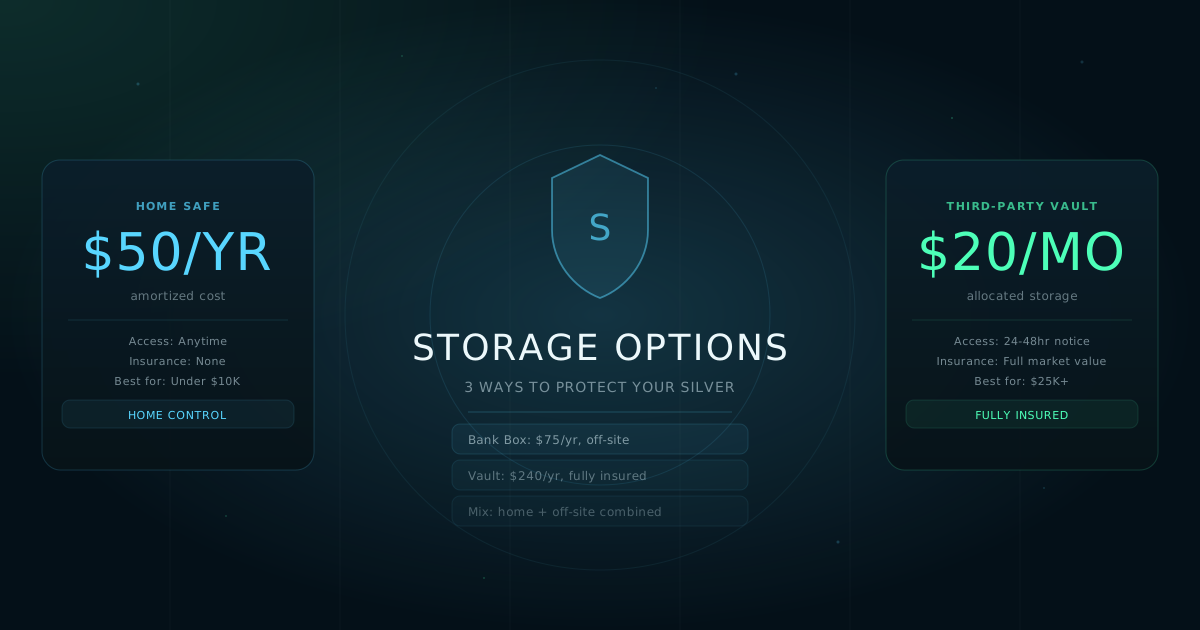
The silver you buy matters. Where you keep it matters just as much. Most first-time buyers store everything at home and never revisit that choice as their stack grows. But each storage option trades off differently on cost, access, and security.
There are three real options: a home safe, a bank safe deposit box, and a third-party vault service. Each one has a specific range where it makes the most sense. Knowing those ranges helps you make an intentional choice instead of defaulting to whatever is most convenient.
Home Safe
A quality home safe runs $150 to $800. You pay once, and after that there are no ongoing fees. Your silver is accessible any hour of the day, completely private, and under your direct control. For someone just starting out with a few ounces, this is the obvious starting point.
The downsides are real. Most residential safes can be removed from a home in 10 to 15 minutes with the right tools, and cut open with an angle grinder. Bolting is better, but determined thieves work around it. Fire protection ratings on lower-end models typically cover 30 minutes at 1200°F, which isn't enough for a fully involved house fire that burns at 1,400°F or above for longer than that.
Home safes work well for stacks up to around $10,000 in metal. Beyond that, you're accepting meaningful risk for the sake of convenience and zero monthly cost.
Bank Safe Deposit Box
A small safe deposit box at most banks costs $25 to $100 per year. It gets your silver off-site, into a vault that meets commercial bank security standards. Thieves rarely target bank vaults, and even if they did, banks carry their own security infrastructure that far exceeds any home setup.
The limitations matter and most buyers discover them at the wrong moment. You can only access your box during bank hours. That means no weekends at most branches, no access during banking holidays, and potentially frozen access if a bank closes or fails. The FDIC does not insure the contents of safe deposit boxes. It only covers deposits in bank accounts. If the bank fails, regulators control access to your box until they sort out the larger situation.
For silver in the $2,000 to $25,000 range, a safe deposit box is a practical, inexpensive option. It's an off-site location with solid physical security at very low annual cost. Most buyers in this range find that tradeoff reasonable.
Third-Party Vault Storage
Dedicated silver storage services store your metal in professional vaults, typically in segregated, allocated accounts. Your silver is yours specifically, not pooled with other depositors. Reputable services carry insurance for the full current market value of what they hold. Costs typically run $10 to $25 per month, depending on the amount stored.
The tradeoff is that you're trusting another party. The better services allow in-person inspections, provide regular audit documentation, and hold serial-numbered inventory under your name. Access usually requires 24 to 48 hours notice. This isn't ideal for buyers who want to handle their silver regularly, but for a core long-term holding, it's the only option with professional-grade security and full insurance.
For positions above $25,000, third-party storage starts making sense for at least part of the stack. Above $50,000, keeping everything at home or in a bank box is a meaningful uninsured risk.
How to Choose
Start with your current stack size. Under $5,000: a decent home safe handles it, and you don't need to overthink it. Keep silver in original mint packaging, store in a low-humidity location, and bolt the safe to the floor or wall studs.
Between $5,000 and $25,000: consider splitting between home and a safe deposit box. The home portion stays liquid for quick access; the bank portion sits off-site with no ongoing handling. This costs roughly $75 a year and meaningfully reduces concentration risk.
Above $25,000: add third-party allocated storage for the core of your position. The monthly cost is a genuine expense, but it's the only way to have full insurance coverage and professional security at that level. Most experienced buyers at this scale keep some silver at home, some in a bank box, and the bulk with a reputable vault service.
The right answer changes as your stack grows. It's worth revisiting the decision every time your position doubles.
Sources
- FBI. "Crime in the United States: Property Crime." ucr.fbi.gov
- FDIC. "Your Insured Deposits." fdic.gov
- National Burglar & Fire Alarm Association. "Home Security Facts." alarm.org
- Underwriters Laboratories. "Fire Resistance Ratings for Safes." ul.com