The spot price of silver is the number you see on every financial site. It is the price of one troy ounce traded right now on the commodities market. When you go to actually buy silver, you will pay more than that number. Sometimes a little more, sometimes a lot more.
That difference is called the premium. Understanding it is one of the most practical things you can learn as a silver buyer, because it determines how much silver you actually get for your money.
Why Premiums Exist
Silver does not come out of the ground as a coin or bar. Raw metal gets refined, fabricated into a specific product, packaged, insured, stored, shipped, and sold through a distribution chain. Every step costs money. The premium covers those costs and leaves a margin for the dealer.
Three main forces drive the premium number:
- Fabrication cost. Minting a coin takes more work than pouring a bar. Proof coins take more work than bullion strikes. That cost lands in the premium.
- Brand and legal tender status. Government-issued coins like American Silver Eagles carry a face value and come with the mint's quality guarantee. That reputation costs extra.
- Supply and demand for that specific product. When Eagles go on allocation or demand spikes, dealers raise premiums. When supply catches up, they come down.
The Math
Premium % = (Purchase Price − Spot Price) ÷ Spot Price × 100
If spot is $32.00 and you pay $38.40 for a Silver Eagle:
($38.40 − $32.00) ÷ $32.00 × 100 = 20% premium
That means 20 cents of every dollar you spend goes to everything except the silver itself.
This is why comparing products on price per ounce alone is not enough. You need price per ounce of actual silver content relative to spot.
Premiums by Product Type
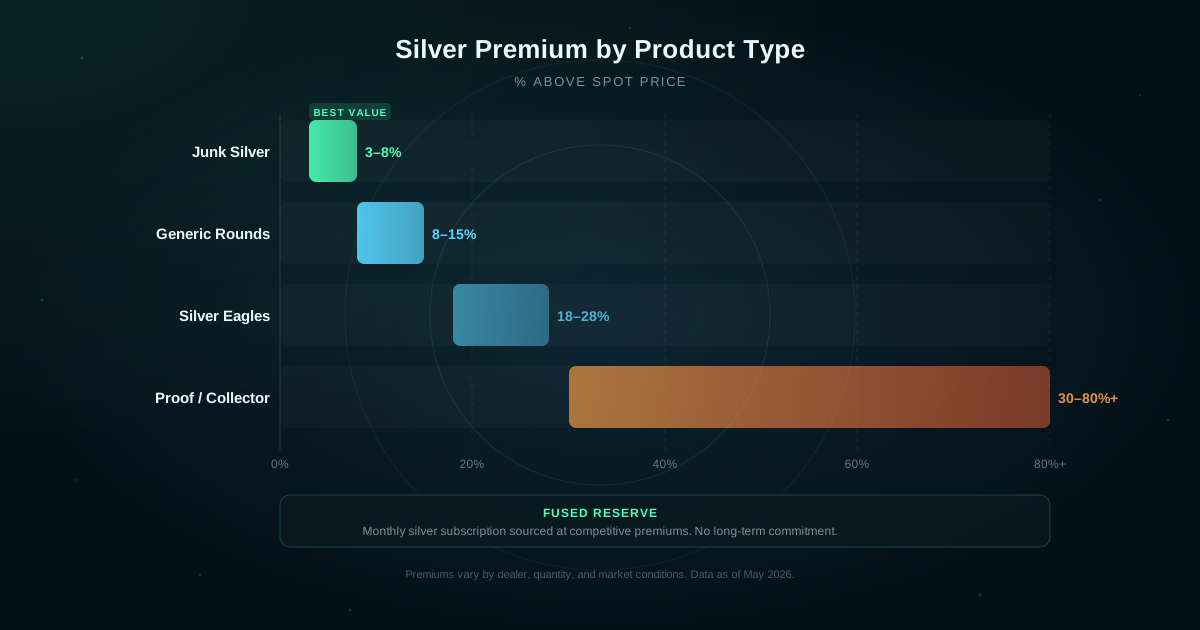
Different silver products carry very different premiums. Here is a realistic range for each category as of mid-2026:
| Product Type | Premium Above Spot | Notes |
|---|---|---|
| Junk Silver (pre-1965 US coins) | 3–8% | No fabrication premium. Just melt value plus dealer margin. Best value for pure silver exposure. |
| Generic Silver Rounds | 8–15% | Private mint, no government guarantee. Lower than Eagles but more than junk. |
| Silver Eagles (ASE) | 18–28% | US Mint. Legal tender. High liquidity and name recognition. Premium reflects demand and mint allocation patterns. |
| Proof & Collector Coins | 30–80%+ | Mirror finish, special packaging, limited mintages. Premium is driven by collectibility, not metal value. |
Proof coins are not a bad product. They are just a different product. You are buying numismatic value and aesthetics, not raw silver at a good price per ounce.
What Drives Premiums Up or Down
Premiums are not fixed. They move with the market. A few things that push them higher:
- Supply disruptions. Mint strikes, shipping delays, or refinery shutdowns reduce supply. Premiums spike.
- Demand surges. Price drops, economic uncertainty, or news cycles bring new buyers. Inventory depletes fast and premiums climb.
- Small order sizes. Buying one ounce costs more per ounce than buying 20. Dealers price in handling costs for small orders.
Things that push premiums lower:
- Buying in bulk. Most dealers offer tiered pricing. 20 oz, 100 oz, and 500 oz tiers each carry lower premiums.
- Stable or falling spot price. When spot is low and demand softens, dealers compete on premium to move inventory.
- Subscription sourcing. Aggregating purchases across many buyers lets a distributor negotiate closer to wholesale pricing.
Which Silver Should You Buy?
It depends on what you want to do with it.
If you want the most silver per dollar spent, junk silver and generic rounds are the answer. You give up the US Mint guarantee and the name recognition, but you get more metal for the same money.
If you want the easiest silver to sell anywhere in the country with no questions asked, Silver Eagles are hard to beat. The premium is real, but so is the liquidity advantage.
If you are building a long-term position over time, the premium you pay today gets diluted across every future purchase. Dollar cost averaging into silver at consistent premiums is more important than hunting for the single lowest-premium deal. Consistent sourcing at a known, fair premium beats inconsistent buying at variable premiums.
How to Calculate Your Break-Even
You paid a 20% premium on Silver Eagles. For that purchase to be neutral, spot price would need to rise 20% just to get you back to what you paid.
Break-even spot = Purchase price per oz
If spot was $32 and you paid $38.40, spot needs to reach $38.40 for you to break even on a same-day resale.
Lower premiums mean lower break-even. That is why premium discipline matters over a long accumulation period.
One Thing Most Buyers Miss
The buy-side premium is only half the equation. When you sell, dealers buy at a discount to spot, not a premium. A typical dealer buyback is 2 to 5 percent below spot for common bullion.
So your total round-trip cost includes both the premium you paid going in and the discount you accept going out. For an Eagle bought at 20% over spot and sold at 3% under, the effective cost of holding that silver through zero price movement is about 23 cents per dollar invested.
That is not a reason not to buy silver. It is a reason to think of silver as a long-hold position, not a trading vehicle. The premium matters most at the moment of purchase. After that, what matters is whether the metal holds or gains value over the time you hold it.
Sources
- APMEX, JM Bullion, SD Bullion — live retail premiums, May 2026
- US Mint — American Silver Eagle program specifications
- Kitco — spot price reference data
- CPM Group — historical silver premium analysis