Silver is one of the most accessible precious metals you can own. A single 1 oz silver round costs around $65 to $70 at current prices (spot: $64.85/oz as of June 22, 2026). You can buy it online, and it arrives at your door in days. You don't need a brokerage account, a financial advisor, or a large upfront commitment. This guide covers every decision you'll face, from choosing the right form of silver to storing it safely and understanding what drives the price.
Key Takeaways - In 2024, silver's average annual price reached $28.27 per troy ounce, a 21% increase year over year (Source: The Silver Institute, World Silver Survey 2025) - The global silver market recorded a structural supply deficit of 148.9 million ounces in 2024, the fourth consecutive year of deficit (Source: The Silver Institute, World Silver Survey 2025) - Silver hit a record $54.48 per ounce in October 2025, posting a 67% year-to-date gain through November 2025 (Source: The Silver Institute, November 2025)
What Forms of Silver Can You Actually Buy?
Physical silver comes in three main forms: coins, bars, and rounds. Each has a different cost structure and a different purpose.
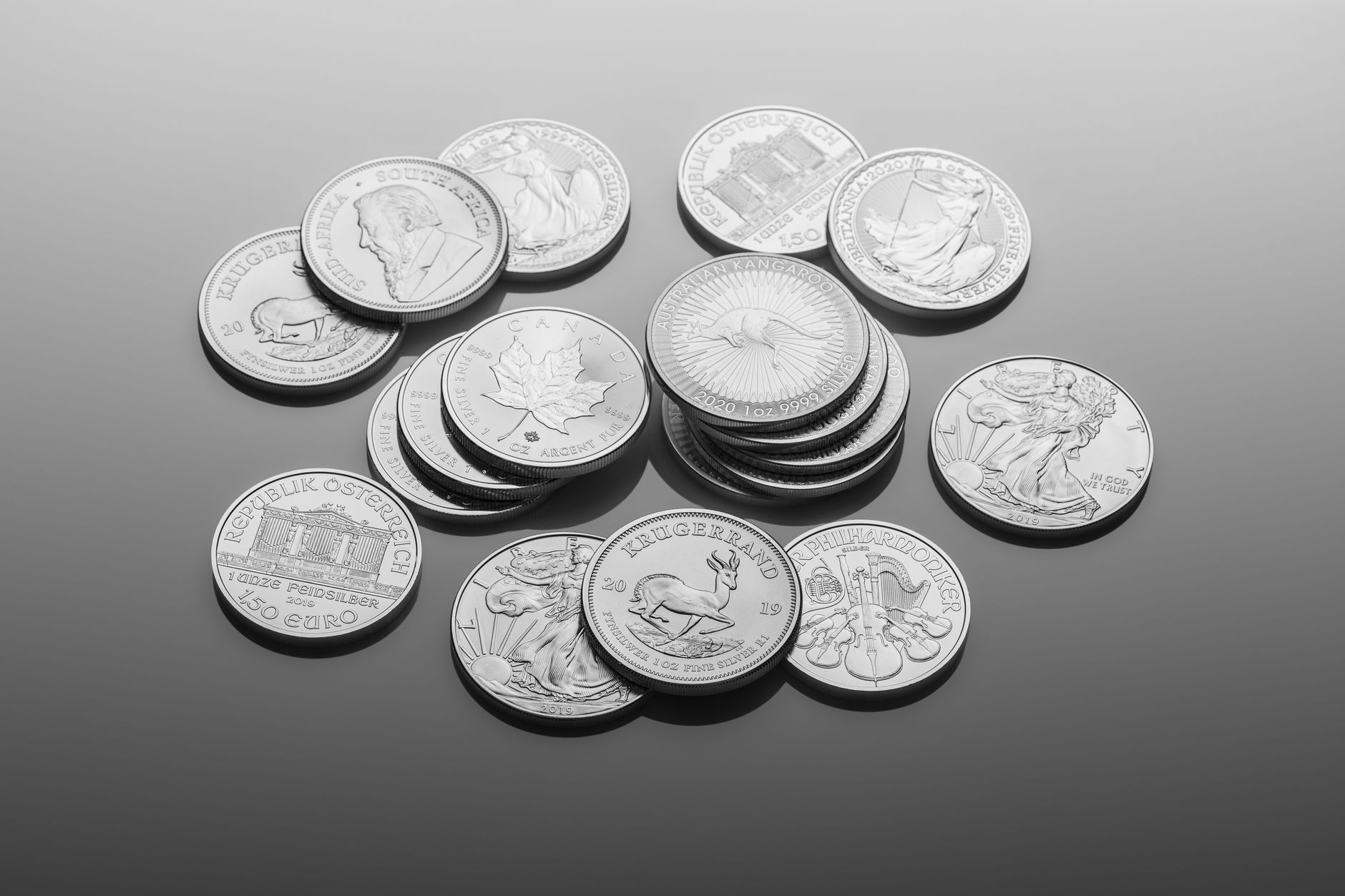
Coins are minted by sovereign governments. American Silver Eagles, Canadian Maple Leafs, and Austrian Philharmonics carry legal tender status. They trade at a higher premium over spot price, typically $4 to $8 per ounce above spot, but they're instantly recognizable worldwide and easy to resell anywhere. We stock all three in our online shop.
Bars are produced by private and accredited mints. A 10 oz silver bar carries a lower per-ounce premium than a coin, usually $1.50 to $3 above spot. Larger bars, 100 oz and up, cost even less per ounce. We carry bars from trusted refiners including PAMP Suisse, Sunshine Mint, and Scottsdale Silver.
Rounds look like coins but carry no government backing or face value. They're the most affordable way to stack ounces, often priced just $1 to $2 above spot. Good for building weight on a tight budget.
Beyond physical metal, you can buy silver-backed ETFs, silver mining stocks, and silver futures. These products don't give you possession of metal. They offer liquidity and convenience, but carry counterparty risk that physical silver doesn't.
Why the Supply and Demand Picture Favors Silver Right Now
In 2024, global silver industrial demand hit a record 680.5 million ounces, the fourth consecutive annual record (Source: The Silver Institute, World Silver Survey 2025). Solar panel manufacturing, EV components, and consumer electronics are the main drivers. This isn't cyclical demand. It's structural, and it's growing every year.
At the same time, the global silver market recorded a structural supply deficit of 148.9 million ounces in 2024, the fourth consecutive year of deficit (Source: The Silver Institute, World Silver Survey 2025). Mining output hasn't kept pace. The Silver Institute forecasts a fifth consecutive annual deficit of 149 million ounces in 2025, with industrial demand set to exceed 700 million ounces for the first time ever (Source: The Silver Institute, January 2025).
Persistent deficits don't always move prices immediately. Silver markets can absorb shortfalls through above-ground inventory drawdowns. But sustained deficits over multiple years tighten the floor under prices. Silver's average annual price rose 21% in 2024, reaching $28.27 per troy ounce, the highest average in several years (Source: The Silver Institute, World Silver Survey 2025).
How Much Should You Start With?
A practical starting point is 5% to 10% of your investable assets in physical silver. If you have $10,000 in savings, that's $500 to $1,000 in silver. At typical prices, that buys roughly 10 to 20 ounces.
Dollar-cost averaging works well for silver. Buying a fixed dollar amount each month, say $100 or $200, removes the pressure of timing the market. You accumulate more ounces when prices dip and fewer when they rise. Over 12 months, this smooths your average cost per ounce considerably.
We recommend starting with 1 oz silver coins if you're new. American Silver Eagles are the most liquid silver product in the US market. They're accepted by virtually every coin dealer and private buyer. When you're ready to scale up, shift some of your budget toward 10 oz bars to reduce your per-ounce premium.
Avoid putting your entire budget into one purchase. Stagger buys over three to six months. You'll build a real position without the anxiety of buying a lump sum right before a price correction.
How Silver Prices Move
Silver is more volatile than gold. Its price swings wider in both directions. This isn't a flaw; it's a feature if you understand it.
Silver trades on two overlapping demand curves. Investment demand drives prices higher during economic uncertainty, dollar weakness, and inflation. Industrial demand provides a floor during economic expansion. When both forces align, silver can move fast.
Silver-backed ETPs attracted 95 million ounces of net inflows in H1 2025, with total holdings surpassing $40 billion for the first time (Source: The Silver Institute, July 2025). When institutional money moves into silver at that scale, spot prices respond. The 67% gain through November 2025 reflects exactly that combination: record institutional inflows meeting record industrial consumption.
For a beginner, volatility means two practical things. First, don't check the price every day. Buy with a three to five year horizon and you'll ride through short-term corrections without panic. Second, silver's volatility creates buying opportunities. Price dips of 10% to 20% within a broader uptrend are common. If you're dollar-cost averaging, those dips automatically lower your average cost.
Silver vs. Gold: Which Should You Buy First?
Gold is less volatile, more expensive per ounce, and easier to store large value in a compact space. Silver is cheaper to enter, more industrially driven, and historically outperforms gold during precious metals bull markets.
The gold-to-silver ratio tells you how many ounces of silver it takes to buy one ounce of gold. The historical average sits around 60 to 80. When it climbs above 80 or 90, silver is historically cheap relative to gold. Some investors use this ratio to time shifts between the two metals.
We recommend owning both. A simple starting split is 70% gold and 30% silver by dollar value. As your position grows, you can adjust based on the ratio and your view on industrial demand cycles.
If budget is a constraint right now, start with silver. You get more metal per dollar, the market is highly liquid, and the multi-year supply deficit story gives you a concrete fundamental case.
How to Store Your Silver Safely
Home storage is free and immediate. A fireproof safe bolted to the floor handles small to medium collections, up to a few hundred ounces, without ongoing cost. Keep your holdings private; don't discuss what you own or where you keep it.
Bank safe deposit boxes aren't FDIC insured and may not be accessible during a banking disruption. We don't recommend them as your primary storage option.
Third-party vault storage through an accredited depository is the right move for larger holdings, generally above 100 to 200 ounces. Depositories like Delaware Depository and Brinks offer fully segregated, allocated storage with insurance included. Costs run roughly 0.5% to 1% of value per year. When you're ready to sell, the depository handles the logistics.
Never store silver in a way that makes it difficult to verify or retrieve. Allocated, segregated storage means your specific metal is set aside under your name, not pooled with other clients' holdings.
Tax and Legal Basics for US Silver Buyers
The IRS classifies physical silver as a collectible. Long-term capital gains on collectibles are taxed at a maximum rate of 28%, higher than the standard 15% or 20% rate on stocks held over a year. This applies to silver coins, rounds, and bars.
Short-term gains on silver held under a year are taxed as ordinary income at your marginal rate.
You don't pay tax when you buy silver. You pay only when you sell at a profit. Keep clean records of every purchase: date, quantity, price per ounce, and total cost. Cost basis records become critical the moment you start selling.
Some states charge sales tax on silver purchases. As of 2025, most US states exempt investment-grade silver from sales tax, but a handful still apply it. Check your state's current rules before buying.
Silver inside a self-directed IRA lets you hold IRS-approved silver products tax-deferred or tax-free, depending on the account type. Eligible silver must meet a minimum purity of 99.9%. If you're considering this route, we can point you toward custodians who specialize in precious metals IRAs.
Frequently Asked Questions
What is the cheapest way to buy silver as a beginner?
Silver rounds carry the lowest premiums, often just $1 to $2 above spot price per ounce. A 1 oz round from a reputable private mint gives you direct ownership of .999 fine silver at close to the lowest possible cost. We recommend buying from an established dealer with clear pricing and a published buyback policy.
Is silver a good investment during inflation?
Silver has historically preserved purchasing power during inflationary periods. Its 21% average annual price gain in 2024 and record spot price of $54.48 in October 2025 (Source: The Silver Institute) occurred alongside elevated inflation and a weaker dollar environment. Physical silver carries no counterparty risk, which makes it a direct store of value outside the financial system.
How do I sell silver when I'm ready?
Most coin dealers and precious metals retailers publish live buyback prices. You can ship your silver to an online dealer and receive a wire transfer, or sell locally to a coin shop. American Silver Eagles and other government-minted coins are the easiest to sell quickly. Niche or obscure products may require more effort to move at a fair price.
What purity should silver be to qualify as investment grade?
Investment-grade silver is .999 fine (99.9% pure) or .9999 fine (99.99% pure). American Silver Eagles are .999 fine. Most bars and rounds from recognized mints meet the .999 standard. Junk silver, pre-1965 US dimes, quarters, and half-dollars, is 90% silver and trades on different pricing dynamics, typically used by collectors and value stackers rather than straightforward investors.
How many ounces of silver should I own?
There's no universal answer, but a common framework targets silver as 5% to 10% of total investable assets. At current spot of $64.85/oz (June 22, 2026), a $5,000 position equals roughly 77 ounces. A $10,000 position gets you around 154 ounces. Start wherever your budget is comfortable, build consistently, and let the compounding position size work over time rather than trying to time a single large entry.
The case for silver in 2026 and beyond isn't built on speculation. It's built on five consecutive years of supply deficits, record industrial consumption, and institutional inflows that broke through $40 billion in total ETP holdings for the first time. You can enter this market for around $65 to $70 per ounce, hold real metal in your hand, and build toward a meaningful position over 12 to 24 months. Start with one ounce, buy consistently, store it correctly, and scale when it makes sense for your budget.
Related
- How To Build A Silver Stacking Portfolio From Scratch
- Dollar Cost Averaging Silver Strategy Explained
- Silver as a Percentage of Net Worth: How Much Is Right?
Read next: How To Build A Silver Stacking Portfolio From Scratch