When inflation runs hot, a savings account earning 0.5% loses real value at 8% annual inflation. $10,000 becomes worth about $9,250 in purchasing power after one year. Silver has historically moved in the opposite direction during these periods.
This is not guaranteed. Silver is volatile. But the pattern is consistent enough across three separate inflationary cycles that a lot of buyers add it specifically for inflation exposure.
What Three Inflationary Cycles Show
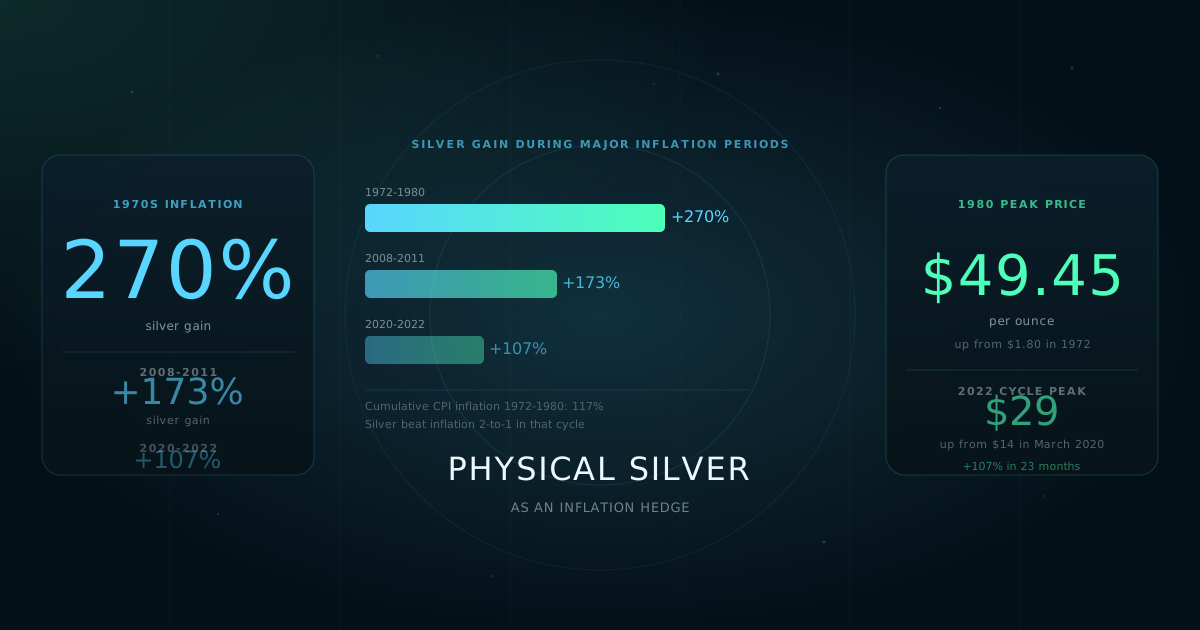
The clearest case is the 1970s stagflation period. From 1972 to 1980, silver moved from roughly $1.80 to $49.45 per ounce. That is a gain of about 270%. Over the same period, cumulative US inflation was 117%. Silver outpaced inflation by more than 2 to 1 in the most severe inflationary episode in modern US history.
The 2008 to 2011 period followed a similar pattern. During the post-financial-crisis money printing era, silver went from a low around $8.50 to a high of $49.51. A 173% gain in three years, driven largely by investors moving into hard assets as central banks expanded their balance sheets.
The most recent episode: from March 2020 to February 2022, as US inflation hit a 40-year high, silver moved from $14 to $29. About a 107% gain over 23 months.
Why Silver Tends to Move With Inflation
Three mechanics drive it.
Silver is priced in dollars. When the dollar loses purchasing power, more dollars are required to buy the same ounce. This automatic repricing happens regardless of what silver's industrial or investment demand is doing.
Silver has industrial demand that responds to economic cycles. In inflationary periods, the cost of raw materials rises broadly, and silver rises with them. Industrial buyers front-load purchases when they expect prices to increase. More buying pressure pushes prices up.
Investor demand for hard assets increases during inflationary periods. Gold gets most of the attention, but silver costs far less per ounce. Retail investors moving money out of cash tend to buy both, and silver's lower price per ounce means more buyers can participate.
What It Doesn't Do
Silver does not move in a straight line during inflation. During the early 2020s inflation spike, silver gave back a significant portion of its gains before the inflationary cycle peaked. Prices can drop sharply in the short term even when inflation is still running high.
It also does not track inflation the way Treasury Inflation-Protected Securities (TIPS) do. TIPS are designed to match inflation precisely, adjusting their principal with the CPI. Silver is a bet on a larger repricing, not a mechanical match.
If you want to protect purchasing power with precision, TIPS are the right tool. Silver suits buyers who think the repricing will exceed what the official inflation index captures, or who want exposure to the physical metal itself.
How Much Makes Sense
Most buyers who hold silver as an inflation hedge keep it at 5% to 15% of their total savings. Below 5%, it barely moves the needle on portfolio-level performance. Above 20%, the volatility of silver becomes a larger factor than the inflation protection it provides.
A small position added consistently over time builds meaningful exposure without concentration risk. The buyers who came into 2020 with 10% of savings in silver and held through the cycle came out ahead of inflation by a significant margin. Timing perfect entries is harder than just owning the metal steadily.
Sources
- Kitco. "Historical Silver Price Charts." kitco.com
- US Bureau of Labor Statistics. "Consumer Price Index Historical Data." bls.gov
- Silver Institute. "World Silver Survey." silverinstitute.org
- Federal Reserve Bank of St. Louis. "Silver Spot Price (SLVPRUSD)." fred.stlouisfed.org
- US Treasury. "Treasury Inflation-Protected Securities." treasurydirect.gov