Separate the layer → Read the conditions
Match the application → Keep claims separate
Silver is used in some mirrors and reflective coatings because of its optical properties. The presence of silver is only one part of a finished mirror's construction, however. A material description does not tell you how a complete product will perform in a particular room, instrument or outdoor installation.
The U.S. Geological Survey identifies pure silver as having the highest optical reflectivity among metals and lists mirrors among its industrial applications. That broad property explains the interest in silver as a reflective material. It is not a specification for every silver coating or a comparison of every finished mirror available for purchase.
Separate the silver layer from the mirror
Think of the reflective material and the finished product as different questions. The first asks what substance is used in the reflective layer. The second asks how the assembled product is specified for its use. A brochure may answer one question clearly while leaving the other unanswered.
When reading a product description, note whether it identifies the reflective material, the surface arrangement, any protective layers and the intended application. Do not assume that information missing from a short description is unimportant. Ask for the relevant product documentation instead of filling in a construction detail from a generic illustration.
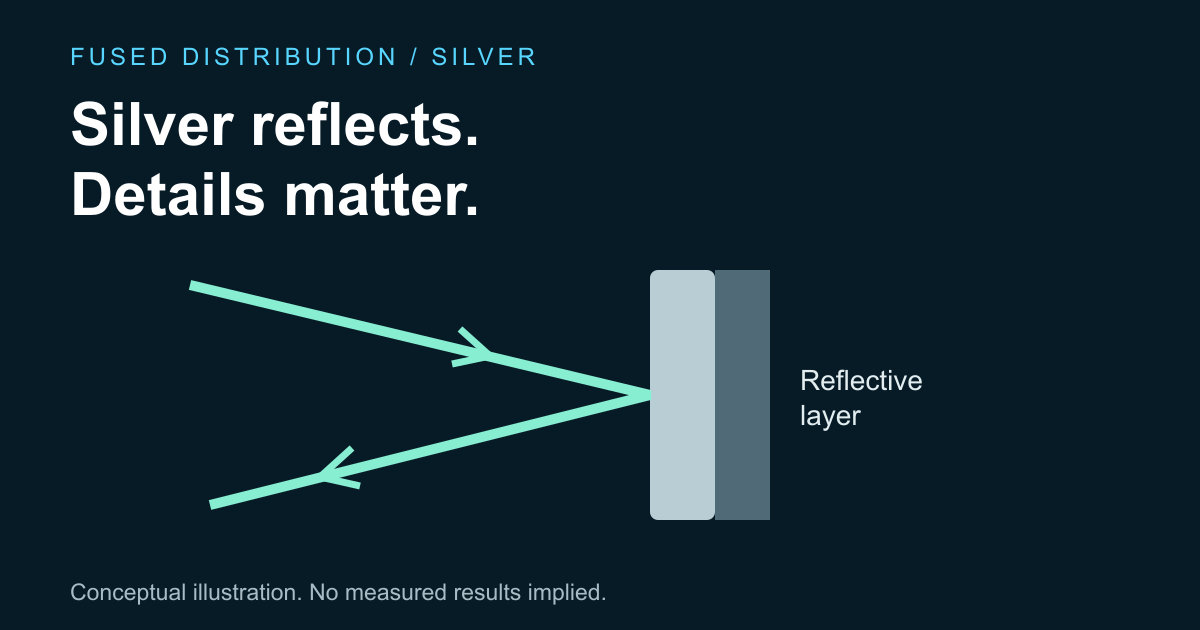
The diagram in this article is conceptual. It points to a reflective layer but does not prescribe a coating thickness or represent the stack of a particular commercial mirror. Its purpose is to distinguish a material from an assembly. It should not be used to identify a product by looking at its edge.
Read a reflectivity claim in context
A reflectivity figure needs more than a percentage to be useful. Ask what was measured, under what conditions, and whether the claim concerns a material sample or the finished product. If a supplier provides a graph, read its axes and notes before comparing its headline figure with another supplier's number.
Keep the source wording in your comparison notes. A measurement described for one setup should not be rewritten as a universal performance promise. If two documents describe different conditions, mark the comparison as unresolved until the difference is explained. Do not combine the most favorable number from each document into a conclusion neither source supports.
This is a proposed reading method, not a test procedure. A general educational article cannot supply the measurement conditions that a specific product document omits. If the application depends on a particular optical requirement, use the appropriate technical specification and expertise.
Match the coating question to the application
Write down what you need the product to do before selecting a material based on a general property. A household replacement, an optical component and an exposed installation may raise different questions. Ask the supplier which product is specified for the actual intended use rather than assuming that one silver-based description settles them all.
The useful output of this review is a short requirement note. Name the application, cite the manufacturer's document and list the conditions it does and does not address. Include installation and care instructions where they apply. Avoid substituting a generic cleaning method for product-specific guidance.
If the documentation uses unfamiliar terms, retain them in the note and ask for clarification. Replacing a technical term with an apparently similar everyday word can change the claim. A clear question is more valuable than a simplified answer that erases an important distinction.
Keep silver application claims separate from market claims
An industrial use explains one reason people use a material. It does not establish the current quantity used worldwide, the value of a discarded mirror, or the future price of silver. Those questions require different evidence. Do not turn a description of reflectivity into a demand forecast.
For the same reason, a silver-containing component is not a bullion product specification. If you maintain a collection, connect each item to its own purchase and identification records. Our silver invoice checklist covers transaction documentation. The article on silver electrical contacts shows another application where a useful material property still does not define the entire component.
Keep notes about applications in a research section of your records, separate from holdings and valuations. That lets you learn about silver's uses without accidentally assigning unsupported properties or values to the objects you own.
A practical comparison note
For each product, record the product identifier, the exact reflective-material claim, the source document and its date, and the application it is intended to serve. Add a separate field for unresolved questions. Leave an answer unknown when you have not found it.
Then compare the notes by requirement rather than by marketing headline. If the question is whether a product meets a specified use, the relevant evidence is the product specification. If the question is why silver is interesting as a reflective material, the USGS overview provides useful context. Keeping those questions separate makes both explanations more accurate.
Sources
- USGS silver statistics and information: optical reflectivity and mirror applications. Product-review steps are original suggestions; no numerical performance or market claim is made.
Related
Read next: Understand silver contact materials.