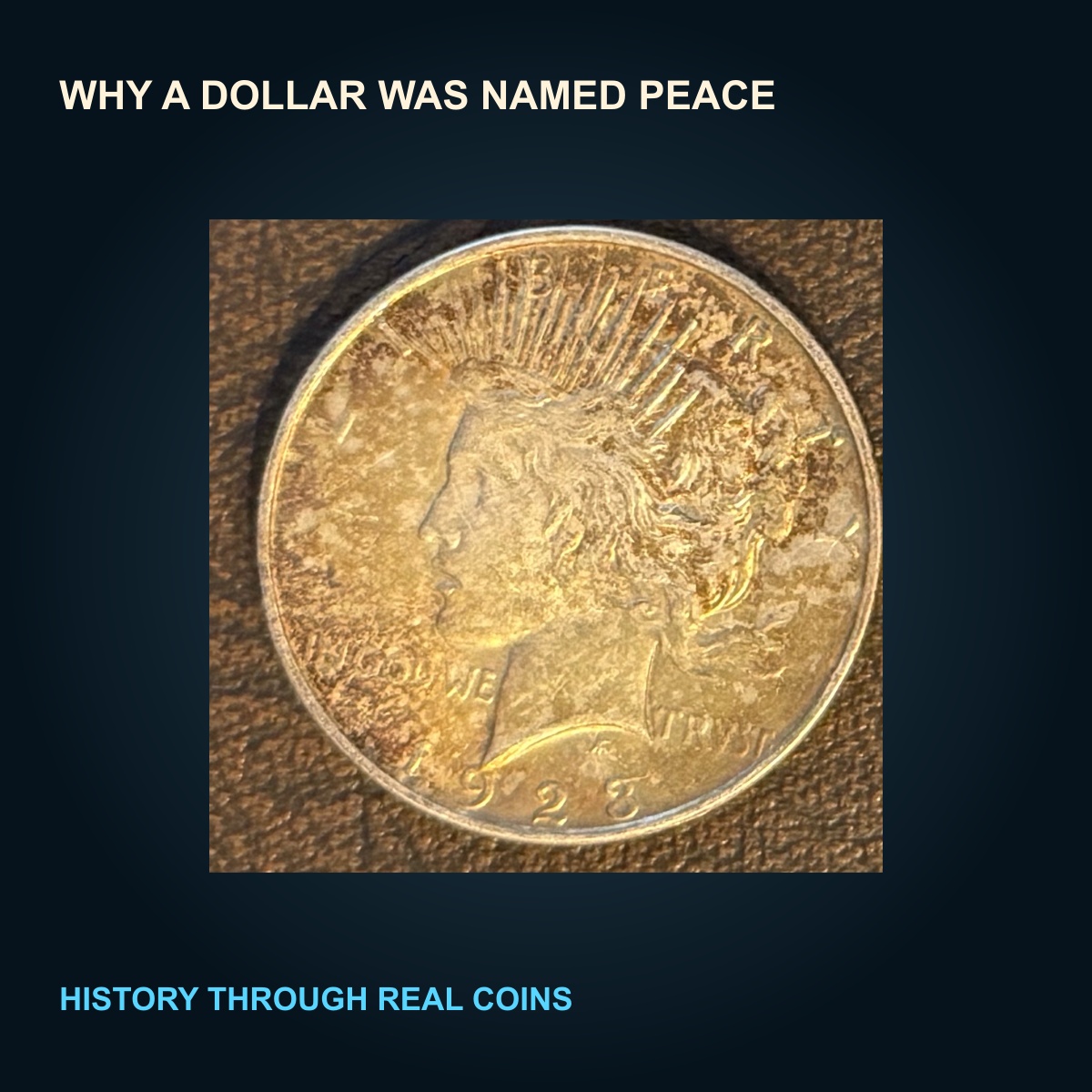
1921 → Peace dollar design approved; broken sword removed
1921-1928 → Original production run
1934-1935 → Production resumes
The word PEACE on a silver dollar is a deliberate statement about the world after World War One. Its reverse also preserves the result of a design dispute: a broken sword was removed before the finished coins appeared. Following that change explains why the eagle and olive branch matter.
Why did America put the word PEACE on a silver dollar? And why did one proposed detail make people see defeat instead?
Why a Peace dollar appeared in 1921
The Peace dollar arrived in 1921, after World War One. It commemorated peace between the United States and Germany, giving an everyday denomination a message about what should follow the fighting.
Sculptor Anthony de Francisci created the design selected by the Commission of Fine Arts. Treasury Secretary Andrew Mellon approved it in December of that year.
The coin's commemorative purpose should not be confused with a claim that the fighting continued until the coin appeared. Its message concerns peace between the United States and Germany. The official design history connects that purpose to the choice of imagery on a circulating denomination.
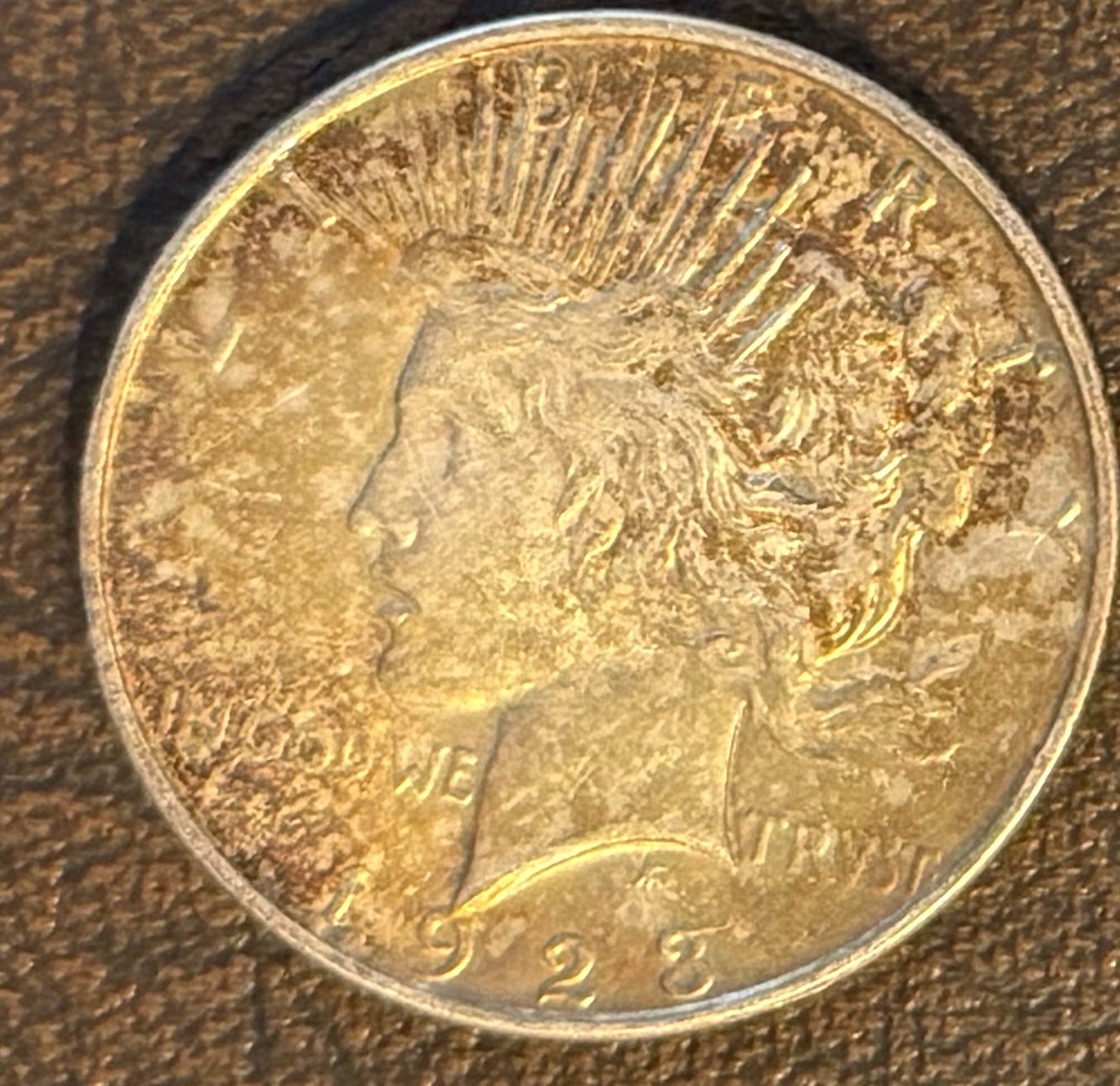
Reading the Peace dollar design
On the front, Liberty wears a crown of rays. On the back, an eagle rests on a rocky summit, holding an olive branch and facing the light of a new day. Beneath it is the word PEACE.
Those details make the reverse more than a picture of America's national bird. The eagle is at rest, and the branch gives the coin's message a visible symbol.
Read the reverse as a composition: bird, perch, branch, rays and inscription. The inscription gives the scene its subject, while the eagle's resting posture supports it. Our photographs show separate owner examples of the two sides; they are not presented as a matched pair of one specimen.
Why the broken sword was removed
But an earlier version included something that never reached the finished coins: a broken sword in the eagle's grasp.
According to the Smithsonian, many Americans interpreted that broken weapon as a sign of defeat and protested. A design celebrating peace risked telling a very different story to the people looking at it.
A symbol can be interpreted differently by its designer and its audience. The objection recorded by the Smithsonian concerned what viewers believed the broken weapon communicated. The rejected sword is part of the design's development, not a detail to search for on a normal finished Peace dollar.
George Morgan changes the Peace dollar hub
There was no time to make new models. Mint engraver George Morgan, working under de Francisci's supervision, cut the sword away from the steel hub and shaped olive leaves from what remained. The Smithsonian records that the alteration took a full day.
That means an important part of this coin's history is a symbol you cannot see on the finished dollar.
The museum account describes work on a steel hub rather than a redesign of each individual coin. That matters to the sequence: the change happened to production tooling before the finished design was struck. We use archival photographs as context and label generated workshop scenes as illustrations, never as evidence of the exact alteration.
The Peace dollar series and its lasting message
The original Peace dollar series was struck from 1921 through 1928, then again in 1934 and 1935.
Its story shows how much meaning a small design can carry. A broken sword suggested defeat to critics. An eagle, an olive branch, and a new dawn carried the message forward: peace.
The gap in the original minting years is worth keeping visible on a timeline. A range written simply as 1921 to 1935 can suggest uninterrupted annual production. The documented runs were 1921 through 1928 and then 1934 and 1935.
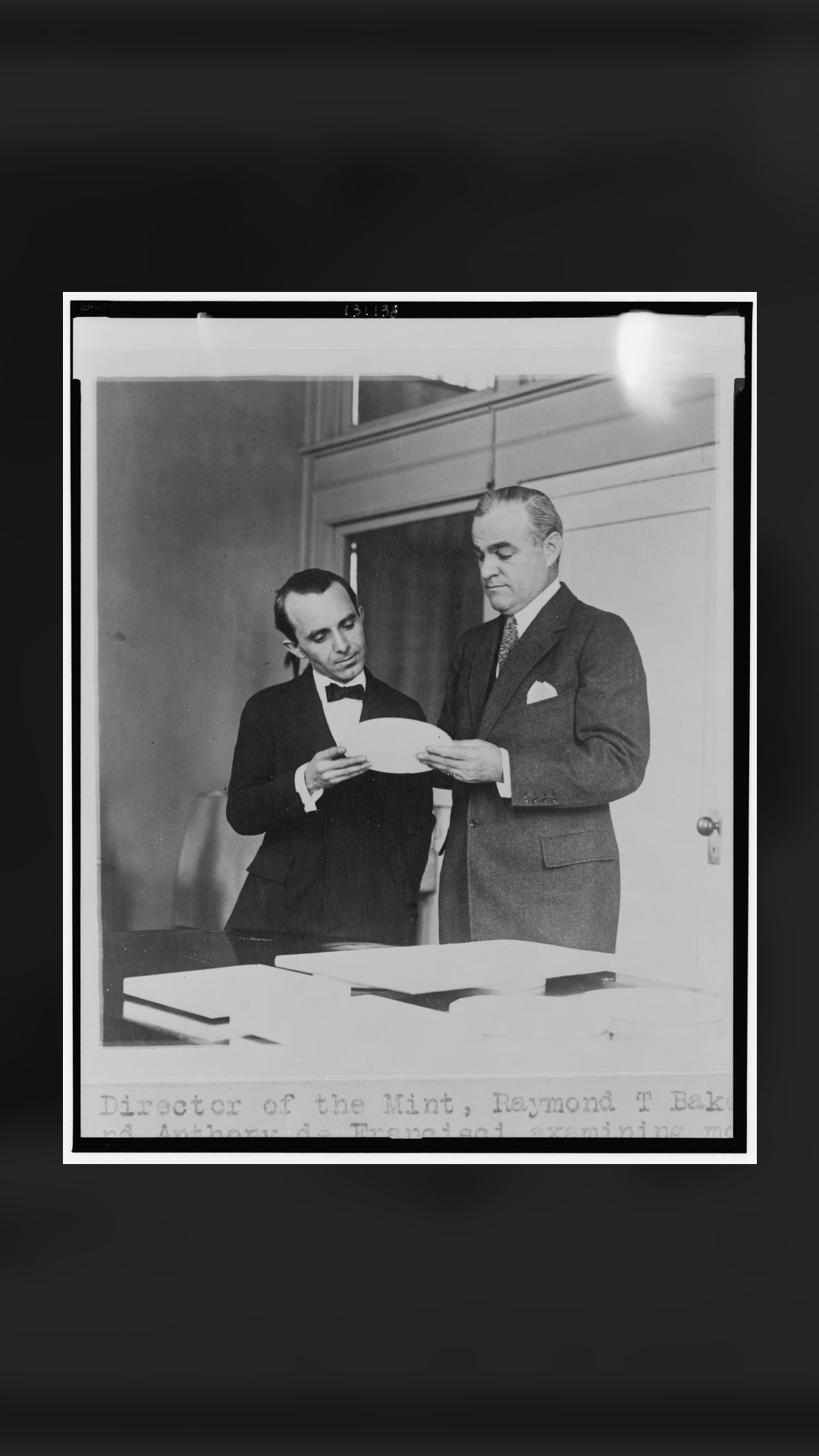
Sources and photographs
- 1921 purpose, Mellon approval, de Francisci, design and original production years
- Eagle summit and new day; Liberty rays
- Commission selection; broken sword proposal, public objections; Morgan hub alteration under de Francisci supervision and one day work
The reel combines original coin photography, credited historical references and clearly labeled illustrative backgrounds. Archival mint photographs show historical working conditions, not a documented view of this specific coin or the exact event described.
For another way to examine the object itself, try reading a coin design from center to rim. Then compare the lettering on collectible coins to see how inscriptions guide the story.
Related
Read next: Reading a coin design from center to rim.