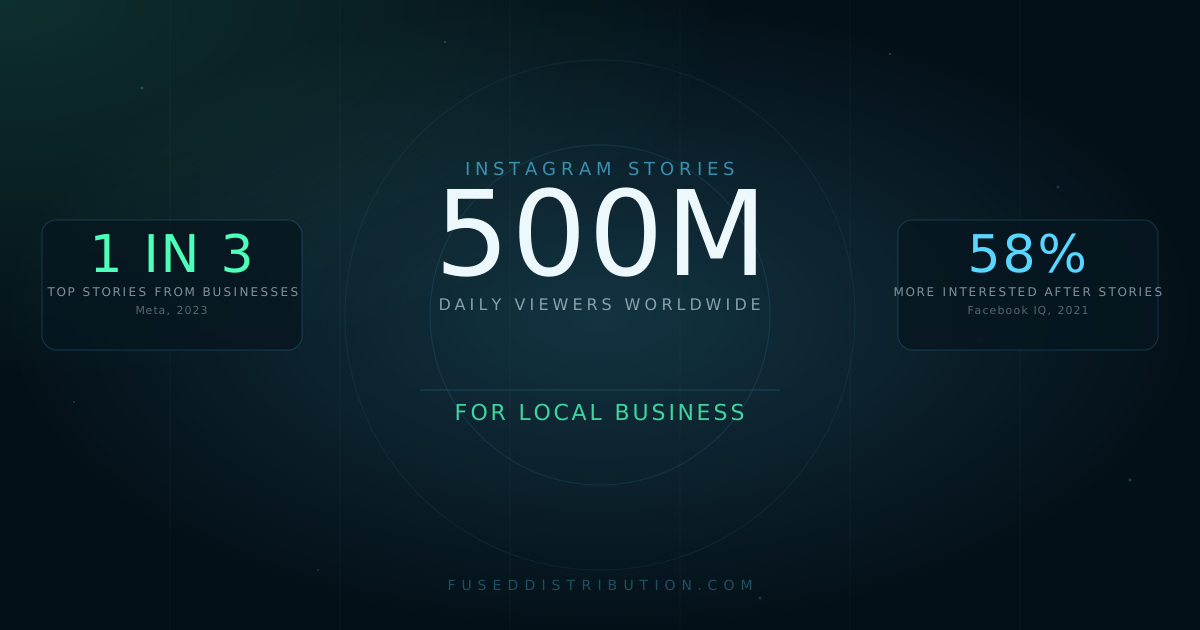
Instagram Stories gets 500 million viewers every day, and one in three of the most-viewed Stories on the platform comes from a business account (Meta Business, 2023). For a local service business, that's a direct line to an audience already in the habit of watching brands. The feed is competitive and unpredictable. Stories are habit-forming and give you a mechanical advantage your feed posts don't have.
This post covers the four Story features that move viewers from watching to booking, a simple weekly rhythm that keeps your profile visible without burning time, and the two metrics that show what's actually working.
Why Stories Reach More Followers Than Your Feed Posts
Feed posts on Instagram reach roughly 5 to 15 percent of your followers on average, according to Hootsuite's 2024 Social Media Trends report. Stories work on a different mechanic. Each new Story you post moves your profile bubble to the front of the row at the top of the app for every follower who hasn't watched it yet. You get a reset. Post consistently and you appear at the front of that row every single day.
In 2021, Facebook IQ research found that 58 percent of people became more interested in a product or brand after watching its Stories. That's not just passive awareness. Interest is the step that precedes a phone call or a booked appointment. By the time someone taps your link or sends you a DM, they've already spent time watching your work. That makes them a warmer lead than almost anything a paid ad can produce at comparable cost.

Stories also expire after 24 hours. That limitation is an advantage. Followers know Story content is fresh. A before-and-after photo in a feed post feels like a polished ad. The same photo in a Story feels like a live update from a business they follow. The difference in how people process it is real, and it shows up in how they respond.
The Four Story Features That Drive Bookings
Each interactive Story feature gives a viewer a one-tap way to engage with your business. Here's what each one does and how to use it for a service business specifically.
Poll sticker presents a two-option choice. Ask something tied to your actual work: "Which wall color would you go with?" or "Deck or fence for this summer?" Every response shows up in your viewer list by name. Reply directly to everyone who tapped. You didn't ask for a DM. They initiated. That's a warmer open than any cold outreach.
Question box opens a free-text reply field. "Ask me anything about our pressure washing process" or "What's stopping you from booking?" surfaces the exact objections people have before they become customers. Answer each question as a follow-up Story. Other followers read those answers too. Over a few weeks, you've built a public FAQ out of real objections without writing a single word of copy yourself.
Countdown sticker adds a deadline to an appointment slot, promotional price, or seasonal opening. Followers tap to set a personal reminder. When the timer hits zero, they get a push notification. That's a free re-engagement from someone who already showed enough interest to tap. No ad spend required.
Link sticker became available to all Instagram accounts in 2021 with no follower minimum required (Meta, 2021). Put your booking page, quote form, or phone tap link directly in the Story. In 2020, Facebook IQ found that 50 percent of people visited a website or made a purchase after seeing a product or service in Stories. That's the most direct conversion path on the platform.
How Many Stories Should You Post Each Day?
For a local service business, 3 to 5 Stories per day keeps your profile bubble visible without creating a content burden you can't sustain. You don't need polished production. Behind-the-scenes clips, before-and-after photos, a 10-second clip of work in progress — these consistently outperform designed promotional graphics in the local business niche because they feel like a real person, not a marketing department.
A plumber filming a cleared drain gets more saves than a formatted discount announcement. An electrician showing a finished panel replacement builds more trust than a seasonal sale graphic. The less it looks like an ad, the better it performs.

A weekly rhythm that works without a content team:
- Monday: Show work in progress or the week's upcoming jobs
- Wednesday: Run a poll about a service choice or preference relevant to your work
- Friday: "DM us to book this weekend" Story with a link sticker to your contact page
That's a floor, not a ceiling. When something interesting happens on the job — a difficult repair, a dramatic result, a client reaction worth capturing — post it that day. The best Stories aren't scheduled. They're moments that would stop someone mid-scroll, and you know one when you see it.
The Two Metrics That Tell You What's Working
Instagram Stories analytics show every viewer by name for each frame, along with a small set of engagement data. Two numbers matter most for a local service business.
Exits count how many people swiped away on a specific Story frame. High exits on a particular frame means the content stopped working right there. If your pricing Stories consistently bleed viewers, cut them. If behind-the-scenes clips hold attention all the way through, post more of those. Exits are the most direct feedback the algorithm gives you about what your specific audience doesn't want to see.
Link taps and interactive responses show which Story format your audience actually acts on. If poll Stories consistently drive more replies than standalone link Stories, lead with a poll to build engagement, then follow with a link Story when you're pushing a specific offer. Track both weekly for a month. You'll see which content stops the scroll and which gets skipped.
The businesses that see real results from Instagram Stories aren't running paid campaigns or buying followers. They're posting work photos three times a week, asking their audience two questions a month, and responding to every DM within the hour. That's all it takes to keep a local service business visible to the people who already want to hire someone like you.
Sources
- Meta Business, "Instagram Stories Best Practices," retrieved 2026-06-03, facebook.com/business
- Facebook IQ, "Stories Research: The Science of What Makes Stories Engaging," 2021, facebook.com/business
- Facebook IQ, "Telling Stories Through Mobile," 2020, facebook.com/business
- Meta, "Introducing the Link Sticker," 2021, about.instagram.com
- Hootsuite, "Social Media Trends Report 2024," retrieved 2026-06-03, hootsuite.com