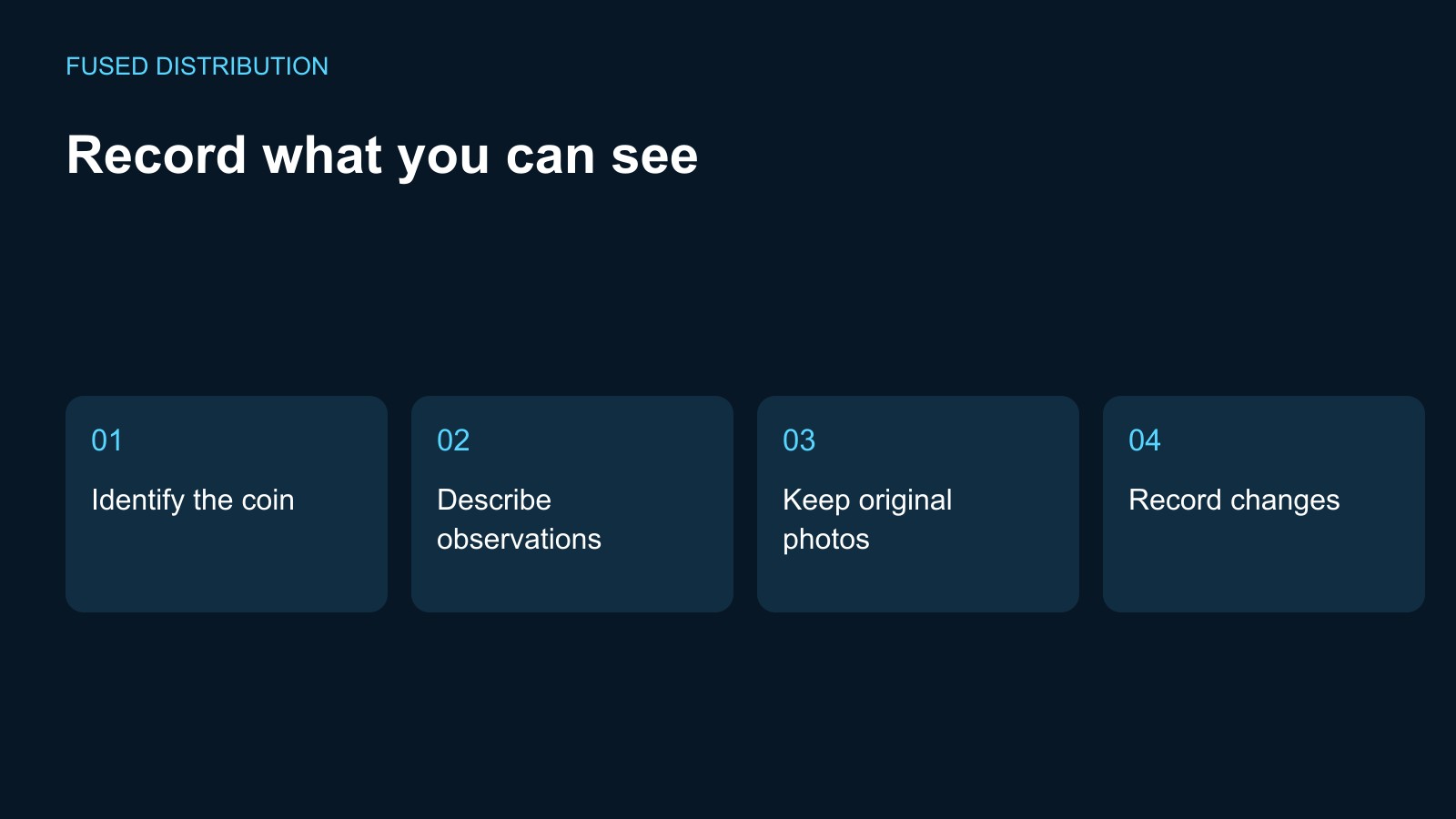
Identify the coin → Describe observations
Keep original photos → Record changes
A useful collection record describes what you can observe without assigning a grade. Record the coin's identity, visible features, storage location, and the date you checked it. Keep observations separate from conclusions about authenticity, rarity, or value.
Set up a repeatable record
Give each coin a unique inventory ID and use it consistently on the record and on the outside of its storage box or compartment. Note the date, coin type, date and mint mark when legible, denomination, and any holder or certification number. If a detail is uncertain, mark it as uncertain rather than guessing.
Keep private information such as the exact location of a home safe out of any shared or public copy. Back up the inventory separately from the physical collection.
Describe visible condition in plain language
Use neutral observations instead of a grade. For example, note whether design details appear sharp or worn, whether you see spots, scratches, discoloration, or contact marks, and where those features appear. Describe only what is visible under consistent lighting; do not infer how or when a mark occurred.
A coin's grade is a professional assessment of condition. PCGS explains that grading assesses a coin’s physical condition, including its wear and marks. A written inventory note is useful for tracking, but it is not a grade or an authentication.
Photograph consistently
If you photograph coins, capture the obverse and reverse with the coin centered and the lighting and distance kept as consistent as practical. Include the inventory ID in a separate frame or label beside the holder, not attached to the coin. Keep original files and dates so later images can be compared with the same coin.
Photographs help document visible appearance; they cannot establish authenticity or replace an in-person examination. Avoid removing a coin from a holder just to take a picture. The U.S. Mint advises holding coins by their edges over a soft surface and cautions that cleaning or rubbing can scratch or reduce value.
Record storage and changes
Add the holder type and the box or compartment location. When you move a coin, update the location and date rather than changing the original observation. If a new mark or spot appears, record what changed and when you noticed it; avoid claiming a cause unless you know it.
Keep certificates, receipts, and other provenance documents linked by inventory ID. Store those records securely, especially if they reveal collection size, value, or storage details.
Use the record for tracking, not appraisal
Review entries periodically to confirm that the ID, holder, and location still match. If you need a formal grade, authentication, or valuation, consult a qualified coin professional. A personal condition log is most useful when it stays descriptive, dated, and consistent.
Sources
- United States Mint, Caring for Your Coin Collection: handling by the edges over a soft surface, storage and documentation guidance, and risks of cleaning or rubbing.
- PCGS, What Is Coin Grading?: grading describes physical condition and considers wear, marks, and handling/storage-related factors.
For the broader storage setup, see our silver storage guide. Keep the purchase paperwork connected using the silver invoice checklist.
Related
Read next: Silver storage guide.