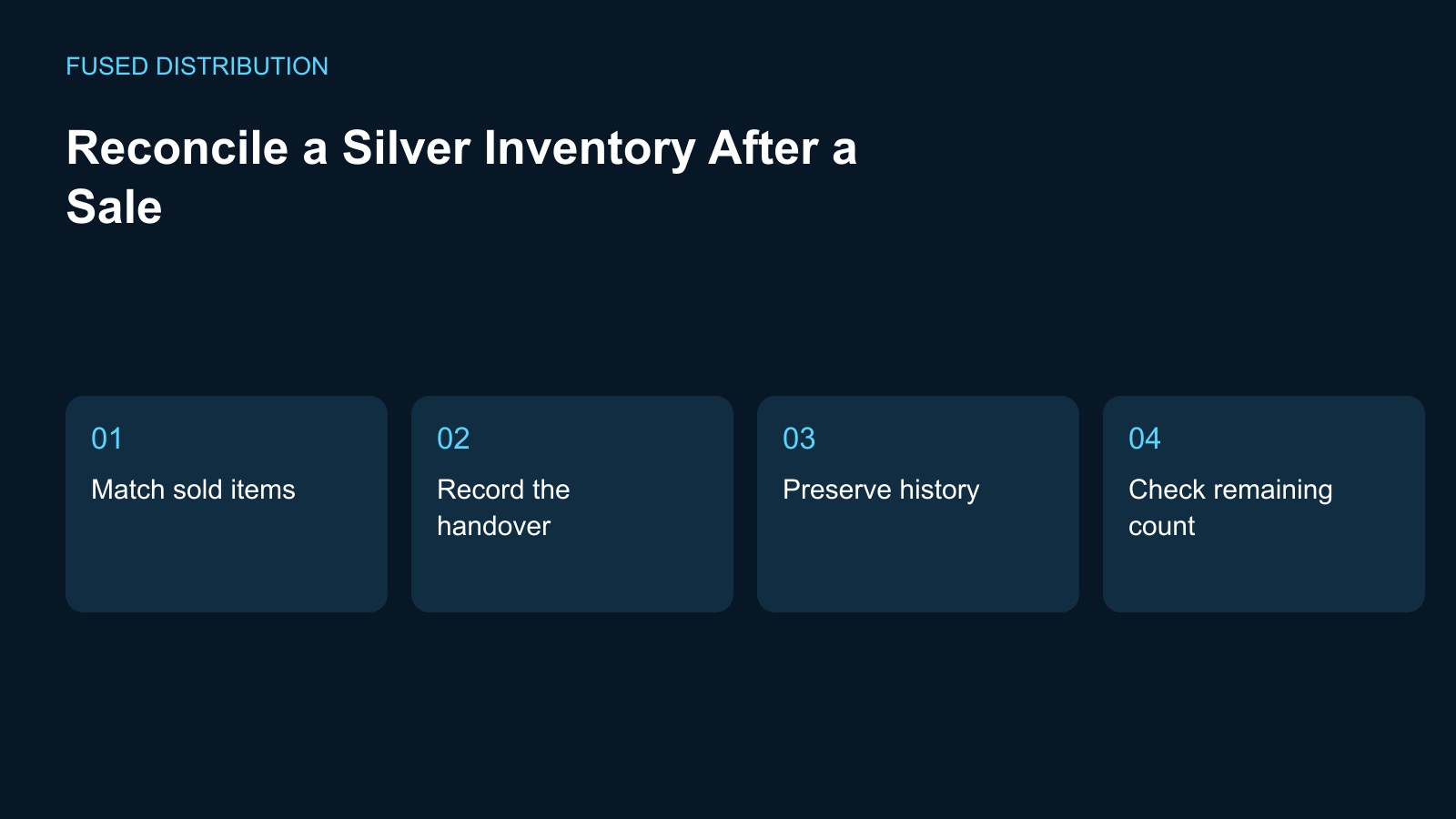
Match sold items → Record the handover
Preserve history → Check remaining count
Reconcile your silver inventory after a sale by matching the transaction record to the exact items that left the collection. Begin with the inventory IDs, agreed quantity, and supporting paperwork. Keep payment, dispatch, and delivery as separate recorded events. A message saying the transaction is arranged does not establish that payment has cleared or that the package has reached the recipient. Record only what your evidence supports.
Match sold silver to the inventory register
Compare the transaction description with the coin or bar records before changing their status. Check quantity, visible identifiers, and any holder or certificate reference used in the agreement. If an item cannot be matched confidently, leave the discrepancy open while you review the paperwork. Do not pick a similar entry simply to make the collection count balance. A correct unresolved note is more useful than a neat but inaccurate register.
Record what accompanied the items
List the holders, original packaging, certificates, or other records included in the handover. Keep copies of the relevant transaction documents where appropriate in your private records. Record the date and method of dispatch or collection using the evidence available. If the recipient later reports a discrepancy, this list provides a starting point for checking what was agreed and recorded, without inventing a conclusion about responsibility.
Preserve the earlier inventory history
Mark the matched entries with a clear transaction status and date instead of erasing them from your only inventory file. Retain the original acquisition record and earlier observations alongside the new event. If your system uses a separate archive, confirm that the links to photographs and paperwork still work after moving the entry. An archived item should remain traceable even though it no longer belongs in the current physical count.
Check quantities and storage locations
Compare the remaining recorded quantity with the relevant storage location after the handover. Keep this check focused on the affected items and record any difference before making adjustments. A count mismatch may involve an outdated location, a group recorded differently, or an entry that needs investigation. Do not rewrite several old transactions to force agreement. Document the discrepancy and resolve it from records and an actual count.
Close the record with clear limits
Save the reconciliation date, the records checked, and any unresolved payment or delivery event. Keep sensitive transaction details out of shared collection lists. This is an inventory workflow, not a calculation of taxable gain or advice about reporting requirements. If you need that separate analysis, provide the retained records to an appropriate professional. The aim here is a collection register that accurately explains which items remain and why others are archived.
For related preparation, see our Silver storage guide. Use the Silver invoice checklist to connect this check with the wider record.
Source context: U.S. Mint collection care guidance. The checklist above is a suggested working method; record your own observations rather than assuming an outcome.
Related
Read next: Silver storage guide.