Material unclear → Pause purchase
Material documented → Check fit and record product
Choose a coin flip whose manufacturer identifies the material and explicitly says it contains no PVC. Keep that description with your purchase record. If the material is unclear, choose a documented holder instead of guessing from how the plastic feels. A flip is the holder around a coin; it does not establish the coin's purity or authenticity.
Check materials for silver coin flips
The U.S. Mint's collection care guidance recommends plastic holders without PVC and acid free cardboard. It warns that PVC can damage a coin's surface. Use that guidance as the starting point for a purchase specification, rather than treating every product labeled for collectors as suitable.
Open the actual product page and look for a material description tied to the exact item. A store can sell several types of flips with similar photographs. Check the product number on the listing, the package, and the receipt. A general statement elsewhere on the seller's website is less useful when you cannot connect it to the product being ordered.
If the description only says archival or premium, ask for the material and the PVC statement. Save the response. Do not use an improvised smell, flame, or solvent test to identify an unknown holder. When documentation is missing, the purchase decision can stay simple: leave that item unselected.
Match the holder to your coin
Record the coin's diameter from its issuer's specifications or existing paperwork before choosing a holder. A listing's outside flip dimensions are not a promise that every coin will fit comfortably inside. Check the usable pocket size and any stated coin size limits. Review the closure and how you would insert the coin without forcing it against a seam.
Start with a small quantity when you have not used a product before. Inspect an empty holder under good light for rough edges, loose debris, or damage. Keep questionable pieces out of the usable supply. Do not test a tight fit with your most delicate coin.
Decide whether a flip actually suits the item. A coin already in an intact original capsule or graded holder may need no new inner holder at all. Our silver storage guide provides broader storage context. The aim here is to select suitable supplies, not to move every coin into matching packaging.
Separate the label from the coin
Plan the inventory label before opening anything. Give each coin an identifier that connects its holder to the purchase record. Keep paper notes in the designated label pocket, if the holder has one, rather than placing loose writing materials against the coin. Follow the manufacturer's directions for the holder you selected.
Useful label fields include your inventory ID, the coin name, its year, and the storage location. Put detailed transaction information in your private inventory rather than on a label that could appear in a photograph. Avoid including the purchase price on a public image unless you intend to share it.
A holder label is your record, not a certification. Do not copy a seller's grade onto it as an independently verified finding. Keep observations such as visible marks separate from claims that came from the listing. The silver bullion invoice checklist can help connect an inventory entry with its original paperwork.
Keep a supply record for future orders
Save the manufacturer, product number, material statement, quantity, purchase date, and seller with your receipt. A photograph of the package can be useful when the same shop changes a listing later. Store that image with your inventory documentation so you do not have to repeat the research for the next order.
When a replacement order arrives, compare its label with the saved specification. Similar packaging does not establish that the product is unchanged. If the item number or description differs, check it before adding the new pieces to your established supply.
Keep unused holders in their packaging and separate from unidentified old flips. This is an organizational rule you can follow without testing plastic yourself. Mark an uncertain group as needing identification and avoid distributing it through several storage boxes. A small, clearly documented supply is easier to manage than a mixed drawer of loose holders.
Make a short acceptance checklist
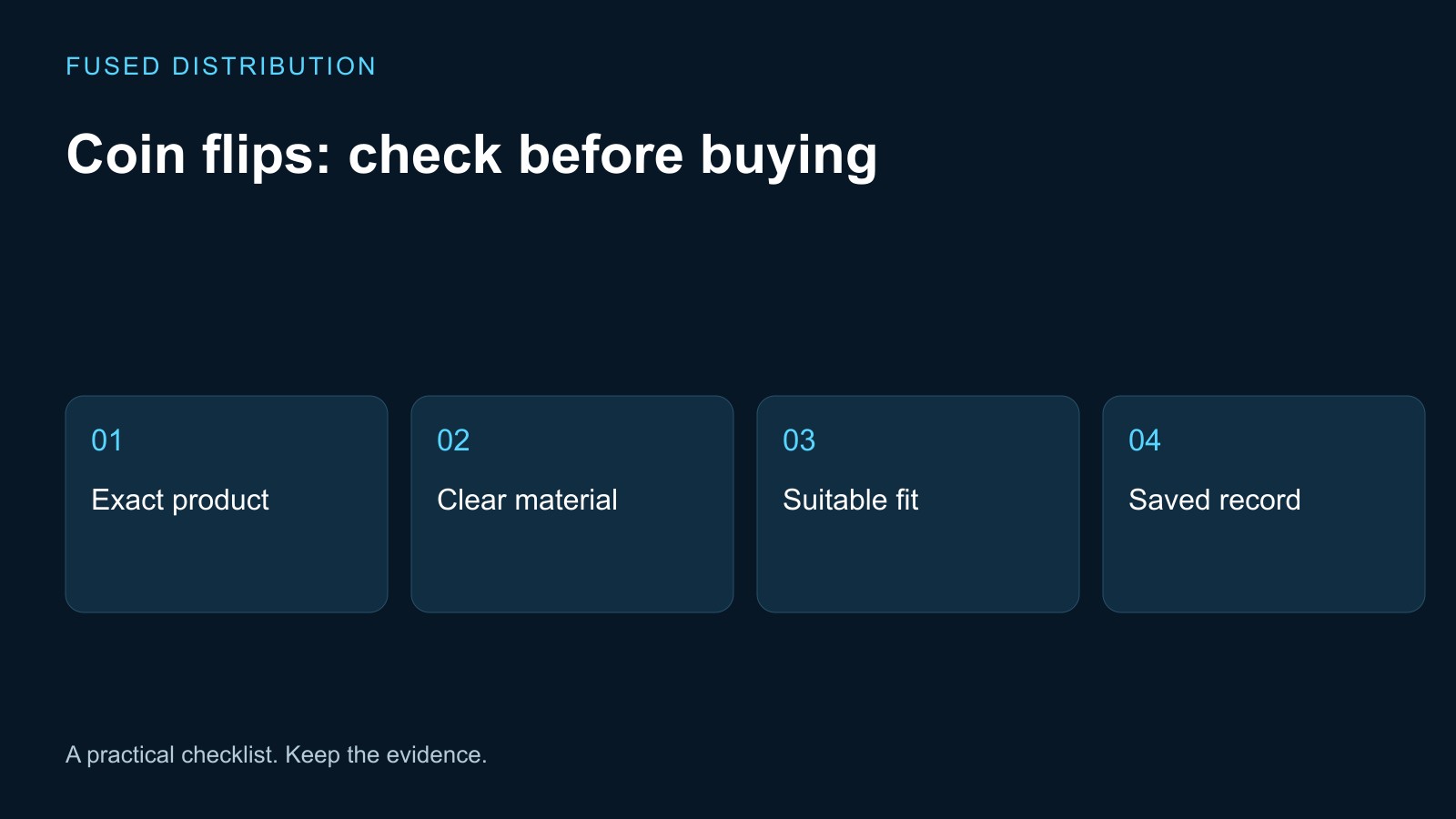
Before accepting the supplies for use, confirm the exact product, a clear material description, an explicit PVC statement, suitable dimensions, and undamaged empty holders. Record any unanswered question. A lower price should not turn an unknown answer into an assumed yes.
For example, imagine two listings with the same outside dimensions. One names the product and provides the material statement; the other only says suitable for collectibles. The practical difference is the evidence available for your decision. You do not need to accuse the second seller of supplying a harmful product to choose the documented option.
Once the supplies pass your check, update the inventory location and store the purchase record. If you notice an existing coin or holder has residue, do not experiment with cleaning it to make the new packaging look tidy. Pause the transfer and seek qualified conservation advice. This checklist selects a holder; it does not diagnose or repair a coin's surface.
Related
Read next: silver storage guide.