Raised design → Compare against the field
Different relief → Check issue specifications
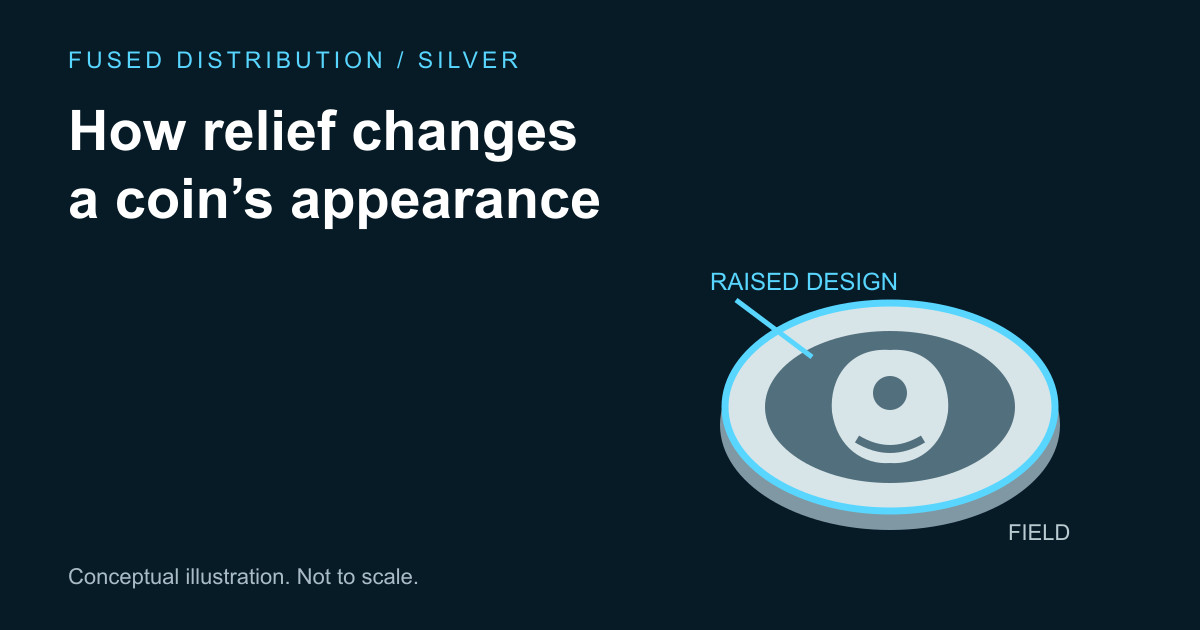
Relief is the part of a coin’s design raised above its surrounding surface. Its height changes how strongly the design stands out, how light and shadow describe it, and what a mint must consider when striking the coin. The word describes a physical feature, not a grade, a guarantee of detail, or a measure of value.
A useful comparison starts with the coin’s own specification. The U.S. Mint’s account of the 1907 Saint-Gaudens double eagle describes multiple versions of the design with different relief heights. The first ultra high relief versions were difficult to strike, while later lower relief versions were better suited to production. That history shows why appearance and manufacturing choices are connected, but it does not make one relief level inherently better for every coin.
What relief means on a coin
The raised portrait, lettering, and other sculpted details sit above the flatter background, often called the field. The U.S. Mint defines relief as the raised part of a coin’s design and contrasts it with incuse elements, which are pressed into the surface. A coin can include both kinds of detail. If you are also learning how coin edges differ, keep the edge separate from the raised design on the face. Looking at a side lit image can make the height differences easier to see, though glare and camera angle can also exaggerate them.
Relief is different from the rim, the raised border around a coin’s face. It is also different from a finish such as proof or uncirculated. Those terms describe other characteristics of a coin and should not be used as substitutes for a description of its sculpted height. When recording a coin, say which feature you mean and identify the exact issue before comparing it with another piece.
Why relief height affects striking
A coin is made by pressing dies against a prepared blank. The collar around a coin during striking also matters to how the edge is formed. As the metal moves into the design recesses in the dies, the intended details must fill sufficiently for the strike. The Mint’s historical account of trial strikes explains that excessive relief or an unsuitable background basin can impede metal flow and require pressure beyond what the press and dies can practically handle.
That is a design and production tradeoff, not a simple contest in which the tallest design is always best. A sculptor and mint consider the shape of the design, the blank, the metal, the press, and the expected production method together. The Mint’s 1907 examples illustrate that reducing relief helped make a celebrated design more practical to produce. They do not establish one universal maximum height or explain the specifications of a different coin.
How relief changes what you see
A higher area can catch a highlight while the field falls into shadow. From a low angle, the height may appear dramatic; from directly above, the same detail can look flatter. Wear can soften exposed high points, while lighting, toning, surface marks, and photography can change apparent contrast. A photograph is useful evidence of visible features, but it cannot by itself establish the original relief specification or a coin’s grade.
For a fair comparison, use the same viewing angle and similar diffuse light. Compare coins of the same issue or consult the issuing mint’s description. Note which feature looks raised, which is incuse, and what conditions might affect the image. Do not polish or otherwise alter a coin to make its design easier to see. If attribution or condition affects a purchase decision, consult an appropriately qualified numismatic professional.
Keep observation separate from attribution
A collection note can state that a portrait appears more pronounced under side lighting, then separately record the issue name and source used for comparison. Avoid inferring that a coin is a special high relief variety from a single photograph. The U.S. Mint’s glossary supplies the basic terminology; issue specific product records and reliable references are needed for a particular coin.
This distinction also helps when comparing modern and historical pieces. Design height, strike quality, wear and image conditions can all affect what stands out. Keep each observation attached to the coin identifier, date, source and viewing conditions. If a detail remains uncertain, preserve that uncertainty instead of turning a visual impression into a claim about rarity or value. When you view a coin, do you notice the raised design or the flatter field first?
Sources
- U.S. Mint Coin Term Glossary: definition of relief and incuse.
- U.S. Mint Gold Eagles: the 1907 Saint-Gaudens double eagle relief variations and production history.
- U.S. Mint Trial Strike of the Eisenhower Dollar: relationship among relief, metal flow, pressure, dies and press limitations.
Related
Read next: Understand the edge as part of coin design.