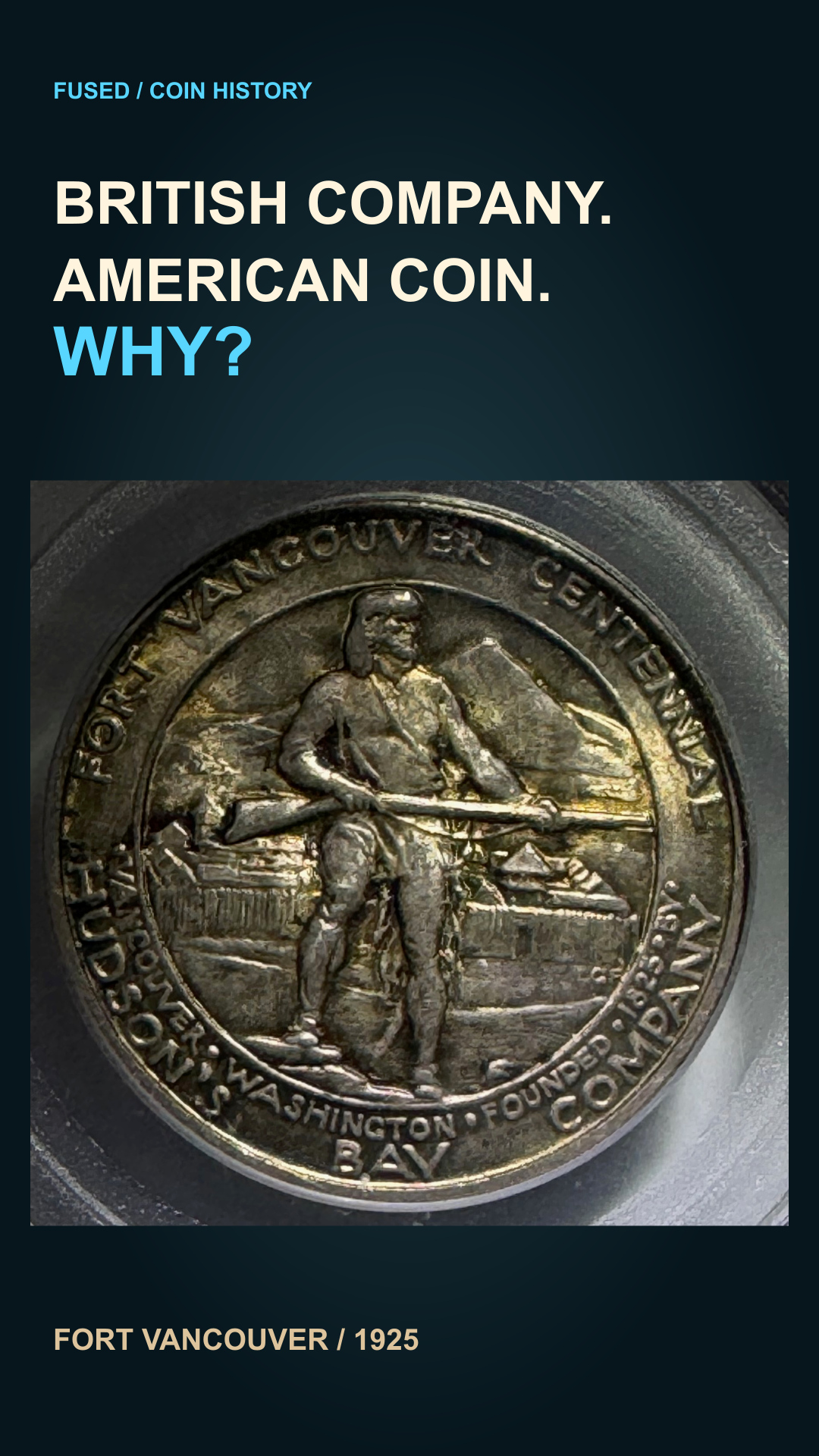
1825 → Hudson Bay Company establishes Fort Vancouver
1925 → Centennial half dollar marks the anniversary
Why is a British fur trading company named on an American half dollar?
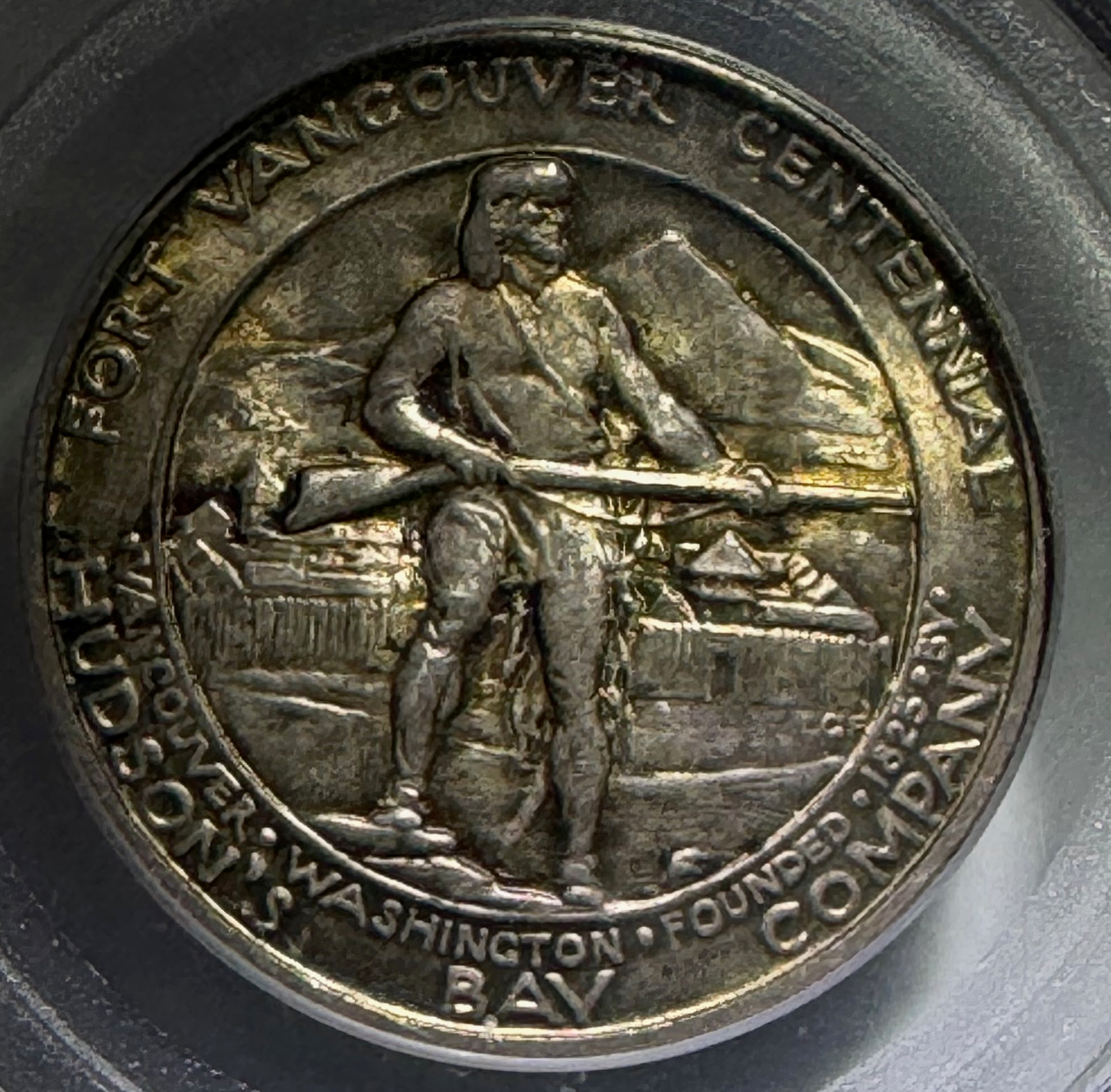
Look closely at the reverse in our photograph. A standing figure holds a gun across his body. Behind him are a fort and a mountain. Around the design, the words “FORT VANCOUVER CENTENNIAL” and “HUDSON'S BAY COMPANY” turn a small coin into a question about Pacific Northwest history.
The answer starts a century before the coin was issued.
The Fort Vancouver dates tell the story
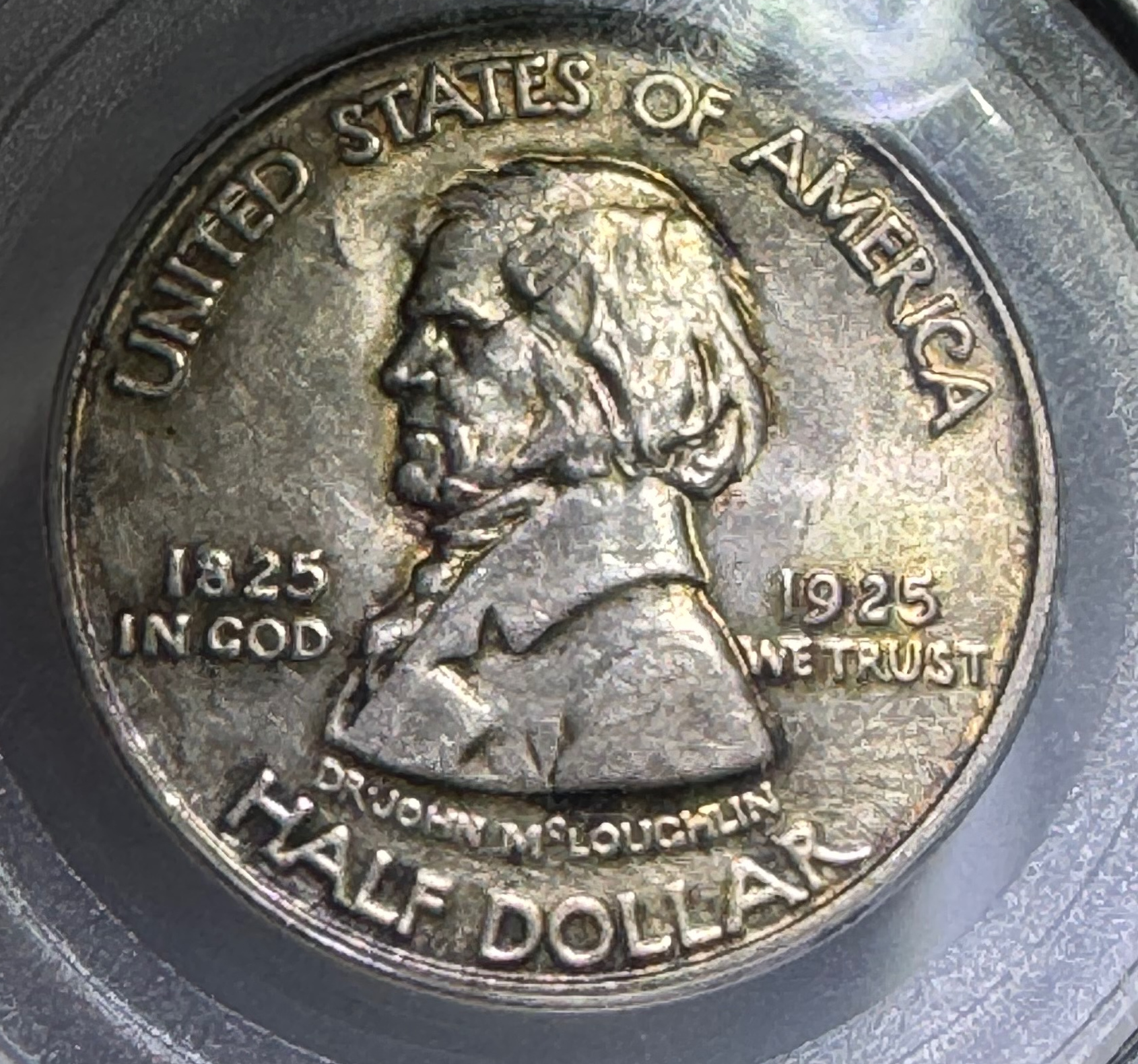
The 1925 Fort Vancouver Centennial half dollar marked 100 years since the Hudson's Bay Company founded the fort. On the portrait side, the dates 1825 and 1925 frame the anniversary. This is Vancouver, Washington, the location named on the coin. U.S. Mint
The London based company established Fort Vancouver in 1825 as the headquarters of its interior fur trade. So the company's name is part of the reason this place existed, rather than an unexpected advertisement on American money. National Park Service
The fort was more than a trading post at the edge of a map. It became the Hudson's Bay Company's administrative headquarters and supply depot for its Columbia Department, a network that stretched across a vast region. The company first built the post on a bluff, then moved it to the site visitors recognize today in 1829. National Park Service
The landscape also had a much longer history than the fort. Indigenous communities lived and traded throughout the Columbia River region before the Hudson's Bay Company arrived, and the fort was established within those existing homelands and trade networks. The later employee village brought together people with homelands across the globe, including Indigenous people, French Canadians, Hawaiians, and people from Britain and elsewhere in Europe. National Park Service National Park Service
A portrait on one side, a place on the other
Our portrait photograph shows the name Dr. John McLoughlin below the bust. McLoughlin served as the fort's chief factor, the official responsible for its operations, from 1825 to 1845. National Park Service
Turn to the other photograph and the design opens into a scene. The U.S. Mint describes a frontiersman, a fort and a mountain peak. It credits Laura Gardin Fraser with both sides of the coin. U.S. Mint
The fort itself supported a much larger community than one portrait or figure can show. Its workers included carpenters, blacksmiths, bakers, trappers and traders, while the surrounding village could grow to hundreds of people when fur brigades arrived. National Park Service
What the photographed holder tells us
The label in our obverse photograph reads PCGS MS63. That is the grade printed on the holder; we have not independently checked its certification record for this article. The history here comes from the coin's readable design and documented sources, rather than a claim about its price or rarity.
There is another interesting detail about the issue: the U.S. Mint says these coins were produced in San Francisco without a mint mark. That is documented production history, not a letter we are claiming to see in the photograph. U.S. Mint
A local story you can hold
Try reading a coin from center to rim, then compare the lettering with another design. Read the two sides together: a name, a place, a company and a pair of dates. The British company's name belongs on this American commemorative because the coin marks the founding of Fort Vancouver by that company, 100 years earlier.
Which draws you in first: the portrait, the fort scene, or the story hidden in the lettering?
Related
Read next: Reading a coin from center to rim.